Rajasthan Assembly Monsoon Session: BJP, Congress clash over duration and debate agenda
Synopsis
Before a single bill is tabled, the Rajasthan Assembly Monsoon Session is already a battleground — Congress demanding 20-25 sitting days, the BJP signalling it ends by 25 August. With the UCC proposal and Ram Mandir donations controversy in the mix, the first fight may be over the calendar itself.
Key Takeaways
The Rajasthan Assembly Monsoon Session is scheduled to begin on 20 August in Jaipur .
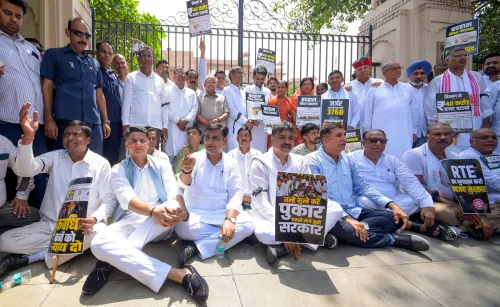
Leader of Opposition Tikaram Jully (Congress) demanded the House sit for 20 to 25 days to debate public-interest issues.
The ruling BJP indicated the session could conclude as early as 25 August , citing approaching elections.
Government Chief Whip Jogeshwar Garg said the government is ready for discussion on all issues, including Ram Mandir donations allegations.
The proposed Uniform Civil Code (UCC) and alleged misappropriation of Ram Mandir donations are expected to be major flashpoints.
Final session duration will be decided jointly by Assembly Speaker Vasudev Devnani and the government.
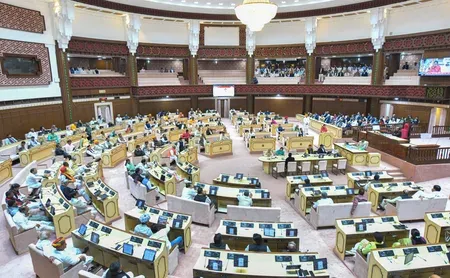
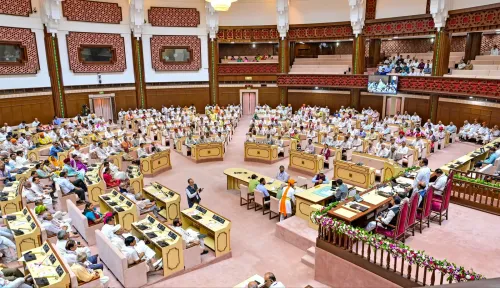
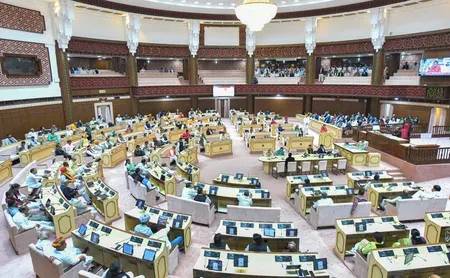
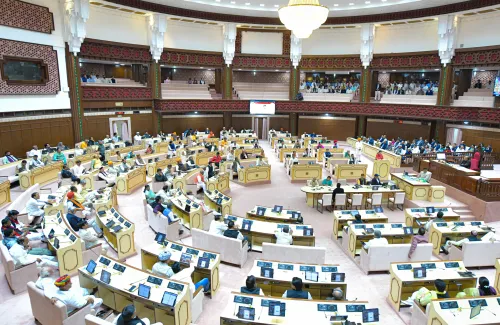
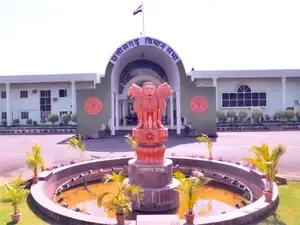
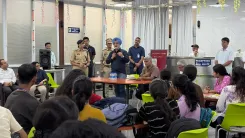
The Rajasthan Assembly Monsoon Session, set to commence on 20 August in Jaipur, has already triggered a sharp political confrontation between the ruling Bharatiya Janata Party (BJP) and the Opposition Congress, with both sides divided over how long the session should run and which issues deserve floor time. The dispute broke into the open during an all-party meeting chaired by Assembly Speaker Vasudev Devnani on Tuesday.
The Duration Dispute
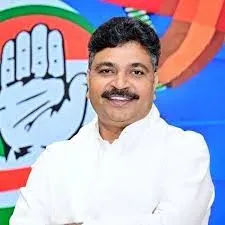
Leader of Opposition Tikaram Jully demanded that the House function for 20 to 25 days to allow substantive debate on pressing public concerns. The ruling BJP, however, signalled that the session could wrap up as early as 25 August — a window of just five sitting days. Government Chief Whip Jogeshwar Garg confirmed that the final call on session length would rest jointly with the Speaker and the government, adding that approaching elections and the traditionally short duration of Monsoon Sessions informed the BJP's position.
What Congress Wants Debated
Jully pressed for dedicated floor time on issues affecting students, youth, women, government employees, labourers, and Dalits. He specifically flagged the deteriorating condition of schools and student-related grievances as priorities. He alleged that the Chief Minister Bhajanlal Sharma government is deliberately engineering a curtailed session to shield its ministers from Opposition questioning — a charge the ruling party rejected outright.
Jully also raised concern over a potential political manoeuvre: he claimed the government could introduce the proposed Uniform Civil Code (UCC) legislation, then blame the Opposition for obstructing it before closing the session early. 'We want the House to run for 20 to 25 days,' Jully said, making the Congress position unambiguous.
BJP's Counter and the Ram Mandir Donations Row
Garg dismissed the Opposition's accusations and said the government is 'ready for discussion' on every issue, including the Ram Mandir donations misappropriation controversy that Congress has flagged as a major flashpoint for the session. He challenged the Opposition not to 'run away' from proceedings, turning the accountability argument back on Congress by pointing to its own legislative record.
Notably, the Ram Mandir donations dispute is expected to be among the most contentious items on the informal agenda, with the Opposition demanding a formal discussion and the government signalling it is prepared to respond.
Likely Battlegrounds Inside the House
The competing agendas have effectively drawn the session's fault lines before a single bill has been tabled. Congress is expected to press on unemployment, student welfare, women's safety, Dalit concerns, and school infrastructure. The government, in turn, may seek to steer debate toward development metrics and governance outcomes under the Sharma administration.
The UCC proposal adds another layer of unpredictability. If the government introduces the legislation, procedural disputes over debate time could consume significant floor hours — precisely the scenario Jully warned against. This is not the first time a Rajasthan Assembly session has opened under such conditions; pre-session all-party meetings have repeatedly exposed the same fault line between a ruling party favouring brevity and an Opposition demanding extended scrutiny.
What Happens Next
With the session beginning on 20 August and the government eyeing a close by 25 August, the first battle is likely to be procedural — over the House calendar itself. Speaker Vasudev Devnani will play a pivotal role in managing competing demands. Whether the session extends beyond the government's preferred timeline will depend on the political pressure the Opposition can sustain from day one.
Point of View
An Opposition with an incentive to maximise it. But the stakes are higher this time: with the UCC proposal potentially on the table and the Ram Mandir donations row unresolved, a five-day session would leave serious governance questions unanswered. The Congress charge that BJP ministers cannot withstand sustained questioning is an allegation the government can only credibly rebut by actually allowing the session to run longer. A short session, whatever the stated reason, will be read as confirmation of the Opposition's narrative.
NationPress
3 Oct 2026
Frequently Asked Questions
When does the Rajasthan Assembly Monsoon Session 2025 begin?
The Rajasthan Assembly Monsoon Session is scheduled to begin on 20 August. The BJP has indicated it may conclude as early as 25 August, while Congress is demanding the House sit for 20 to 25 days.
Why is Congress demanding a longer Rajasthan Assembly session?
Congress Leader of Opposition Tikaram Jully has demanded 20 to 25 sitting days to debate issues affecting students, youth, women, employees, labourers, and Dalits. He alleges the BJP government wants a short session to prevent its ministers from being held accountable on public-interest matters.
What is the BJP's position on the session duration?
Government Chief Whip Jogeshwar Garg indicated the session is likely to close by 25 August, citing approaching elections and the traditionally brief duration of Monsoon Sessions. He said the final decision rests jointly with Assembly Speaker Vasudev Devnani and the government.
What are the key issues expected to be raised in the Rajasthan Assembly session?
Congress plans to raise concerns over unemployment, student welfare, women's safety, Dalit issues, school conditions, and alleged misappropriation of Ram Mandir donations. The proposed Uniform Civil Code (UCC) is also expected to be a flashpoint.
What is the Ram Mandir donations controversy in Rajasthan?
The Opposition Congress has demanded a formal Assembly discussion on alleged misappropriation of Ram Mandir donations, flagging it as a major governance concern. Government Chief Whip Jogeshwar Garg said the BJP government is prepared to address the Opposition's questions on the matter.