Will BSF’s historic camel contingent make a grand appearance at Ekta Parade?
Synopsis
Discover the remarkable history of the BSF's Camel Contingent, known for its majestic presence in national parades. As they prepare to showcase 52 camels from Jodhpur at the Ekta Parade, delve into the rich heritage and rigorous training that defines this iconic unit.
Key Takeaways
Historic Camel Contingent: The BSF's Camel Contingent has a rich legacy dating back to the early 20th century.
Symbol of Heritage: Represents India’s cultural and military heritage.
Rigorous Training: Riders undergo extensive training to master camel riding and parade drills.
Unique Musical Unit: The Camel Band performs atop camels, combining music and skill.
Endurance and Strength: The camels are specifically chosen for their qualities suited to desert conditions.
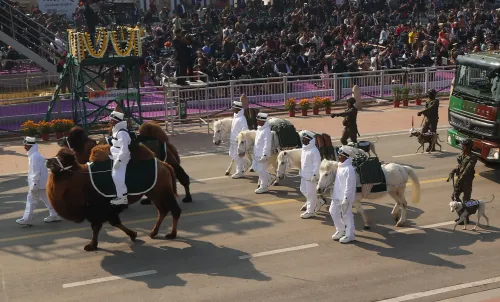
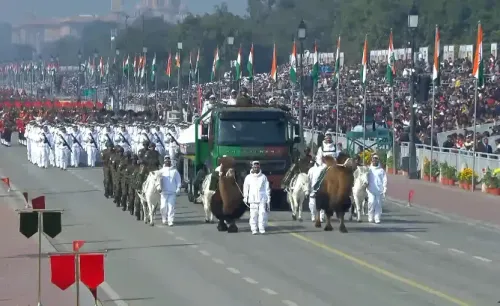
Ahmedabad, Oct 29 (NationPress) The Border Security Force’s (BSF) renowned Camel Contingent, previously recognized as the Ganga Singh Risala of the Bikaner princely state, will proudly participate in the forthcoming Ekta Parade at the Statue of Unity. Two units, totaling 52 camels transported from Jodhpur in customized vehicles, will grace the event.
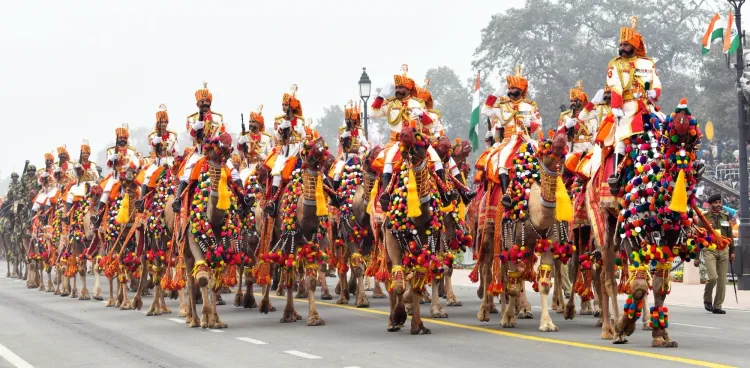
This contingent, celebrated for its majestic presence during the Republic Day parade in New Delhi, boasts a rich history that stretches back to the early 20th century.
The roots of this contingent can be traced to the Bikaner Camel Corps, a regiment initiated by Maharaja Ganga Singh of Bikaner, who modernized his military by forming a specialized unit of camel-mounted soldiers to patrol the desert borders.
Originally known as the Ganga Singh Risala, this force was later amalgamated into the Indian Army post-Independence. In 1965, with the inception of the Border Security Force, the responsibilities of the Camel Regiment were formally transferred to the BSF.
Today, the Camel Contingent symbolizes India’s desert defense and cultural legacy. It remains an integral part of the BSF, taking part in ceremonial roles during national occasions and embodying the spirit of India’s frontiers. The camels, primarily sourced from the Jaisalmer and Bikaner breeds, are meticulously selected based on criteria such as height, weight, strength, and their ability to thrive in desert environments.
While Jaisalmeri camels are celebrated for their endurance and speed, Bikaneri camels are esteemed for their strength and capacity to bear loads. Once they join the contingent, each camel is allocated a dedicated rider responsible for their training, care, and even naming. The most disciplined camels lead the formations during parades.
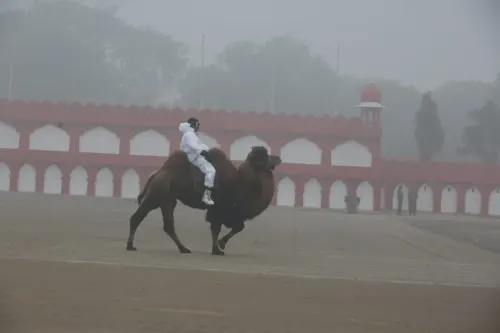
The riders, easily identifiable by their long moustaches, saffron turbans, and traditional garb, undergo extensive training to perfect their camel riding skills and parade maneuvers.
“Camel riding requires the rider’s body to synchronize with the animal’s movements. It is both an art and a discipline,” explained a BSF official.
During the mid-1980s, BSF officer K.S. Rathod significantly reinforced the Camel Contingent, establishing a dedicated training facility in Jodhpur. In 1986, the BSF also launched the Camel Band, a distinctive musical unit where performers play music while riding camels — a challenging endeavor demanding exceptional balance and coordination.
Point of View
It is essential to highlight the BSF's Camel Contingent not just as a ceremonial unit, but as a representation of India's rich military history and cultural diversity. This event at the Ekta Parade serves to honor the dedication of these riders and their camels, reflecting the spirit of unity in our nation's heritage.
NationPress
3 Oct 2026
Frequently Asked Questions
What is the BSF Camel Contingent?
The BSF Camel Contingent is a ceremonial unit of the Border Security Force, known for its majestic appearance in parades and events, symbolizing India's desert defense and cultural heritage.
How many camels are participating in the Ekta Parade?
A total of 52 camels from Jodhpur will participate in the upcoming Ekta Parade.
What breeds of camels are in the BSF Camel Contingent?
The camels in the BSF Camel Contingent are primarily sourced from the Jaisalmer and Bikaner breeds, each with unique attributes suited for desert conditions.
Who was Maharaja Ganga Singh?
Maharaja Ganga Singh was the ruler of Bikaner who established the Bikaner Camel Corps, modernizing his army with specialized camel-mounted units.
What is the Camel Band?
The Camel Band is a unique musical unit formed by the BSF, where musicians perform atop camels, showcasing exceptional balance and coordination.