CBI court convicts 30 in Punjab rice procurement scam, 14 FCI officials jailed
Synopsis
More than two decades after substandard rice was passed off as Grade-A grain at FCI centres in Punjab, a CBI court has finally delivered its verdict — 30 convictions, including 14 public officials who abused their quality-control roles. The case is a rare instance of a procurement fraud running all the way to sentencing, and a stark reminder of institutional rot in India's food supply chain.
Key Takeaways
A CBI Special Court in Mohali convicted 30 people on 14 November 2026 in the 2004-05 Punjab Rice Procurement Scam .
14 FCI officials were convicted under both the IPC and the Prevention of Corruption Act, 1988 ; 16 private rice millers were convicted under the IPC.
Sentences range from one to three years' rigorous imprisonment , with fines between ₹10,000 and ₹25,000 .
The fraud involved substandard rice being accepted as Grade-A rice at FCI centres in Malerkotla, Sunam, and Tapa , causing financial loss to the FCI.
The CBI registered the case on 7 January 2006 after surprise checks in September 2005 confirmed quality violations; chargesheets were filed on 28 November 2008 .
A CBI Special Court in Mohali, Punjab, on 14 November 2026 convicted and sentenced 30 accused persons — including 14 Food Corporation of India (FCI) officials and 16 private rice millers — in connection with the 2004-05 Punjab Rice Procurement Scam. The convicted individuals were found guilty of criminal conspiracy and cheating under the Indian Penal Code (IPC), while the FCI officials faced additional charges under the Prevention of Corruption Act, 1988.
Background of the Scam
The fraud centred on a criminal conspiracy between FCI officials and private rice millers during 2004-05, in which substandard rice was deliberately accepted as Grade-A rice at FCI procurement centres in Malerkotla, Sunam, and Tapa in Sangrur district. This arrangement led to wrongful payments to millers and caused direct financial loss to the Food Corporation of India.
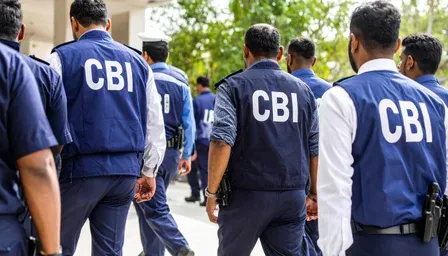
The irregularities surfaced during Joint Surprise Checks conducted by the Central Bureau of Investigation (CBI) in September 2005. Laboratory analysis of rice samples confirmed that the consignments failed to meet prescribed quality specifications. The CBI formally registered the case on 7 January 2006, and three separate chargesheets were filed on 28 November 2008 after completion of the investigation.
Sentences Handed Down in the Malerkotla Case
In the Malerkotla sub-case, the court convicted 10 accused — five FCI officials and five rice millers. FCI officials Varinder Rajput, Girdari Lal, and K.P. Singh (then Technical Assistants) and Raunaq Ali and R.N. Sharma (then Assistant Managers, Quality Control) were each sentenced to rigorous imprisonment (RI) of two years and a fine of ₹15,000.
Among the millers, Harish Kumar and Rajnish Kumar (partners of M/s Shiv Shakti Rice Agro Products) and Rakesh Goyal (partner of M/s R.K. Agro Tech) received three years' RI and a fine of ₹25,000 each. Ramesh Singla (M/s Shiv Shakti Rice Agro Products) and Narinder Kumar (M/s Satkartar Rice and Agro Mills) were sentenced to two years' RI and fined ₹20,000 each.
Sentences in the Sunam Case
The Sunam sub-case saw six convictions — three FCI officials and three millers. FCI officials R.C. Verma (then Assistant Manager, Quality Control), Som Pal Singh, and K.L. Gulati (then Technical Assistants) each drew two years' RI with a fine of ₹15,000.
Miller Kewal Krishan (partner of M/s Mahavir Rice Mills) was sentenced to one year's RI and a fine of ₹10,000, while Hari Ram and Jiwan Lal (partners of M/s K.C. Rice Mills) received two years' RI and fines of ₹20,000 each.
Significance and Wider Context
The verdict, arriving more than two decades after the original offences, underscores the protracted timelines that characterise CBI prosecutions in procurement fraud cases. Notably, this is one of several grain-procurement scams in Punjab that the CBI has pursued through the courts, reflecting systemic vulnerabilities in the government's grain-handling infrastructure. The combined sentences — ranging from one to three years' rigorous imprisonment alongside financial penalties — apply across all three sub-cases.
The ruling is likely to serve as a precedent signal in ongoing procurement-related investigations, reinforcing that quality-control gatekeepers within public food agencies can be held criminally liable for collusive acceptance of substandard grain. Further hearings in related Tapa sub-case proceedings, if any, are expected to follow.
Point of View
000-₹25,000 do not begin to address. With India's grain procurement system handling crores of rupees annually, the deterrent value of sentences this light remains questionable. The more urgent question is whether systemic reforms — independent third-party quality audits, digital grain-tracking — have been embedded since 2005, or whether the next scam is already in progress.
NationPress
14 Nov 2026
Frequently Asked Questions
What is the 2004-05 Punjab Rice Procurement Scam?
It was a criminal conspiracy between Food Corporation of India (FCI) officials and private rice millers in Punjab, in which substandard rice was falsely accepted as Grade-A rice at FCI procurement centres in Malerkotla, Sunam, and Tapa during 2004-05. The fraud resulted in wrongful payments to millers and direct financial loss to the FCI.
How many people were convicted and what sentences did they receive?
A total of 30 people were convicted — 14 FCI officials and 16 private rice millers. Sentences range from one to three years' rigorous imprisonment, with fines ranging from ₹10,000 to ₹25,000 depending on the sub-case and role of the accused.
What laws were the accused convicted under?
All 30 accused were convicted of criminal conspiracy and cheating under the Indian Penal Code (IPC). The 14 FCI officials faced additional conviction under the Prevention of Corruption Act, 1988, given their status as public servants.
How did the CBI uncover the fraud?
The CBI conducted Joint Surprise Checks in September 2005, during which rice samples from the consignments were collected and sent for laboratory analysis. The tests confirmed that the rice did not meet prescribed quality specifications, prompting the CBI to register a formal case on 7 January 2006.
Which FCI centres and districts were involved in the scam?
The scam covered FCI procurement centres in Malerkotla, Sunam, and Tapa, all located in Sangrur district of Punjab. Three separate chargesheets corresponding to each centre were filed by the CBI on 28 November 2008.