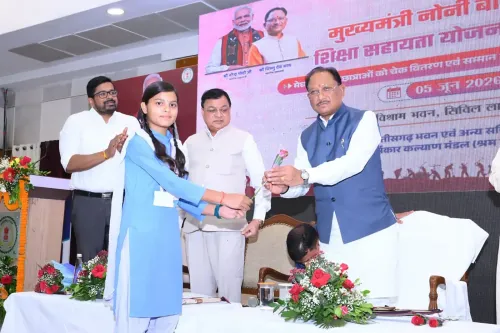
Chhattisgarh CMO hosts Noni Babu Medhavi Shiksha Sahayata Yojana programme
Synopsis
The Chhattisgarh CMO on 5 June 2026 highlighted a programme under the Mukhyamantri Noni Babu Medhavi Shiksha Sahayata Yojana, a state scheme supporting meritorious students. Formal guidelines and beneficiary details are awaited.
Key Takeaways
The Chief Minister's Office of Chhattisgarh shared coverage of a programme under the Mukhyamantri Noni Babu Medhavi Shiksha Sahayata Yojana on 5 June 2026 .
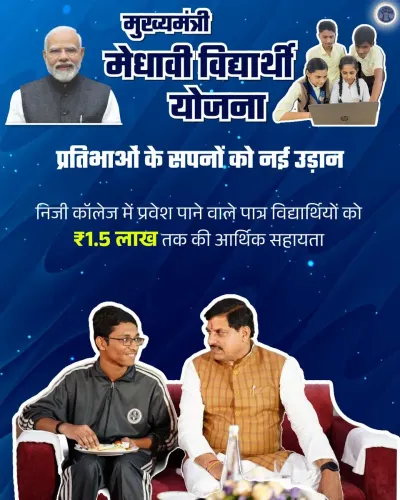
The scheme is designed to provide education assistance to meritorious students in Chhattisgarh .
The name 'Noni Babu' uses Chhattisgarhi terms of endearment for girls and boys, indicating a broad student-focused mandate.
The programme was broadcast live, reflecting the state government's use of digital outreach for welfare scheme communication.
Specific eligibility norms, funding details, and beneficiary numbers are yet to be officially released.
The Chief Minister's Office of Chhattisgarh on Friday, 5 June 2026 shared coverage of a programme under the Mukhyamantri Noni Babu Medhavi Shiksha Sahayata Yojana, a state-run education assistance scheme designed to support meritorious students across the state.
Context
The post, shared via the official Chhattisgarh CMO handle, referenced a live broadcast of the scheme's programme — signalling an active rollout or a public-facing event tied to the initiative. The scheme's name translates broadly as the 'Mukhyamantri Noni Babu Medhavi Shiksha Sahayata Yojana' (Chief Minister Noni Babu Meritorious Education Assistance Scheme), targeting students who demonstrate academic excellence but may require financial or institutional support to continue their education.
Chhattisgarh, a central Indian state with a significant tribal and rural population, has historically faced challenges in educational retention and access at secondary and higher levels. State-level schemes of this nature are positioned as direct interventions to bridge those gaps.
Policy Backdrop
Named education-assistance programmes are a well-established instrument of welfare governance across Indian states. They typically combine merit-based eligibility with financial support — covering tuition, stipends, or hostel costs — to keep students, particularly from economically weaker sections, enrolled through critical academic transitions.
In states like Chhattisgarh, where a substantial share of the student population belongs to Scheduled Tribes and Other Backward Classes, such schemes also serve as equity tools. The state government has previously introduced multiple education-linked welfare programmes targeting girls, tribal youth, and first-generation learners.
The naming convention 'Noni Babu' — colloquial terms of endearment for girls and boys respectively in Chhattisgarhi dialect — signals that the scheme is likely aimed at a broad cross-section of young students rather than a single demographic.
Stakeholders and Impact
The primary beneficiaries of the Mukhyamantri Noni Babu Medhavi Shiksha Sahayata Yojana are meritorious students across Chhattisgarh, with particular relevance for those in rural and semi-urban areas where access to quality education and financial resources remains uneven. Parents, school administrators, and district education officers are secondary stakeholders who would be involved in identifying and enrolling eligible students.
Schemes of this type, when implemented effectively, have been shown to improve examination participation rates and reduce dropout figures at the secondary level — outcomes that align with national education targets under frameworks such as the National Education Policy.
What's Next
The government is expected to release formal scheme guidelines, eligibility criteria, and budget allocations through official state orders or announcements in the Chhattisgarh legislative assembly. Observers will watch for details on the annual outlay, the number of intended beneficiaries, and the application process for the current academic year.
The live-broadcast format used to publicise the programme suggests the administration is prioritising direct public outreach — a pattern consistent with how state governments have increasingly used digital platforms to communicate welfare scheme launches to citizens across remote districts.
Point of View
Vernacular-branded schemes to signal welfare intent ahead of formal policy rollout. The choice of the culturally resonant 'Noni Babu' framing — evoking affection for children — is a deliberate communication strategy aimed at building grassroots identification with the scheme. For a state with significant tribal and rural student populations, education-linked financial assistance schemes are politically salient and developmentally consequential. The real test will be in the published guidelines: whether eligibility is broad enough to reach first-generation learners, and whether the budget allocation matches the ambition of the programme's name.
NationPress
21 Oct 2026
Frequently Asked Questions
What is the Mukhyamantri Noni Babu Medhavi Shiksha Sahayata Yojana?
It is a state government education assistance scheme in Chhattisgarh aimed at supporting meritorious students, combining merit criteria with financial or institutional help to improve access and retention in education.
Who are the beneficiaries of the Noni Babu Shiksha Sahayata Yojana?
The scheme targets meritorious students across Chhattisgarh, with the 'Noni Babu' naming suggesting it is designed for both girls and boys from the state's student population.
When was the Noni Babu Yojana programme announced?
The Chief Minister's Office of Chhattisgarh shared coverage of the scheme's programme on 5 June 2026 via a live broadcast on the official CMO social media handle.
What documents or eligibility criteria are needed for the Noni Babu Yojana?
Formal eligibility norms and required documentation have not yet been officially published; the state government is expected to release these details through official orders or assembly announcements.
How does Chhattisgarh's education scheme compare to similar state programmes in India?
Named merit-cum-financial-assistance schemes are common across Indian states and typically target students from economically weaker sections, Scheduled Tribes, and rural areas to reduce dropout rates and improve examination outcomes.