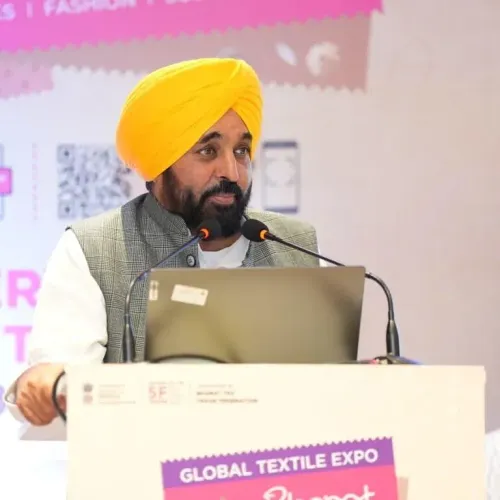
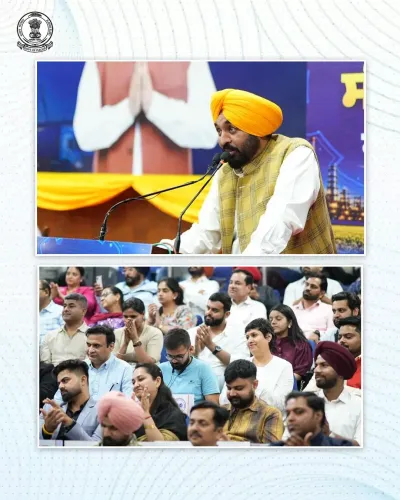
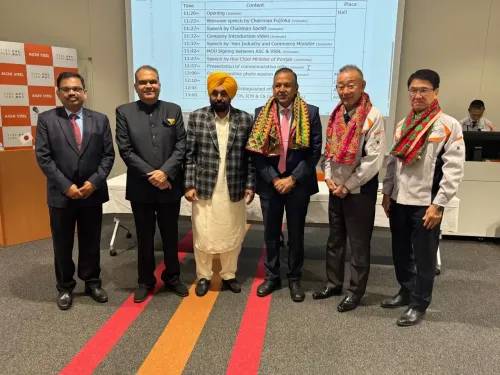
CM Bhagwant Mann Lays Foundation for Rs 1,100 Cr Vardhman-Aichi Steel Plant
Synopsis
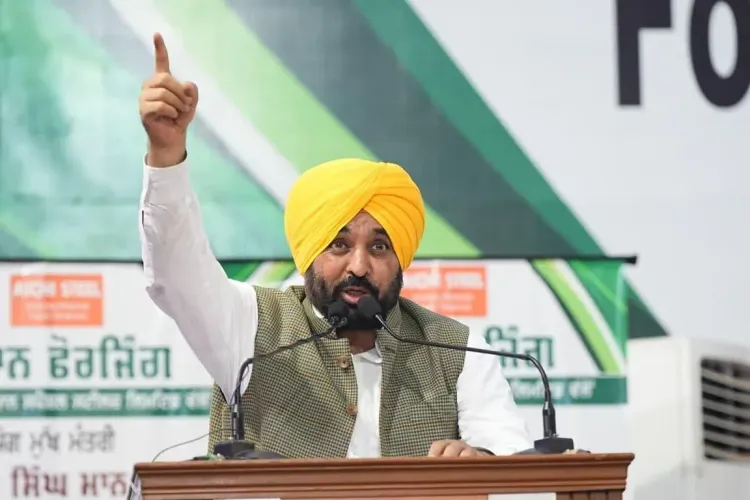
Punjab CM Bhagwant Mann laid the foundation stone of a Rs 1,100 crore joint venture between Vardhman Group and Japan's Aichi Steel on 27 July 2026. The project — India's first of its kind — scaled up from an initial Rs 500 crore commitment and is projected to create over 2,000 jobs, with Mann crediting the state's Single Window policy.
Key Takeaways
Punjab CM Bhagwant Mann laid the foundation stone of the Vardhman Group–Aichi Steel joint venture on 27 July 2026 .
The project is valued at Rs 1,100 crore , more than double the original commitment of Rs 500 crore .
The plant is described as India's first of its kind in this segment of specialty steel manufacturing.
The project is expected to generate employment for more than 2,000 young people in Punjab.
Mann attributed the investment scale-up to Punjab's Single Window clearance policy introduced after the 2022 AAP election win.
Aichi Steel Corporation is a Japanese specialty steel manufacturer with automotive supply chain linkages, reflecting growing Japan-India manufacturing ties.
Punjab Chief Minister Bhagwant Mann on Monday, 27 July 2026, laid the foundation stone of a joint venture between Vardhman Group and Japan's Aichi Steel Corporation, a project valued at Rs 1,100 crore that the government says will be India's first plant of its kind. The investment marks a significant scale-up from the company's initial commitment, with Mann attributing the expansion to Punjab's improving industrial environment.
Context
Posting in Punjabi on X, CM Mann announced: 'Aaj Vardhman Group ate Japan di Aichi Steel de 1100 crore de sanjhe project da neenv pathar rakhiya' ('Today, the foundation stone of the Rs 1,100 crore joint project of Vardhman Group and Japan's Aichi Steel was laid'). He noted that the company had originally planned an investment of Rs 500 crore but raised it to Rs 1,100 crore — a more than double increase — citing Punjab's 'excellent industrial environment.' The plant is described as the first of its kind in India.
Mann added that the project would generate employment for more than 2,000 young people, framing it as a direct outcome of the state's investor-friendly policies. He credited the government's Single Window clearance policy for bringing industrialists back to Punjab, calling it the 'true picture of our Rangla Punjab' — a phrase evoking a vibrant, prosperous Punjab.
Policy Backdrop
The Aam Aadmi Party government, which came to power in Punjab after the 2022 state elections, introduced a suite of ease-of-doing-business reforms, with the Single Window portal as a centrepiece. The mechanism is designed to consolidate industrial approvals and reduce bureaucratic delays that have historically deterred investment in the state.
Vardhman Group is a major Indian conglomerate with established operations in textiles and steel manufacturing. Its partner, Aichi Steel Corporation, is a Japanese specialty steel maker with deep ties to the automotive supply chain. The combination signals a cross-sector and cross-border manufacturing push within Punjab, a state that has sought to diversify its economic base beyond agriculture.
Stakeholders and Impact
The most immediate beneficiaries, according to the state government, are Punjab's youth, with over 2,000 direct employment opportunities projected from the plant. Industrial clusters in and around Ludhiana — Punjab's traditional manufacturing hub — have historically anchored the state's secondary sector, and projects of this scale are expected to reinforce that base.
For Japan, the investment fits within a broader pattern of Japanese capital flowing into Indian manufacturing as global supply chains diversify. India has actively courted Japanese firms in the steel, automotive components, and advanced manufacturing segments, and a project anchored by Aichi Steel adds to that bilateral momentum.
The investment increase — from Rs 500 crore to Rs 1,100 crore — is being positioned by the Punjab government as a vote of confidence in the state's regulatory and business environment, a message aimed as much at future investors as at the current one.
What's Next
The foundation stone laying marks the beginning of the project's construction and approval cycle. Observers will track whether the Rs 1,100 crore investment is disbursed on schedule, when the plant becomes operational, and whether the promised 2,000-plus jobs materialise within the projected timeline. The Punjab government's ability to deliver on these milestones will be a key test of its industrial policy credibility ahead of future investor summits.
As states across India intensify competition to attract foreign and domestic capital, Punjab's ability to convert foundation-stone ceremonies into operational plants and verified employment numbers will determine whether the Rangla Punjab narrative translates into durable economic gains.
Point of View
100 crore, if it holds, would be a substantive data point in that argument. However, the gap between foundation-stone ceremonies and operational plants with verified employment has been a recurring credibility challenge for state governments across India, and Punjab is not exempt from that scrutiny. The project's real political and economic weight will be assessed when construction timelines, disbursement records, and job creation figures become public.
NationPress
27 Jul 2026
Frequently Asked Questions
What is the Vardhman-Aichi Steel project in Punjab?
It is a joint venture between India's Vardhman Group and Japan's Aichi Steel Corporation, with a combined investment of Rs 1,100 crore. Punjab CM Bhagwant Mann laid its foundation stone on 27 July 2026, describing it as India's first plant of its kind in this segment.
How many jobs will the Vardhman-Aichi Steel plant create in Punjab?
The Punjab government has projected that the plant will create employment for more than 2,000 young people, though these are projected figures tied to the project becoming operational.
Why did Aichi Steel increase its Punjab investment from Rs 500 crore to Rs 1,100 crore?
CM Bhagwant Mann stated that Aichi Steel raised its commitment from Rs 500 crore to Rs 1,100 crore after assessing Punjab's industrial environment, which the government credits to its Single Window clearance policy and broader ease-of-doing-business reforms.
What is Punjab's Single Window policy?
Punjab's Single Window policy is a clearance mechanism introduced by the AAP government after its 2022 election win. It consolidates industrial approvals into a single portal to reduce bureaucratic delays and attract investors to the state.
Who is Aichi Steel and why is it investing in Punjab?
Aichi Steel Corporation is a Japanese specialty steel manufacturer closely linked to the automotive supply chain. Its investment in Punjab aligns with India's broader push to attract Japanese manufacturing capital as global supply chains diversify away from single-country dependence.