CM Bhagwant Mann pays tribute at Hussainiwala on Independence Day
Synopsis
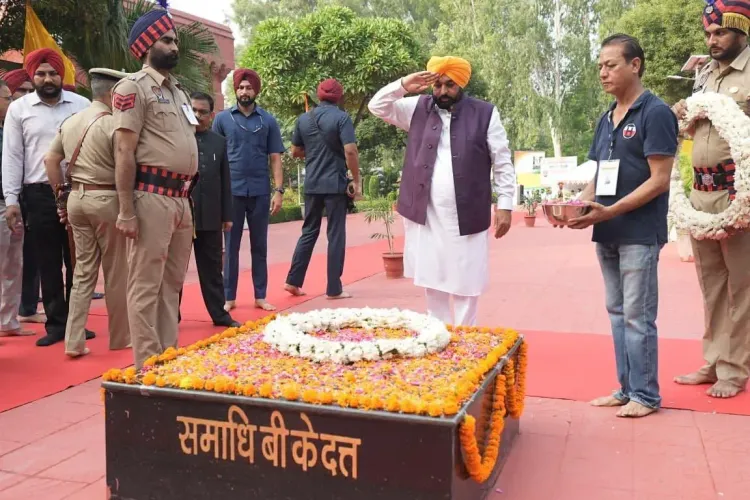
On Independence Day 2026, Punjab Chief Minister Bhagwant Mann visited the Shaheed Bhagat Singh Memorial at Hussainiwala in Firozpur, paying tribute to freedom martyrs and renewing his government's pledge to build a prosperous 'Rangla Punjab' in their honour.
Key Takeaways
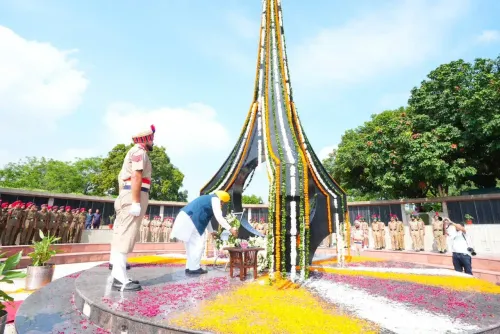
Punjab CM Bhagwant Mann visited the Shaheed Bhagat Singh Memorial at Hussainiwala, Firozpur on 15 August 2026 .
Hussainiwala is the site where Bhagat Singh, Rajguru, and Sukhdev were cremated after their execution by British authorities in 1931 .
Mann invoked Shaheed-e-Azam Bhagat Singh's vision and pledged to build the prosperous 'Rangla Punjab' the martyrs dreamed of.
The Hussainiwala tribute visit has been an Independence Day tradition for Punjab Chief Ministers since the 1950s .
Mann closed his post with the revolutionary slogan Inquilab Zindabad , linking the AAP government's agenda to the freedom movement's egalitarian ideals.
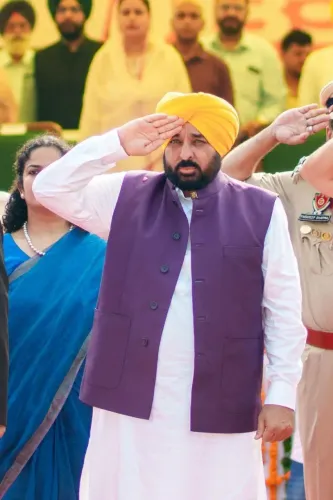
At the crack of Independence Day morning, Punjab Chief Minister Bhagwant Mann stood at the Shaheed Bhagat Singh Memorial in Hussainiwala, Firozpur — the very ground where the ashes of Bhagat Singh, Rajguru, and Sukhdev were scattered after their execution in 1931 — and paid solemn tribute to India's freedom martyrs.
Posting in Punjabi on 15 August 2026, Mann wrote: 'Shaheed-e-Azam Bhagat Singh ji ate hor mahan shaheeda di soch te pahra dindian' — 'Standing guard over the ideals of Shaheed-e-Azam Bhagat Singh and other great martyrs.' He pledged that his government remains committed to building the prosperous 'Rangla Punjab' — a vibrant, colourful Punjab — that those martyrs dreamed of, closing with the revolutionary salute: Inquilab Zindabad.
Why Hussainiwala carries a weight no other memorial does
Hussainiwala is a border village in Firozpur district, metres from the Pakistan frontier, and its memorial is among the most charged sites in Punjab's historical memory. Bhagat Singh, Sukhdev, and Rajguru were hanged by British colonial authorities on 23 March 1931 and cremated here under cover of night. The site has since become a pilgrimage for those who see their sacrifice as the moral spine of Indian independence.
Punjab Chief Ministers across party lines have made the Hussainiwala visit a fixture of every Independence Day since the 1950s — a ritual that transcends political affiliation and roots state leadership in the revolutionary tradition of the region.
Bhagat Singh's legacy and the 'Rangla Punjab' promise
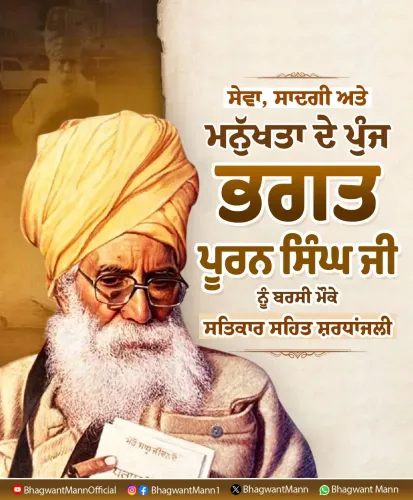
By invoking Bhagat Singh's soch — his vision — Mann is drawing a deliberate line from the revolutionary's egalitarian ideals to the AAP government's development agenda. The phrase 'Rangla Punjab' has been a recurring motif for the Mann administration, used to frame welfare and infrastructure initiatives as the fulfilment of a martyr's unfinished dream.
The choice of Hussainiwala over Chandigarh for the morning's first public act signals where the government wants to plant its Independence Day flag: at the border, at the memorial, in the soil of sacrifice.
As long as that soil remains a place of pilgrimage, the question every Punjab government must answer on 15 August is not just what it has built — but whether it has been worthy of what was given up here.
Point of View
Anti-colonial tradition of Bhagat Singh rather than in mainstream Congress or BJP nationalist imagery. The 'Rangla Punjab' framing is a recurring rhetorical device that converts historical sacrifice into a mandate for present-day governance. For a party that came to power in Punjab in 2022 on a wave of anti-incumbency, anchoring itself to an unimpeachable martyr is a way of claiming moral authority that transcends ordinary electoral politics. The ritual also has a border dimension: standing at Hussainiwala, metres from Pakistan, carries an implicit statement about Punjab's identity as a frontier state with a unique, blood-soaked relationship to nationhood.
NationPress
15 Aug 2026
Frequently Asked Questions
Where is the Hussainiwala memorial and why is it significant?
The Hussainiwala National Martyrs Memorial is located in Firozpur district, Punjab , on the India-Pakistan border. It marks the site where Bhagat Singh, Rajguru, and Sukhdev were cremated by British authorities after their execution on 23 March 1931 , making it one of the most revered freedom-movement sites in India.
Why did Bhagwant Mann visit Hussainiwala on Independence Day?
Punjab CM Bhagwant Mann visited the Hussainiwala Shaheed memorial on 15 August 2026 to pay tribute to India's freedom martyrs, continuing a tradition that Punjab Chief Ministers from various parties have maintained since the 1950s.
What is 'Rangla Punjab' that Bhagwant Mann refers to?
'Rangla Punjab' — meaning a vibrant, prosperous Punjab — is a phrase the Bhagwant Mann government uses to describe its development vision, framing welfare and infrastructure work as the fulfilment of the ideals for which freedom fighters like Bhagat Singh sacrificed their lives.
Who was Shaheed-e-Azam Bhagat Singh?
Bhagat Singh , titled Shaheed-e-Azam (Greatest of Martyrs), was a revolutionary freedom fighter from Punjab who was executed by British colonial authorities on 23 March 1931 at age 23. He remains one of the most widely revered figures in Indian, and especially Punjabi, historical memory.
What does 'Inquilab Zindabad' mean?
Inquilab Zindabad is an Urdu phrase meaning 'Long live the revolution.' It was a rallying cry of Bhagat Singh and his comrades during the independence movement and remains a powerful political salutation in Punjab and across India.