CM Bhajan Lal Hails Historic Rajasthan-Haryana Yamuna Water Pact
Synopsis
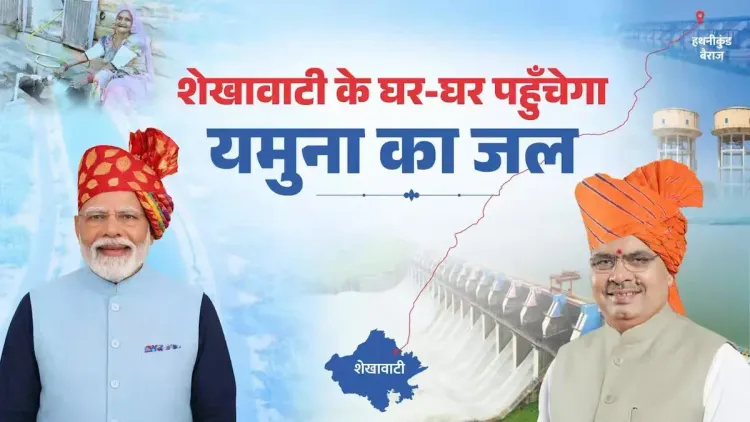
Rajasthan Chief Minister Bhajan Lal Sharma on 1 July 2026 welcomed a landmark Yamuna water-sharing agreement with Haryana, saying the deal ends decades of water deprivation in the arid Shekhawati region covering Sikar, Jhunjhunu and Churu districts.
Key Takeaways
Rajasthan and Haryana have signed a water-sharing agreement on Yamuna river waters, described by CM Bhajan Lal Sharma as historic.
The deal is expected to bring Yamuna water to the Shekhawati region — covering Sikar , Jhunjhunu , and Churu — which has faced chronic water scarcity for decades.
Prime Minister Narendra Modi , Home Minister Amit Shah , and Jal Shakti Minister C.R.
Patil were credited by CM Sharma for facilitating the agreement.
The Upper Yamuna River Board , established under a 1994 MoU, provides the existing legal framework for Yamuna water allocation among five states including Rajasthan.
Next steps include gazette notification of water shares, tendering of conveyance infrastructure, and state budget provisions for Shekhawati distribution networks.
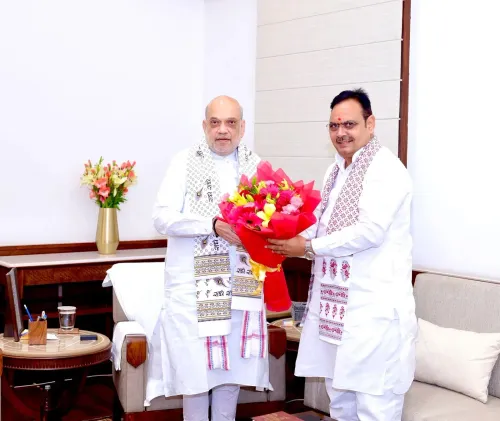
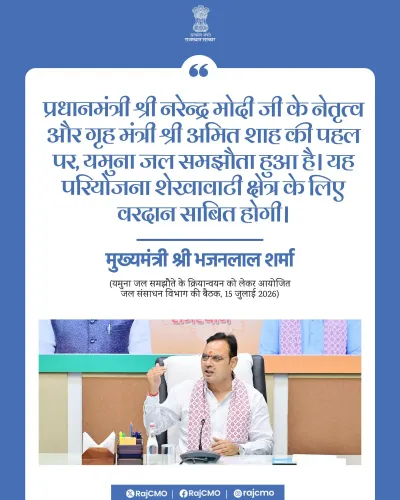
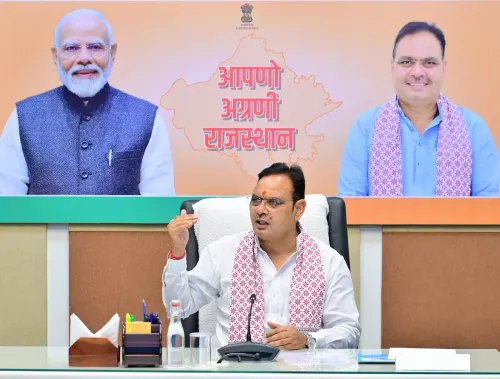
Rajasthan Chief Minister Bhajan Lal Sharma on Wednesday, 1 July 2026 welcomed a landmark water-sharing agreement between Rajasthan and Haryana over Yamuna river waters, calling it the dawn of a new era for the long-parched Shekhawati region. The Chief Minister credited Prime Minister Narendra Modi, Union Home Minister Amit Shah, and Union Jal Shakti Minister C.R. Patil for making the deal possible.
Context
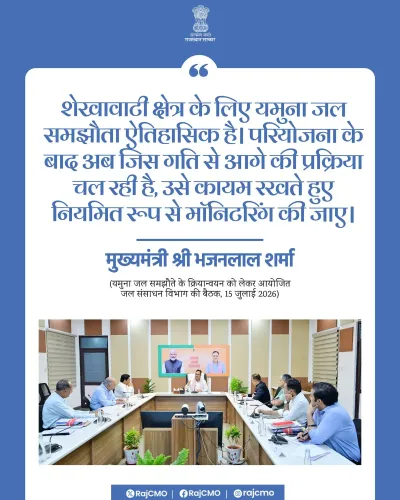
Posting in Hindi on X, CM Sharma described the agreement as historic, writing that the Shekhawati anchal (Shekhawati region), which has been 'thirsting for every drop of water for decades,' has now received a 'new lease of life.' He said Yamuna water will now 'make the fields of Shekhawati green and quench the thirst of its citizens.'
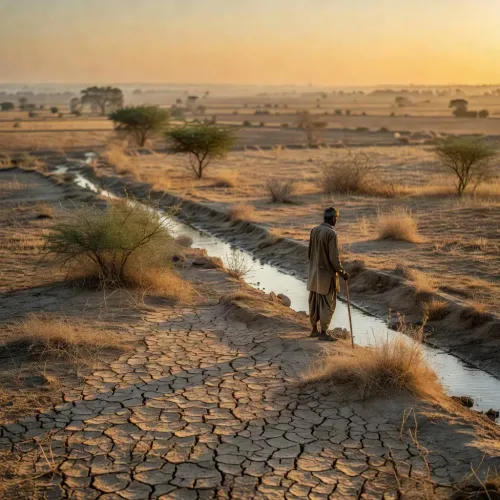
Shekhawati — covering the districts of Sikar, Jhunjhunu, and Churu in north-western Rajasthan — is one of India's most water-stressed sub-regions. Chronic groundwater depletion and negligible surface-water access have constrained both agriculture and domestic supply for generations.
Policy Backdrop
The Yamuna basin has been governed by a multi-state framework since 1994, when an MoU among Haryana, Uttar Pradesh, Rajasthan, Delhi, and Himachal Pradesh established the Upper Yamuna River Board to allocate river flows. Rajasthan's share under that framework has historically been difficult to utilise due to the absence of adequate conveyance infrastructure linking the river system to Shekhawati.
CM Sharma attributed the breakthrough to what he called the 'double engine government' — a BJP formulation describing aligned central and state administrations working in concert. The Centre's role, led by Amit Shah on inter-state coordination and C.R. Patil on water policy, was highlighted as decisive in resolving the long-pending dispute.
Stakeholders and Impact
The primary beneficiaries of the agreement are Shekhawati's farming communities and rural households, who have depended heavily on rapidly depleting groundwater for irrigation and drinking water. If the agreement translates into physical infrastructure — link canals, pipelines, or distribution networks — it could significantly alter the agricultural economy of the three districts.
The broader pattern of central facilitation of interstate river settlements has been a consistent feature of BJP-led governance at the Centre, with negotiated allocations subsequently converted into state-level infrastructure projects. The Rajasthan government will now be expected to move swiftly on tendering and executing conveyance works to deliver water to end-users.
What's Next
The agreement's full impact will depend on several downstream steps: gazette notification of precise volumetric water shares, amendments or orders under the Upper Yamuna River Board framework, and state budget allocations for distribution infrastructure in Sikar, Jhunjhunu, and Churu. Timelines for canal or pipeline construction will be closely watched by farmers and local administrations.
For Rajasthan, which faces some of India's most acute water-scarcity challenges, the successful operationalisation of this pact could serve as a template for resolving other pending inter-state water disputes and unlocking irrigation potential across the state's arid western belt.
Point of View
If operationalised, represents a significant political and administrative achievement for the BJP's 'double engine government' model — one where aligned central and state governments accelerate resolution of disputes that have stalled for decades. For CM Bhajan Lal Sharma, the announcement offers a concrete deliverable in a state where water scarcity is an acute electoral and governance concern. The central facilitation by Amit Shah — historically the BJP's primary inter-state negotiator — signals that the party views Shekhawati's water crisis as a winnable issue with visible dividends. The real test, however, will be the speed and scale of physical infrastructure delivery, which will determine whether the agreement becomes a lasting legacy or a political announcement that fails at execution.
NationPress
29 Sept 2026
Frequently Asked Questions
What is the Rajasthan-Haryana Yamuna water agreement?
It is a water-sharing agreement between Rajasthan and Haryana over Yamuna river waters, announced in July 2026, aimed at channelling Yamuna water to the arid Shekhawati region of north-western Rajasthan.
Which districts in Rajasthan will benefit from the Yamuna water deal?
The primary beneficiaries are the three districts of the Shekhawati region — Sikar , Jhunjhunu , and Churu — which have faced severe groundwater depletion and irrigation deficits for decades.
What is the Upper Yamuna River Board?
The Upper Yamuna River Board was established under a 1994 MoU among Haryana, Uttar Pradesh, Rajasthan, Delhi, and Himachal Pradesh to govern the allocation of Yamuna river flows among these states.
What role did Amit Shah and C.R. Patil play in the Yamuna water pact?
Union Home Minister Amit Shah coordinated centre-state negotiations, while Union Jal Shakti Minister C.R. Patil handled water policy dimensions; both were credited by CM Bhajan Lal Sharma as key facilitators of the deal.
What happens after the Rajasthan-Haryana Yamuna water agreement is signed?
The next steps include gazette notification of volumetric water shares, possible amendments to the Upper Yamuna River Board framework, tendering of link canals or pipelines, and state budget allocations for distribution infrastructure in Shekhawati.