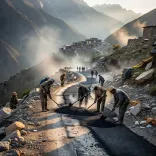
CM Bhajan Lal Marks 5 Years of PM GatiShakti in Rajasthan

Synopsis
Rajasthan CM Bhajan Lal Sharma congratulated PM Modi on PM GatiShakti's fifth anniversary, highlighting how the National Master Plan has accelerated Rajasthan's highway, logistics and multi-modal connectivity development since its October 2021 launch.
Key Takeaways
PM GatiShakti National Master Plan was launched by PM Narendra Modi on 13 October 2021 and completed five years on 13 October 2026 .
The scheme integrated planning across central ministries using a GIS-based digital platform to coordinate roads, rail, ports and utilities.
CM Bhajan Lal Sharma highlighted world-class highways, a stronger logistics network and multi-modal connectivity as key gains for Rajasthan .
GatiShakti built upon the National Infrastructure Pipeline announced in 2019 , which mapped capital expenditure for core infrastructure sectors.
State-level adoption of the central master plan has been a defining feature of the scheme's five-year run, with Rajasthan cited as an active participant.
Five years after Prime Minister Narendra Modi launched it on 13 October 2021, the PM GatiShakti National Master Plan has become the backbone of India's infrastructure ambition — and Rajasthan Chief Minister Bhajan Lal Sharma says his state is riding that momentum hard.
What PM GatiShakti set out to fix
Before October 2021, infrastructure projects across India often moved in silos — railways planned without talking to roads, ports without talking to logistics hubs. PM GatiShakti broke that wall. Built on a GIS-based digital platform, it brought over a dozen central ministries onto a single canvas, forcing coordinated planning across roads, rail, ports, airports and utilities. The scheme itself grew from the National Infrastructure Pipeline announced in 2019, which had mapped out capital expenditure targets for the country's core sectors.
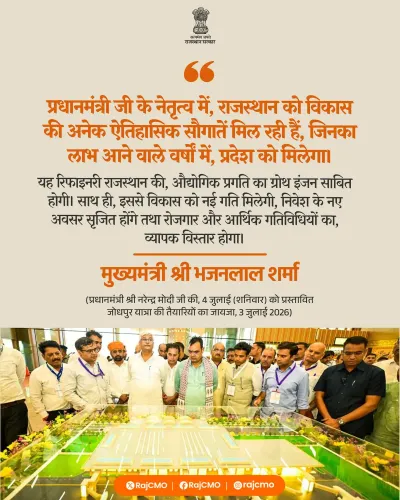
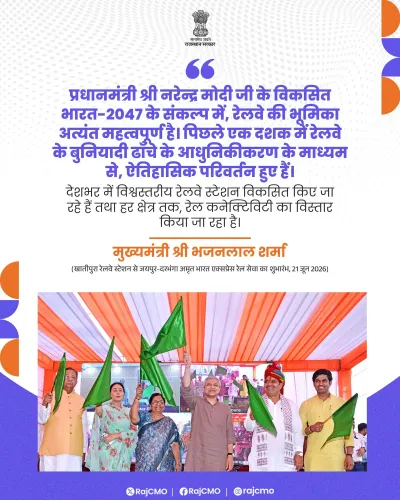
CM Sharma captured the shift in his post: 'behtar planning, samanvit drishtikon aur aadhunik connectivity' — 'better planning, a coordinated approach and modern connectivity' — had simultaneously eased travel and opened new doors for industry, trade and jobs.
Rajasthan's place on the GatiShakti map
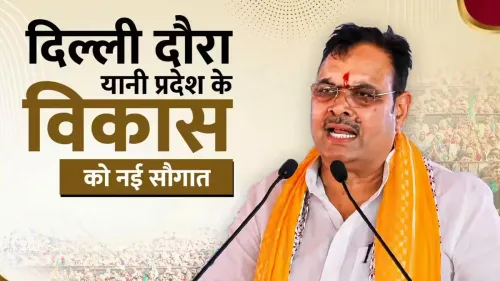
Rajasthan — India's largest state by area — has historically struggled with uneven connectivity across its vast geography. CM Sharma pointed to world-class highways, a strengthened logistics network and robust multi-modal connectivity as evidence that the state is now on what he called a 'vikas ke swarnim path' — a 'golden path of development'. The logistics sector, industries dependent on freight movement and daily highway users all stand to gain as national planning frameworks align with state-level execution.
The pattern here is deliberate: the centre has consistently encouraged states to dovetail their own infrastructure pipelines with the national master plan, turning GatiShakti from a central policy into a living federal partnership.
Five years in, the stakes for the next phase
Anniversaries are milestones, but they are also accountability moments. The five-year mark invites scrutiny of what has actually been delivered against what was planned — and what the next phase of GatiShakti looks like as India targets higher logistics efficiency and deeper economic-corridor integration. State-level progress reports and any central review of the scheme's next phase will be the real measure of whether the momentum Sharma celebrates is structural or ceremonial.
Point of View
GatiShakti offers a ready narrative bridge between New Delhi's macro ambitions and voter-facing infrastructure on the ground. The five-year mark, however, also invites harder questions: Rajasthan's specific project completion data and logistics-cost benchmarks will determine whether this is genuine developmental momentum or well-timed celebration. As the scheme eyes its next phase, states that can show measurable freight-cost reductions and corridor completions will carry far more credibility than those resting on anniversary messaging.
NationPress
13 Oct 2026
Frequently Asked Questions
What is PM GatiShakti National Master Plan?
PM GatiShakti is a national infrastructure master plan launched by Prime Minister Narendra Modi on 13 October 2021. It uses a GIS-based digital platform to integrate planning across over a dozen central ministries — covering roads, railways, ports, airports and utilities — to eliminate siloed decision-making and speed up project delivery.
When was PM GatiShakti launched and how old is it now?
PM GatiShakti was launched on 13 October 2021 , making October 2026 its fifth anniversary. CM Bhajan Lal Sharma's post marked this milestone on 13 October 2026.
How has PM GatiShakti benefited Rajasthan?
According to CM Bhajan Lal Sharma, Rajasthan has seen world-class highway development, a stronger logistics network and improved multi-modal connectivity under the GatiShakti framework, opening new opportunities for industry, trade and employment across the state.
What was the National Infrastructure Pipeline and how does it relate to GatiShakti?
The National Infrastructure Pipeline was announced in 2019 and mapped out capital expenditure targets for roads, railways and ports. PM GatiShakti, launched in 2021, built upon this foundation by adding a coordinated digital planning layer across all infrastructure ministries.
Who is Bhajan Lal Sharma?
Bhajan Lal Sharma is a BJP leader who has served as Chief Minister of Rajasthan since December 2023. He is known for aligning Rajasthan's state infrastructure agenda with central government flagship schemes including PM GatiShakti.