CM Bhajan Lal launches Har Ghar Tiranga from Jaipur's Albert Hall
Synopsis
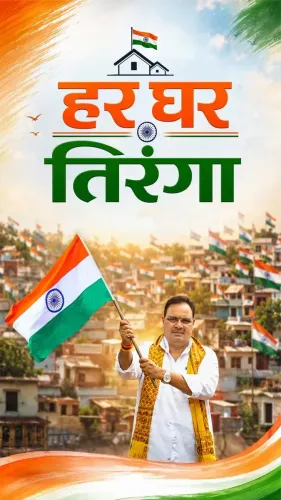
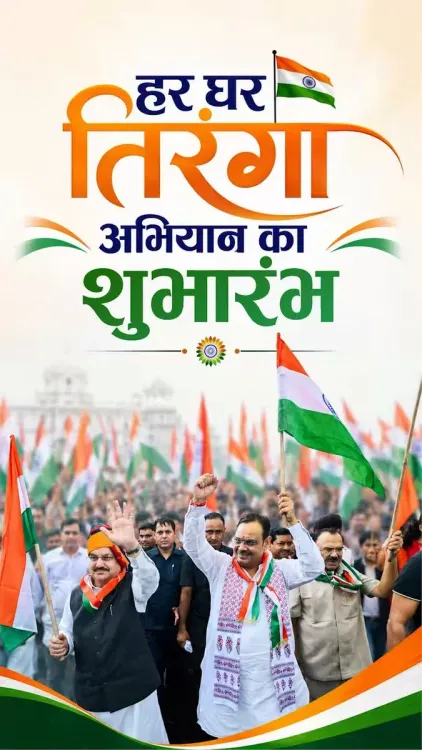
Rajasthan Chief Minister Bhajan Lal Sharma launched the 'Har Ghar Tiranga' campaign at Jaipur's historic Albert Hall on 9 August 2026, calling on citizens across the state to hoist the tricolour at homes and offices through 17 August as part of Independence Day celebrations.
Key Takeaways
CM Bhajan Lal Sharma launched the Har Ghar Tiranga campaign in Rajasthan on 9 August 2026 at Jaipur's Albert Hall .
Citizens are urged to fly the tricolour at homes, establishments, and offices from now through 17 August 2026 .
The campaign was first introduced nationally in 2022 under Azadi Ka Amrit Mahotsav to mark 75 years of Indian independence.
Albert Hall, built in 1887 , is Rajasthan's oldest public museum and a prominent Jaipur landmark.
District-level events and public outreach across Rajasthan are expected in the run-up to Independence Day on 15 August .
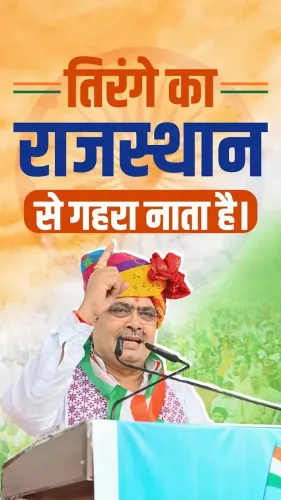
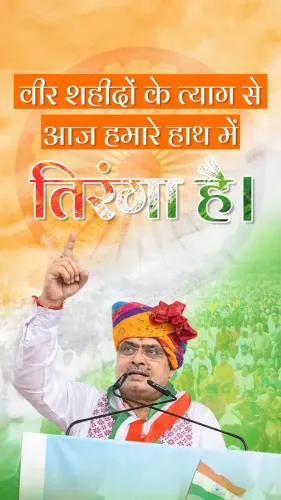
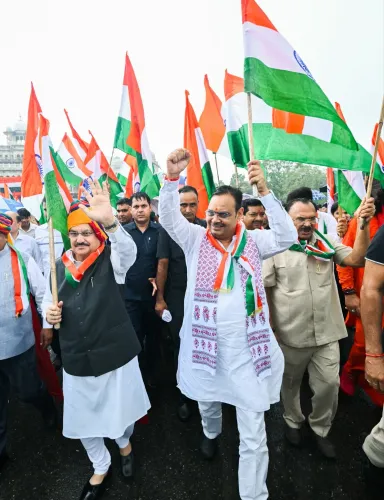
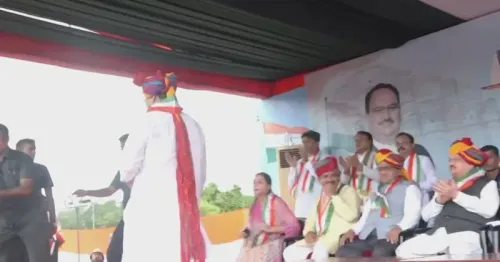
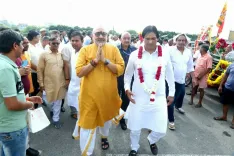
From the sandstone arches of one of Jaipur's most storied landmarks, Rajasthan Chief Minister Bhajan Lal Sharma on Sunday, 9 August 2026 flagged off the state's 'Har Ghar Tiranga' campaign — a rolling call to every household, business, and government office in Rajasthan to fly the tricolour with pride ahead of Independence Day on 15 August.
Speaking at the launch event held at the Albert Hall in Jaipur, CM Sharma urged citizens to participate in the campaign and hoist the national flag at their homes and establishments 'poore samman ke saath' — with full honour. He called on residents to make Independence Day a festival of 'rashtrabhakti, gaurav evam janabhagidari' — patriotism, pride, and public participation — and extended warm wishes to all those who attended the event.
A 19th-century hall, a 21st-century campaign
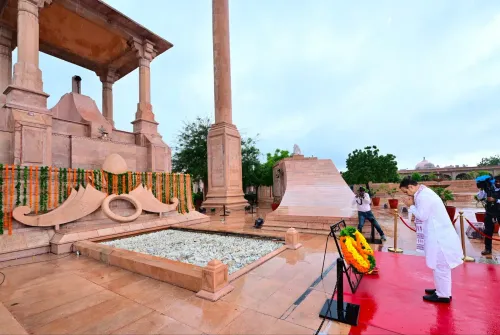
The choice of venue carries its own symbolism. Albert Hall, built in 1887 and now home to Rajasthan's state museum, is Jaipur's oldest public museum and a defining piece of the city's Indo-Saracenic skyline. Launching a mass-participation patriotic drive from its steps connects a colonial-era landmark to the independent nation's ongoing project of civic pride — a contrast that was clearly deliberate.
Har Ghar Tiranga: from national idea to Rajasthan streets
The Har Ghar Tiranga campaign was first introduced nationally in 2022 by the Government of India as a centrepiece of the Azadi Ka Amrit Mahotsav, marking 75 years of independence. The idea was straightforward but powerful: move the tricolour out of government buildings and into the hands — and homes — of ordinary citizens. It struck a chord, drawing participation across states in successive years.
Rajasthan's 2026 edition, launched by CM Sharma, extends that tradition to the state level with a coordinated event anchored in the capital. The campaign is set to run through 17 August 2026, giving citizens a window spanning the Independence Day weekend to display the flag. District-level events and public outreach across Rajasthan are expected in the days ahead.
What Rajasthan's participation looks like on the ground
State governments across India have increasingly treated the Har Ghar Tiranga window as a civic mobilisation moment — coordinating with local bodies, schools, and resident welfare associations to maximise flag displays. The metric that matters is simple and visible: how many homes and establishments actually fly the tricolour by 15 August. In a state as vast and diverse as Rajasthan, that means outreach from the lanes of the walled city in Jaipur to villages in Barmer and Dungarpur.
CM Sharma's closing appeal — 'tirangle ki aan, baan aur shaan ko har ghar tak pahunchaaen' (let the honour, dignity, and glory of the tricolour reach every home) — frames this not as a government directive but as a collective act of national feeling. Whether that sentiment translates into street-level participation will be the real story of the fortnight ahead.
Point of View
Turning a symbolic act into a measurable public-participation exercise. CM Sharma's choice of Albert Hall — a colonial-era landmark — as the launch venue reinforces a recurring BJP narrative of reclaiming and reframing inherited symbols within an independent India's identity. The campaign also serves a practical political purpose: it keeps the party visible in every district in the days immediately before Independence Day. Whether Rajasthan's 2026 edition generates meaningfully broader participation than previous years will depend on ground-level coordination beyond the capital.
NationPress
9 Aug 2026
Frequently Asked Questions
What is the Har Ghar Tiranga campaign?
Har Ghar Tiranga is a national campaign, first launched in 2022 as part of Azadi Ka Amrit Mahotsav, that encourages every Indian household and establishment to display the national tricolour during the Independence Day period to promote patriotism and civic pride.
Where was the Har Ghar Tiranga campaign launched in Rajasthan in 2026?
Rajasthan Chief Minister Bhajan Lal Sharma launched the 2026 campaign at Albert Hall in Jaipur on 9 August 2026.
How long does the Har Ghar Tiranga campaign run in Rajasthan?
The campaign runs from 9 August through 17 August 2026, covering the lead-up to and the days immediately after Independence Day on 15 August.
What is Albert Hall in Jaipur?
Albert Hall is a 19th-century Indo-Saracenic building in Jaipur, built in 1887, that now serves as Rajasthan's oldest state museum and is frequently used as a venue for major public and cultural events.
Who is Bhajan Lal Sharma?
Bhajan Lal Sharma is the Chief Minister of Rajasthan and a BJP leader who assumed office in December 2023 following the state assembly elections.