CM Bhajanlal Sharma Greets Rajasthan on Maharana Pratap Jayanti
Synopsis
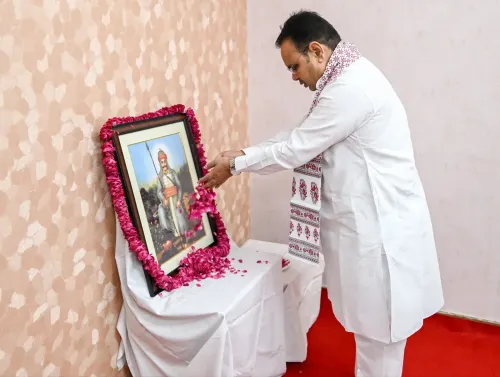
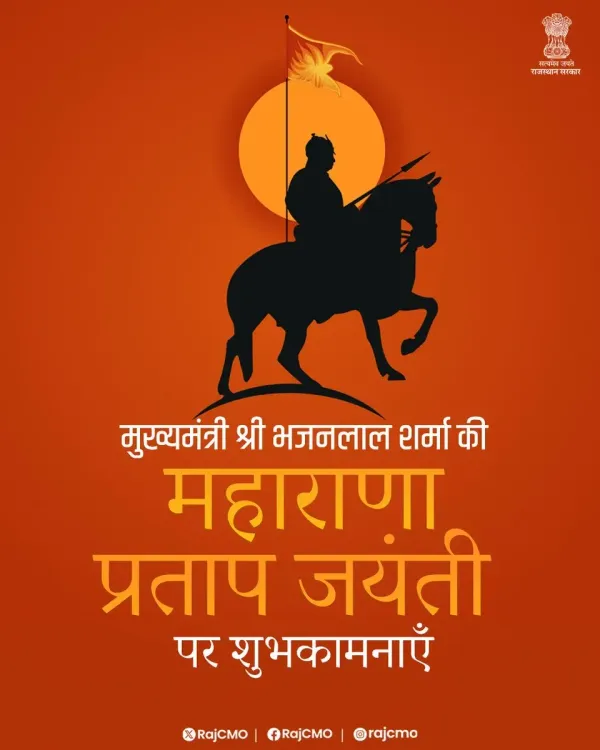
Chief Minister Bhajanlal Sharma greeted Rajasthan on Maharana Pratap Jayanti on 17 June 2026, honouring the 16th-century Mewar ruler as a supreme warrior and champion of sovereignty, and urging citizens to pledge themselves to national service and the state's progress.
Key Takeaways
CM Bhajanlal Sharma issued an official Maharana Pratap Jayanti message on 17 June 2026 via the Rajasthan Chief Minister's Office.
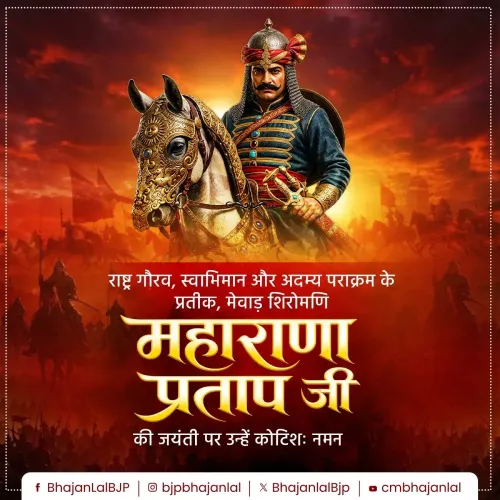
He described Maharana Pratap as a 'Veer Shiromani' — supreme warrior — who sacrificed everything for the motherland's protection and self-dignity.
The CM called on citizens to imbibe Pratap's ideals of truth, dharma, and national interest and pledge themselves to national service.
The message was tagged with #AapnoAgrani_Rajasthan , the state government's campaign positioning Rajasthan as a pioneering, forward-looking state.
The observance is part of a long-standing tradition of official Jayanti tributes by Rajasthan state governments, intensified under BJP administrations.
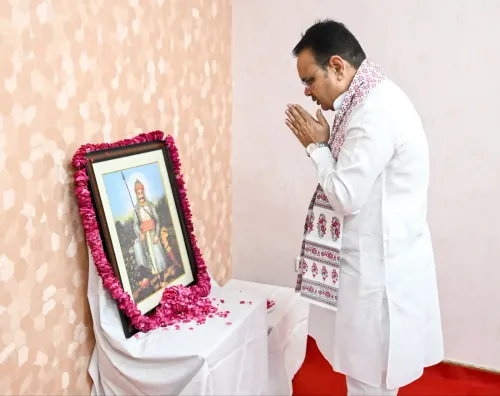
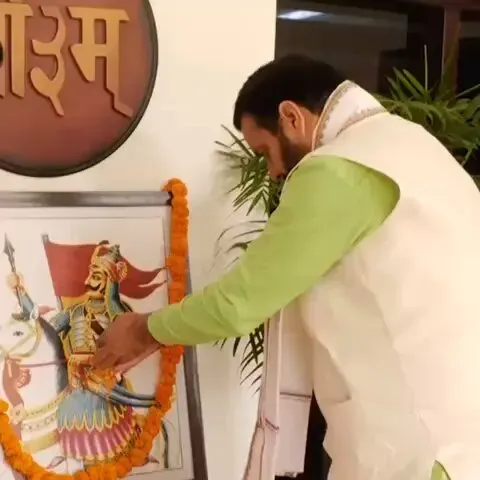
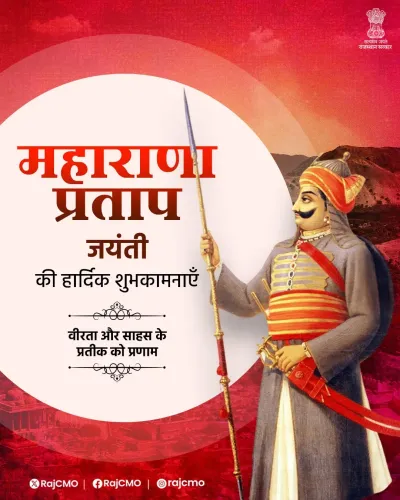
The Chief Minister's Office of Rajasthan announced on Wednesday, 17 June 2026 that Chief Minister Bhajanlal Sharma has extended warm greetings to the people of Rajasthan on the occasion of Maharana Pratap Jayanti, observed this year on Jyeshtha Shukla Tritiya (the third day of the bright fortnight of the Hindu month of Jyeshtha).
Context
In his message, CM Bhajanlal Sharma described Maharana Pratap as a 'Veer Shiromani' — a supreme warrior — who was 'a great fighter, deeply self-respecting, and a lover of freedom.' He said that Pratap 'sacrificed everything for the protection of the motherland and self-dignity, walking the path of truth, dharma, and national interest.' The Chief Minister added that 'his life teaches us to protect our sovereignty.'
Sharma called upon the people of Rajasthan to imbibe Maharana Pratap's ideals and take a pledge of service to the nation, 'so that the country and the state can touch new heights of progress.' The message was accompanied by the hashtag #AapnoAgrani_Rajasthan ('Our Pioneering Rajasthan'), a recurring tag used by the state government to project a forward-looking identity for the state.
Policy Backdrop
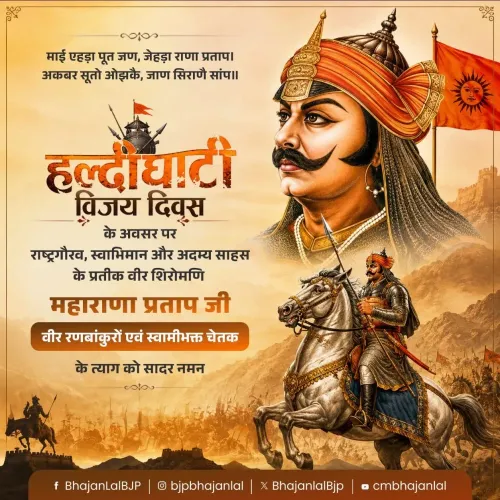
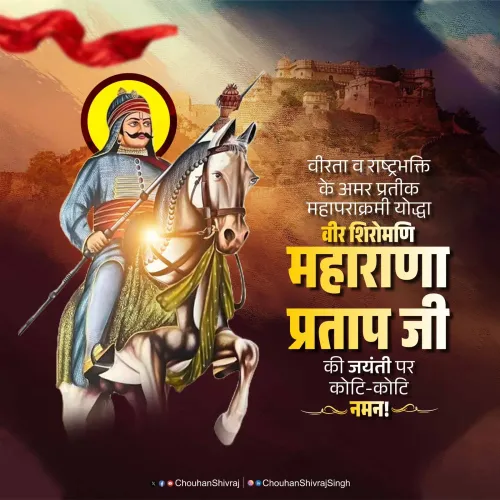
Maharana Pratap, the 16th-century Rajput ruler of Mewar, is celebrated across Rajasthan and India for his sustained resistance against Mughal expansion under Emperor Akbar. His legacy — rooted in the ideals of sovereignty, martial honour, and sacrifice — has been central to Rajasthan's regional identity for generations.
Rajasthan state governments have issued official messages on Maharana Pratap Jayanti since at least the early 2000s. Under BJP-led administrations, these messages have increasingly linked the historical narrative of resistance and dharma to contemporary calls for national service and development. This pattern is consistent with a broader trend across BJP-ruled states of foregrounding pre-colonial martial heritage in public discourse.
Stakeholders and Impact
The message is directed at the general population of Rajasthan, with a particular emphasis on the youth, who are being urged to draw inspiration from Maharana Pratap's life and channel it into national service. Cultural and educational institutions in the state that observe the Jayanti are also key stakeholders in how this message is received and amplified.
Sites associated with Maharana Pratap's legacy — including Haldighati, the site of his famous 1576 battle against the Mughals, and Chittorgarh — regularly see heightened public activity around this annual observance, drawing tourists and devotees from across the country.
What's Next
Observers will watch whether the state government moves beyond ceremonial messaging to integrate Maharana Pratap's legacy more formally into Rajasthan's education curricula or tourism development plans around heritage sites. The invocation of ideals such as sovereignty and self-respect alongside the state's development agenda — captured in the #AapnoAgrani_Rajasthan campaign — suggests the government may seek to anchor its governance narrative in this cultural heritage in the months ahead.
Point of View
Self-respect, and dharma maps neatly onto the BJP's broader project of anchoring political identity in pre-colonial martial heritage. The pairing of this historical narrative with the forward-looking #AapnoAgrani_Rajasthan tag signals an attempt to fuse cultural pride with a development mandate. Across BJP-ruled states, such jayanti messaging has grown more elaborate and policy-linked over time, making it a soft but consistent tool of political communication. Whether this translates into concrete curricular or heritage-tourism policy in Rajasthan will be the real measure of how deep the invocation runs.
NationPress
19 Sept 2026
Frequently Asked Questions
When is Maharana Pratap Jayanti celebrated in 2026?
Maharana Pratap Jayanti in 2026 falls on 17 June , corresponding to Jyeshtha Shukla Tritiya in the Hindu calendar. The Rajasthan Chief Minister's Office issued its official tribute on this date.
What did CM Bhajanlal Sharma say about Maharana Pratap?
CM Bhajanlal Sharma described Maharana Pratap as a supreme warrior, deeply self-respecting and a lover of freedom, who sacrificed everything for the protection of the motherland. He said Pratap's life teaches the value of protecting sovereignty.
Who was Maharana Pratap and why is he celebrated?
Maharana Pratap was a 16th-century Rajput ruler of Mewar in present-day Rajasthan, celebrated for resisting Mughal expansion under Emperor Akbar. He is regarded as a symbol of sovereignty, martial honour, and sacrifice in Indian history.
What is the significance of Haldighati for Maharana Pratap?
Haldighati in Rajasthan is the site of the famous 1576 battle in which Maharana Pratap fought against the Mughal army. It remains one of the most visited heritage sites associated with his legacy and sees heightened activity around his Jayanti.
What is the hashtag AapnoAgrani Rajasthan used by the Rajasthan government?
#AapnoAgrani_Rajasthan , meaning 'Our Pioneering Rajasthan,' is a recurring campaign hashtag used by the Rajasthan state government to project a forward-looking development identity for the state alongside cultural messaging.