CM Bhajanlal Sharma Walks Tilanesh Fields, Talks to Farmers
Synopsis
Chief Minister Bhajanlal Sharma spent the night in Tilanesh village, Nagaur, and walked its fields on 18 July 2026, weeding crops alongside farmers, gathering feedback on scheme delivery, and discussing health and livelihood issues with women under the Rajeevika mission.
Key Takeaways
CM Bhajanlal Sharma conducted an overnight stay at Tilanesh village , Nagaur district , on 17–18 July 2026 .
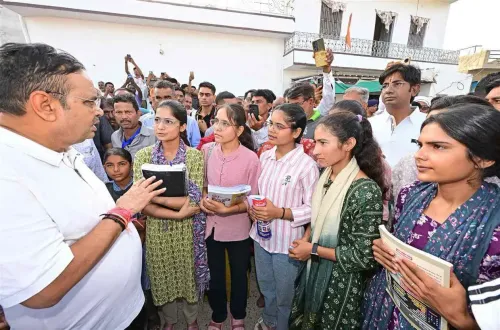
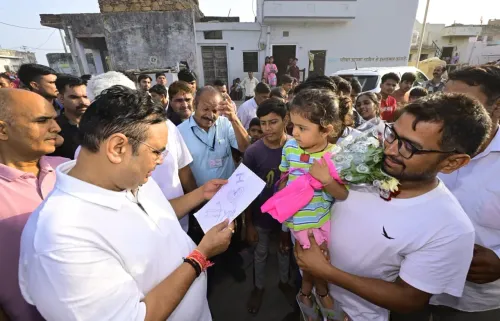
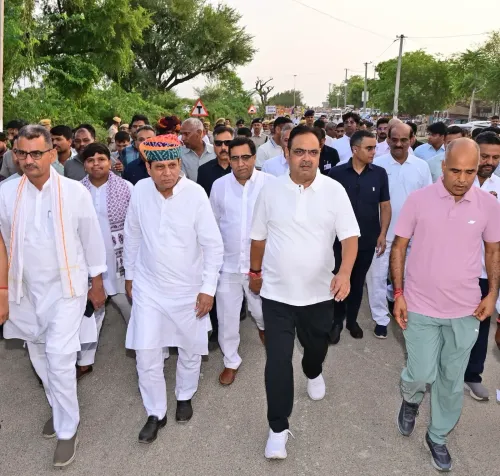
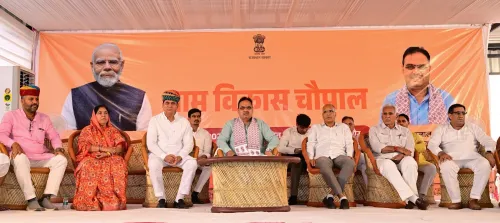
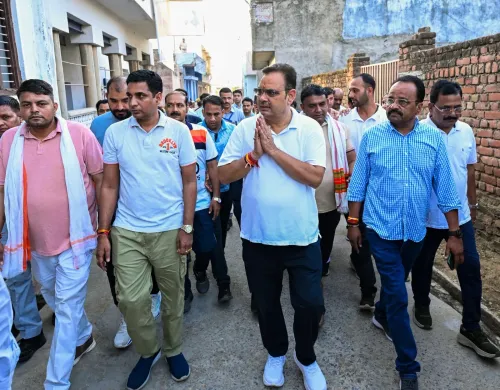
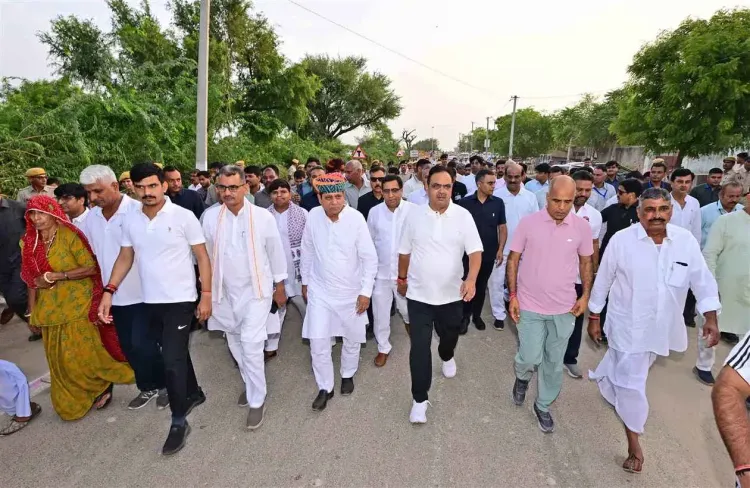
He walked village lanes, fields, and public spaces during a morning stroll and held direct conversations with residents.
Sharma personally participated in weeding and hoeing ( निराई-गुड़ाई ) alongside farmers in the fields.
He gathered feedback on crop conditions, irrigation, input costs, and the reach of state and central agricultural schemes including PM-KISAN .
Farmers were encouraged to adopt natural farming and advanced agricultural techniques.
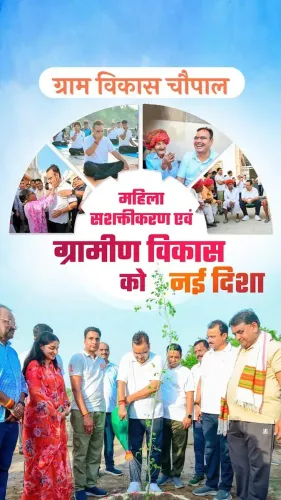
Separate discussions were held with women on health, nutrition, sanitation, and Rajeevika livelihood activities.
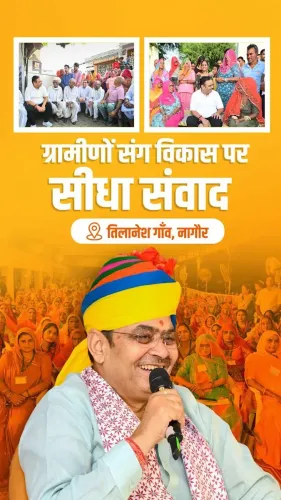
Chief Minister Bhajanlal Sharma of Rajasthan spent the morning of 18 July 2026 walking through the lanes, fields, and public spaces of Tilanesh village in Nagaur district after an overnight stay, holding candid conversations with farmers and women residents about their daily challenges and expectations from government schemes.
Context
The Chief Minister's Office shared that Sharma conducted a morning walk — prातः भ्रमण (morning stroll) — through the village after a night's rest there, a format designed to allow unscripted interaction with ordinary residents. He listened to their problems, suggestions, and expectations, the post stated, describing the exchange as सहज और आत्मीय संवाद ('easy and heartfelt conversation').
Sharma also joined farmers directly in their fields, observing standing crops and participating in निराई-गुड़ाई (weeding and hoeing) alongside them — a gesture aimed at signalling solidarity with agricultural labour.
Policy Backdrop
During the field interactions, the Chief Minister gathered first-hand information on crop conditions, yields, irrigation arrangements, input costs, and the challenges farmers face. He urged them to adopt advanced agricultural techniques and natural farming practices, and to maximise benefits from both state and central government schemes.
The PM-KISAN scheme, operational since 2019, provides direct income support to landholding farmers across India, including in Rajasthan. The BJP government that took office in Rajasthan in December 2023 has stated a priority of strengthening farmer welfare and promoting natural farming aligned with national policy goals.
Sharma also separately engaged with women residents on topics of health, nutrition, sanitation, livelihoods, and activities under Rajeevika — Rajasthan's state rural livelihood mission that supports women's self-help groups and income-generation programmes.
Stakeholders and Impact
Nagaur district in western Rajasthan is a predominantly agricultural region where small and marginal farmers form a significant share of the rural population. Irrigation access and input costs remain persistent concerns in the semi-arid zone.
Women's participation in Rajeevika-linked self-help groups has been a focus of rural economic policy in the state, and the Chief Minister's direct discussion of livelihood and nutrition issues with village women reflects that priority. Feedback collected during such visits can surface ground-level gaps in scheme delivery that administrative reports may miss.
What's Next
The Chief Minister's Office indicated that Sharma received feedback on both the implementation of schemes and their on-ground impact — information that state policy planners could factor into future budget discussions or agriculture programme adjustments. District-level outreach tours of this nature are expected to continue in the coming months as the government seeks unfiltered assessments of rural welfare delivery across Rajasthan.
Frequently Asked Questions
Why did CM Bhajanlal Sharma stay overnight in Tilanesh village?
CM Bhajanlal Sharma stayed overnight in Tilanesh village, Nagaur, to conduct a morning walk and hold direct, unscripted conversations with farmers and residents about their problems and the implementation of government schemes.
What is Tilanesh village and where is it located?
Tilanesh is a village in Nagaur district, situated in western Rajasthan — a predominantly agricultural region where farming communities depend heavily on crops and irrigation.
What is Rajeevika and how does it help women in Rajasthan?
Rajeevika is Rajasthan's state rural livelihood mission that supports women through self-help groups and income-generation activities, covering health, nutrition, sanitation, and economic participation.
What farming issues did CM Sharma discuss with Nagaur farmers?
CM Sharma discussed crop conditions, yields, irrigation arrangements, agricultural input costs, and challenges faced by farmers. He also encouraged adoption of natural farming and advanced agricultural techniques.
What is the PM-KISAN scheme relevant to Rajasthan farmers?
PM-KISAN, launched in 2019, is a central government scheme that provides direct income support to landholding farmers across India, including those in Rajasthan, to help meet agricultural expenses.