CM Bhupendra Patel Lights Diwali With Gujarat's 'Pragati na Panchamrut'
Synopsis
On Diwali 2026, Gujarat's Chief Minister's Office links the festival to CM Bhupendra Patel's 'Pragati na Panchamrut' framework and PM Modi's Atmanirbhar Bharat and Viksit Bharat visions, urging citizens to embrace Swadeshi and collective prosperity.
Key Takeaways
Gujarat's CMO shared a Diwali 2026 message on 8 November 2026 in Gujarati, anchoring the festival in development themes.
CM Bhupendra Patel's governance is framed through the 'Pragati na Panchamrut' — a five-pronged state development approach.
The post explicitly invokes PM Narendra Modi's Atmanirbhar Bharat (launched May 2020 ) and Viksit Bharat ( 2047 target) visions.
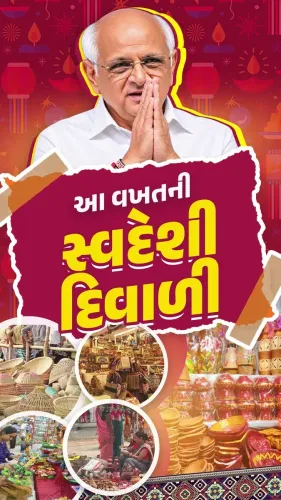
Citizens are urged to celebrate Diwali through acceptance of Swadeshi , self-reliance, and collective solidarity.
The messaging reflects a broader BJP communication pattern of linking cultural festivals to national economic goals.
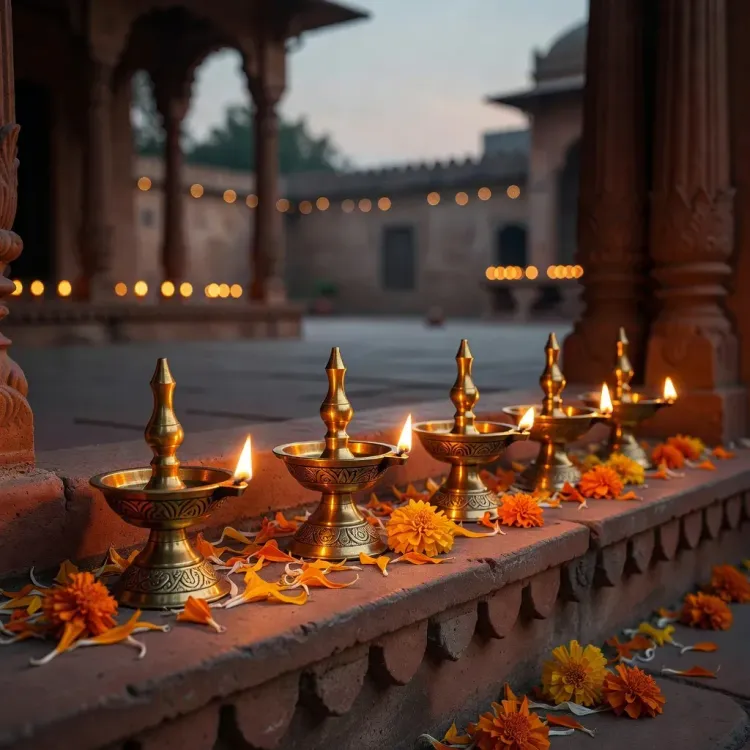
As the lamps of Diwali are lit across Gujarat on 8 November 2026, the Chief Minister's Office of Gujarat has framed the festival not merely as celebration but as a collective resolve — invoking the twin national visions of Atmanirbhar Bharat and Viksit Bharat and urging citizens to make prosperity through self-reliance the true spirit of the season.
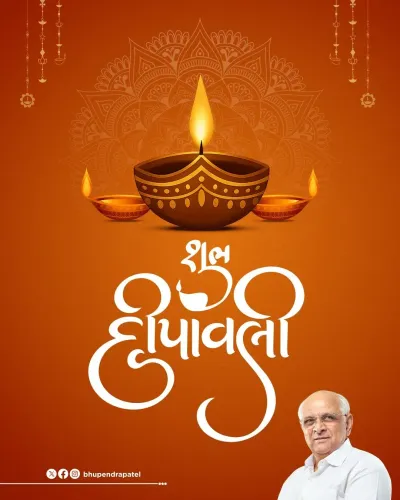
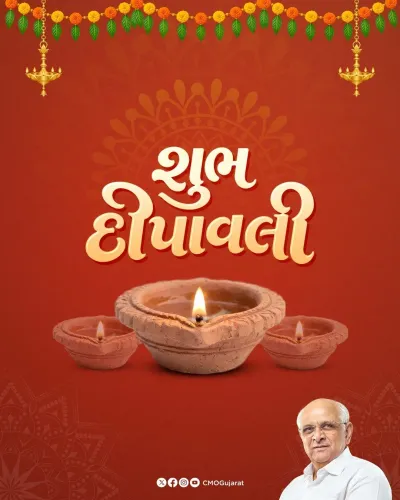
The post, shared in Gujarati, extends 'Shubh Deepavali' (Happy Diwali) greetings while tying the festival's symbolism directly to governance. It reads: 'Under the leadership of Chief Minister Shri Bhupendrabhai Patel, Gujarat has lit the lamp of development and public welfare through the 'Pragati na Panchamrut' approach, with the resolve to realise the vision of Atmanirbhar and Viksit Bharat of Honourable Prime Minister Shri Narendra Modi. Let us make the great festival of Diwali a celebration of prosperity through the acceptance of Swadeshi, the resolve of self-reliance, and the solidarity of all.'
What Is 'Pragati na Panchamrut'?
Gujarat's governance messaging has increasingly centred on the 'Pragati na Panchamrut' — a five-pronged framework for state development and public welfare, mirroring the broader national idiom of Panchamrut targets used by Prime Minister Modi at the national level. While the exact five components of the state-specific framework have not been officially codified in public records, the term signals Gujarat's attempt to build a local architecture of goals nested within the central government's macro ambitions.
Swadeshi Spirit Woven Into the Festival
Diwali, traditionally the festival of lights and new beginnings, has become a recurring occasion for BJP-led governments — both at the Centre and in states — to reinforce the economic message of buying local and reducing import dependence. Atmanirbhar Bharat, launched by PM Modi in May 2020, was designed to promote domestic manufacturing and cut reliance on foreign goods. The Viksit Bharat vision extends that horizon to 2047, India's centenary of independence, targeting a fully developed economy by then.
By anchoring Diwali greetings in the language of Swadeshi and collective solidarity, Gujarat's official messaging turns a cultural moment into a policy nudge — asking citizens to channel festive spending toward homegrown goods and enterprises. It is a soft but deliberate alignment of calendar and governance calendar.
Gujarat as a Development Flagship
Gujarat, long positioned as India's industrial and investment bellwether, has used successive administrations to pitch itself as the proof-of-concept for the Centre's self-reliance agenda. Under CM Bhupendra Patel, the state has continued to push initiatives in manufacturing, ease of doing business, and social welfare — a continuity narrative the CMO's Diwali message reinforces explicitly.
The convergence of a beloved national festival with a development mandate reflects a well-established BJP communication strategy: weaving cultural identity, economic aspiration, and state-citizen solidarity into a single, emotionally resonant message. On Diwali, every lamp lit is also, in this framing, a lamp lit for Viksit Bharat.
Point of View
Watch whether this rhetorical alignment is backed by measurable scheme rollouts and industrial announcements that flesh out the five-pronged pledge.
NationPress
8 Nov 2026
Frequently Asked Questions
What is 'Pragati na Panchamrut' in Gujarat?
'Pragati na Panchamrut' is Gujarat's five-pronged development and public welfare framework championed under CM Bhupendra Patel, designed to align state governance with PM Modi's Atmanirbhar Bharat and Viksit Bharat visions. The exact five components have not been officially codified in public records.
What did Gujarat's CMO post on Diwali 2026?
The Chief Minister's Office of Gujarat posted Diwali greetings on 8 November 2026, urging citizens to embrace Swadeshi, self-reliance, and collective solidarity, while highlighting Gujarat's development progress under the 'Pragati na Panchamrut' approach.
What is Atmanirbhar Bharat and how does it relate to Gujarat?
Atmanirbhar Bharat is PM Modi's national self-reliance initiative launched in May 2020 to promote domestic manufacturing and reduce import dependence. Gujarat, as a major industrial state, frames its own development programmes as a direct contribution to this vision.
What is the Viksit Bharat vision?
Viksit Bharat is PM Modi's long-term goal of making India a fully developed nation by 2047, coinciding with the centenary of India's independence. Gujarat's governance messaging explicitly ties state-level progress to this 2047 development target.
Why do BJP governments link Diwali to Swadeshi messaging?
BJP-led governments at both the Centre and state levels have consistently used major Hindu festivals as platforms to reinforce economic messages around Swadeshi — buying local Indian products — as a way to popularise Atmanirbhar Bharat goals through cultural resonance.