CM Bhupendra Patel Visits Ancient Babadeva Shrine in Dahod Forest
Synopsis
Gujarat CM Bhupendra Patel kicked off day two of his Dahod district tour with devotional prayers at the ancient Babadeva tribal shrine in Ratanmahal forest, then visited Sakhi Mandal stalls showcasing natural farming produce, herbal soaps, palm-leaf crafts, and traditional bow-and-arrow items.
Key Takeaways
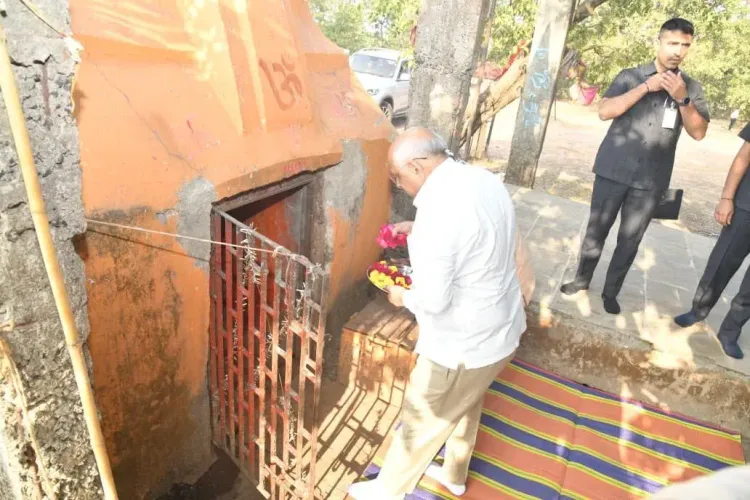
CM Bhupendra Patel visited the ancient Babadeva shrine at Bhuvero village , Dhanpur taluka, Dahod , on 19 November 2026 .
He prayed for Gujarat's welfare and prosperity at a site described as a symbol of Adivasi faith and tradition.
He held an open dialogue with villagers, listening to local issues directly.
Sakhi Mandal women's self-help groups displayed natural-farming produce, palm-leaf handicrafts, herbal soaps , and traditional bow-and-arrow crafts .
Patel publicly praised the women's self-reliance and skills at the stalls.
Dahod is one of Gujarat's most tribal-dominated districts and a regular focus of state-level outreach programmes.
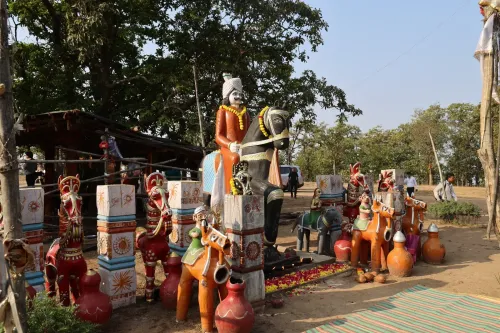
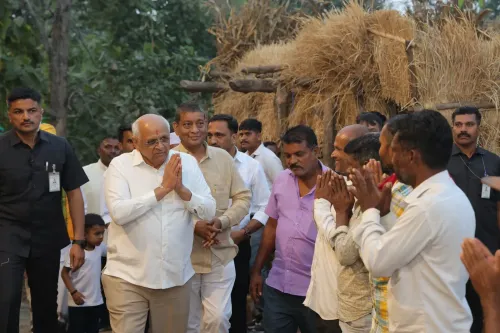
Deep inside the dense forests of Ratanmahal in Dahod district's Dhanpur taluka, Gujarat Chief Minister Bhupendra Patel opened the second day of his district tour on Thursday, November 19 with a devotional visit to the ancient Babadeva shrine at Bhuvero village — a site held sacred by the tribal communities of eastern Gujarat for generations. He offered prayers for the welfare, prosperity, and well-being of the entire state at the feet of Babadeva, whom he described as a symbol of the Adivasi community's unshakeable faith and rich tradition.
Prayers at a Forest Shrine Rooted in Adivasi Faith
The Babadeva shrine at Bhuvero village sits amid the thick forest cover of Ratanmahal — the same landscape that shelters the Ratanmahal Sloth Bear Sanctuary, one of Gujarat's most ecologically significant protected areas. For the Adivasi communities of this belt, Babadeva is not merely a local deity but a living pillar of cultural identity, and the Chief Minister's decision to anchor the day's programme here carried unmistakable symbolic weight. Patel prayed for sukhaakari, samriddhi ane jankalyan (happiness, prosperity and public welfare) across Gujarat.
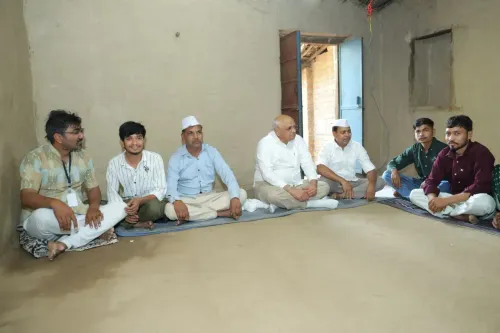
After the prayers, he held what he described as an aatmiya samvaad — an intimate conversation — with the residents of Bhuvero, listening to local concerns and grievances directly. The format is a deliberate feature of these multi-day district tours: no dais, no formal press conference, just the Chief Minister sitting with villagers and hearing them out.
Sakhi Mandal Stalls Showcase Tribal Self-Reliance
The visit then moved to a cluster of stalls run by Sakhi Mandal women's self-help groups — the grassroots collectives that anchor livelihood activity across Gujarat's villages. The Chief Minister walked through exhibits of natural-farming produce, palm-leaf handicrafts, herbal soaps, and traditional bow-and-arrow crafts, each item a marker of the community's skills and economic self-sufficiency.
Patel publicly commended the women for their aatmanirbharta (self-reliance) and craftsmanship. The bow-and-arrow stall, in particular, reflects a craft tradition that is simultaneously cultural heritage and livelihood — a detail that cuts to the heart of what the tribal belt's development story is really about.
Dahod's Tribal Demographics and the Politics of Outreach
Dahod is one of Gujarat's most heavily tribal districts, sitting on the eastern border with Madhya Pradesh. Its population is predominantly from Scheduled Tribe communities, and it has historically been the focus of both development schemes and political attention from successive state governments. Periodic multi-day tours by the Chief Minister — combining religious stops, village dialogues, and self-help group interactions — are a well-established format for state outreach in this region.
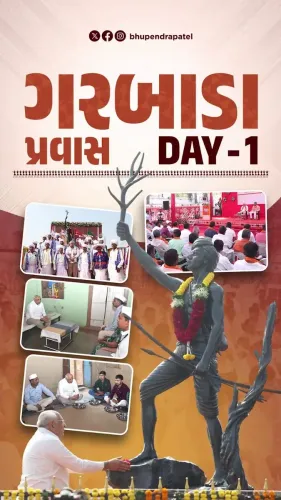
Nine photographs shared by the Chief Minister document the visit across its various moments: the shrine, the prayers, the village conversations, the stall walk-throughs. The images, more than any formal statement, tell the story of a government that understands the district tour as performance of accessibility — not just administration by remote.
Point of View
As a predominantly Adivasi district bordering Madhya Pradesh, carries both electoral and social-policy weight; the format of personal dialogue and self-help group engagement is designed to demonstrate proximity to communities that have historically felt distant from state power. The Sakhi Mandal component ties the tour to a broader national narrative around women's self-reliance. Whether the issues raised by Bhuvero's villagers translate into policy follow-through will be the real test of the tour's governance value.
NationPress
19 Nov 2026
Frequently Asked Questions
Where is the Babadeva shrine that CM Bhupendra Patel visited?
The Babadeva shrine is located at Bhuvero village in Dhanpur taluka, inside the dense forests of the Ratanmahal area of Dahod district in eastern Gujarat.
What is Ratanmahal in Dahod, Gujarat?
Ratanmahal is a forested region in Dahod district that is home to the Ratanmahal Sloth Bear Sanctuary, one of Gujarat's protected wildlife areas, and is surrounded by predominantly Adivasi communities.
What are Sakhi Mandals in Gujarat?
Sakhi Mandals are women's self-help groups active across Gujarat's villages that support local livelihoods through activities like natural farming, handicraft production, and sale of products such as herbal soaps.
Why does the Gujarat CM visit Dahod frequently?
Dahod is one of Gujarat's most heavily tribal districts with a large Scheduled Tribe population, making it a consistent focus for state outreach, development programmes, and political engagement by the Gujarat government.
What products did the Sakhi Mandal women display during CM Patel's Dahod visit?
The Sakhi Mandal stalls featured natural-farming produce, palm-leaf handicrafts, herbal soaps, and traditional bow-and-arrow crafts — all made by women from the tribal villages of the region.