CM Chandrababu Naidu Raises Retirement Age, Restores Old Pension

Synopsis
AP CM Chandrababu Naidu won praise from employee unions after a cabinet meeting approved raising the PSU retirement age from 60 to 62 and restoring the Old Pension Scheme for staff recruited before September 2004, alongside resolving long-pending grievances.
Key Takeaways
The Andhra Pradesh cabinet decided to raise the retirement age in public sector undertakings and government societies from 60 to 62 years .
The Old Pension Scheme will be implemented for employees recruited through notifications issued before September 2004 .
The cabinet also took initiative to resolve long-pending grievances of various categories of government employees.
Leaders from the APNGO Association , AP Secretariat Association , CPS and PSU employees , Gurukula and Societies staff , and the DSC-2003 Teachers' Association met CM Chandrababu Naidu to express gratitude.
Formal government orders implementing these decisions are awaited and will determine the precise scope and timeline of benefits.
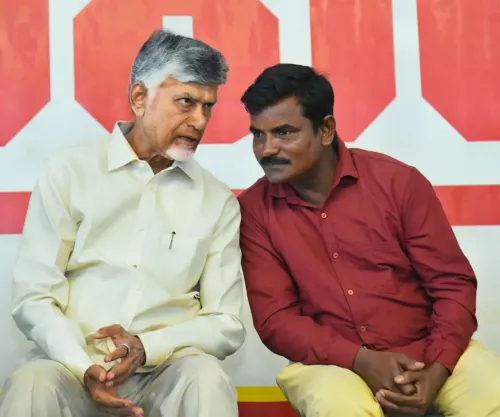
The Chief Minister's Office of Andhra Pradesh announced on Tuesday, 23 June 2026 that employee union leaders met Chief Minister Nara Chandrababu Naidu to express gratitude for a set of pro-employee decisions taken at a recent cabinet meeting, including raising the retirement age in public sector undertakings and restoring the old pension scheme for a category of recruits.
Context
According to the official post, union leaders thanked CM Chandrababu Naidu for three major decisions: raising the retirement age in government public sector organisations and societies from 60 to 62 years, implementing the Old Pension Scheme for employees recruited through notifications issued before September 2004, and taking initiative to resolve long-pending grievances of government staff.
The meeting was attended by leaders representing a broad coalition of employee bodies, including the APNGO Association president and secretary Vidyasagar and Prasad, the AP Secretariat Association president and secretary Ramakrishna and Napa Prasad, as well as representatives from CPS and PSU employees' associations, Gurukula and Societies employees, and the DSC-2003 Teachers' Association.
Policy Backdrop
The New Pension System (NPS) was introduced by the Government of India in September 2004, replacing the defined-benefit old pension scheme for all new central government recruits, with most states following suit. Employees recruited before that cut-off date were entitled to the older, more secure defined-benefit pension, but implementation disputes and service anomalies have persisted for years in several states, including Andhra Pradesh.
The decision to restore the Old Pension Scheme for pre-September 2004 notified recruits addresses a long-standing demand by a specific cohort of employees who argue they were wrongly brought under the NPS despite being recruited under earlier notification conditions. Raising the retirement age from 60 to 62 in public sector undertakings and societies — as distinct from the regular civil services — extends the service window for a significant segment of state government workforce.
Stakeholders and Impact
The decisions benefit multiple categories of workers: employees in state public sector undertakings, government-aided societies, Gurukula institutions, and teachers recruited through the DSC-2003 process. The retirement age extension directly affects those in PSUs and societies who were previously subject to the earlier 60-year limit, giving them an additional two years of service and corresponding salary and benefits.
The old pension restoration, if formally notified, would shift a defined group of employees from a market-linked contributory scheme to a guaranteed defined-benefit pension, with significant long-term fiscal implications for the state exchequer. Employee unions across Andhra Pradesh have historically flagged pension security as a priority demand during every election cycle and budget season.
What's Next
The formal government orders (GOs) implementing both the retirement age extension and the old pension restoration are yet to be publicly issued, and their precise wording will determine the exact scope of beneficiaries and the timeline of implementation. Budgetary provisions and, in the case of the pension change, potential legal scrutiny of the NPS framework at the state level are expected to follow.
With employee associations across Andhra Pradesh publicly endorsing the cabinet decisions, the Telugu Desam Party-led government is likely to face pressure to expedite formal orders — and other state governments watching this move may face similar demands from their own employee unions.
Point of View
Addressing demands that have festered across multiple administrations. Restoring the Old Pension Scheme for pre-2004 recruits is politically significant: it signals a willingness to absorb fiscal risk to honour what employees regard as a legitimate entitlement, a move that has resonated electorally in other states as well. The breadth of union representation at the CM meeting — spanning secretariat staff, PSU workers, Gurukula employees and DSC-2003 teachers — suggests the decisions are designed to cover as many organised employee blocs as possible ahead of future electoral cycles. Whether the formal government orders match the scope of the announcements will be the real test of intent.
NationPress
24 Jun 2026
Frequently Asked Questions
What is the new retirement age for Andhra Pradesh PSU employees?
The Andhra Pradesh government has decided to raise the retirement age for employees in public sector undertakings and government societies from 60 to 62 years , giving eligible workers two additional years of service.
Who is eligible for the Old Pension Scheme in Andhra Pradesh?
Employees recruited through government notifications issued before September 2004 are eligible for the restored Old Pension Scheme under the cabinet decision announced by CM Chandrababu Naidu .
What is the difference between Old Pension Scheme and New Pension System?
The Old Pension Scheme is a defined-benefit plan where the government guarantees a fixed monthly pension, while the New Pension System introduced in September 2004 is a contributory, market-linked scheme with no guaranteed payout.
Which employee unions met CM Chandrababu Naidu over the cabinet decisions?
Leaders from the APNGO Association , AP Secretariat Association , CPS and PSU employees' associations , Gurukula and Societies employees , and the DSC-2003 Teachers' Association met CM Chandrababu Naidu to thank him for the decisions.
When will the Andhra Pradesh retirement age and pension orders take effect?
Formal government orders are yet to be issued; once published, the orders will specify the exact implementation date and scope for both the retirement age increase to 62 and the Old Pension Scheme restoration .