CM Samrat Choudhary launches Patna Water Metro on Ganges
Synopsis
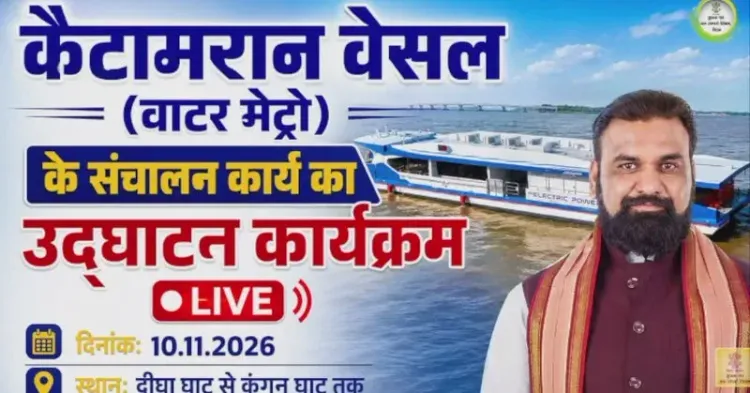
Bihar Chief Minister Samrat Choudhary inaugurated a catamaran Water Metro service between Digha Ghat and Kangan Ghat in Patna on November 10, 2026, expanding the state's multi-modal urban transport network along the Ganges.
Key Takeaways
Bihar CM Samrat Choudhary inaugurated the Water Metro (catamaran vessel) service in Patna on November 10, 2026 .
The route connects Digha Ghat to Kangan Ghat along the Ganges in the state capital.
Catamaran-hull vessels offer stability on wide, fast-flowing rivers and lower impact on riverbanks.
The launch aligns with central government investment in National Waterway 1 since the 2010s.
Future route extensions along Patna's Ganges waterfront and integration with road or rail projects are being watched.
The initiative places Patna alongside other Indian cities — such as Kochi and Mumbai — that have adopted water-based public transport to ease road congestion.
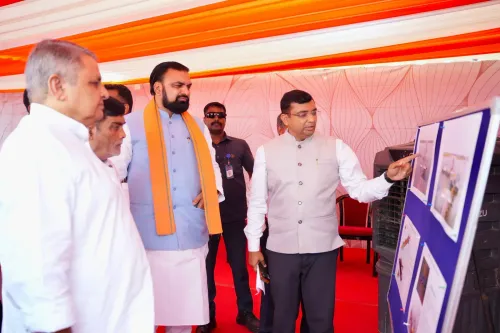
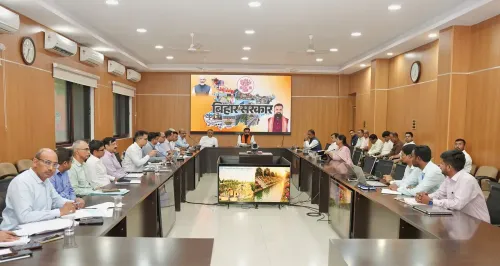
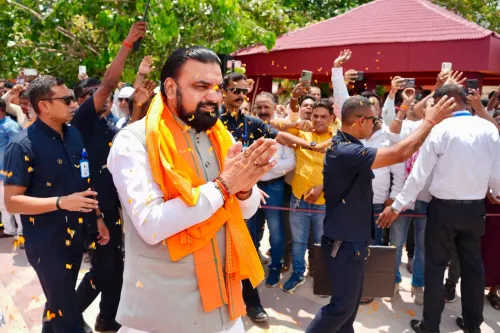
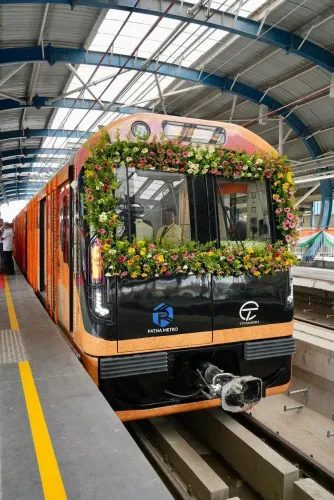
Patna's ancient riverfront just entered a new era. Bihar Chief Minister Samrat Choudhary on Tuesday, November 10, 2026 inaugurated the catamaran vessel service — branded as the Water Metro — connecting Digha Ghat to Kangan Ghat along the Ganges in the state capital, marking Bihar's most visible step yet toward multi-modal urban mobility.
A river route opens between Digha and Kangan
The two ghats have long been nodes of daily life along Patna's waterfront. By linking Digha Ghat and Kangan Ghat with a catamaran vessel, the service offers commuters a direct water corridor that bypasses the congested road network along the Ganges embankment. The inauguration was broadcast live, underscoring the state government's intent to frame this as a landmark public-infrastructure moment.
Catamaran-hull vessels — the same design used in coastal ferry systems — are prized for their stability on wide, current-heavy rivers like the Ganges and their lower wake impact on riverbanks. The choice of vessel class signals an ambition beyond a novelty ride; it is pitched as a functional, scalable transit option.
Bihar's Ganges waterway and the national waterways push
The launch does not emerge in isolation. National Waterway 1 — the Ganges–Bhagirathi–Hooghly river corridor — has been the subject of central government investment since the 2010s, with successive projects aimed at making India's largest river system commercially and commutively viable. Bihar, sitting squarely on this corridor, has pursued its own state-level inland water transport initiatives in parallel.
Across India, cities from Kochi to Mumbai have demonstrated that water-based public transport can meaningfully cut road congestion and tailpipe emissions when integrated with the broader transit network. Patna's water metro now joins that roster — in a city where rapid urbanisation has outpaced road infrastructure for years.
What comes next on the Patna waterfront
The Digha–Kangan route is widely seen as Phase 1. Officials and urban planners watching Bihar's riverfront corridor will now look for signs of route extensions further upstream or downstream, and for integration with the city's road and planned metro rail projects. The Ganges offers a long, navigable stretch through Patna — the geography alone creates room for ambition.
For CM Choudhary, the inauguration is also a governance signal ahead of Bihar's continuing infrastructure push: that the state can operationalise ideas on the water as decisively as it has on roads and bridges. The Ganges, for Patna, is no longer just a backdrop. It is now a commute.
Point of View
Feeding into the broader Central Government narrative around National Waterway 1 and inland water transport. For Chief Minister Samrat Choudhary, whose BJP government has staked political capital on visible infrastructure delivery, the optics of a Ganges ferry launch are potent — a river historically associated with pilgrimage and poverty now framed as a commuter artery. The real test, however, is operational: ridership numbers, fare affordability, and whether the route expands meaningfully will determine whether this becomes a model or a showcase. If Patna can demonstrate sustained utilisation, it could accelerate similar projects at other Gangetic cities, turning the waterway push from policy into practice.
NationPress
10 Nov 2026
Frequently Asked Questions
What is the Patna Water Metro?
The Patna Water Metro is a catamaran vessel-based public water transport service launched on the Ganges in Patna, connecting Digha Ghat to Kangan Ghat. It is designed to offer commuters an alternative route that bypasses congested city roads.
Who inaugurated the Patna Water Metro?
Bihar Chief Minister Samrat Choudhary inaugurated the service on November 10, 2026, as part of the state's multi-modal urban mobility push.
Which ghats does the Patna Water Metro connect?
The inaugural route connects Digha Ghat, the starting point, to Kangan Ghat — both located along the Ganges waterfront in Patna.
How does the Patna Water Metro relate to National Waterway 1?
National Waterway 1 runs along the Ganges–Bhagirathi–Hooghly corridor, and the Central Government has invested in its development since the 2010s. The Patna Water Metro is a state-level initiative that complements this broader national waterway framework.
Will the Patna Water Metro route be extended?
Authorities and urban planners expect the Digha–Kangan segment to serve as Phase 1, with potential extensions further along Patna's Ganges waterfront and integration with road and rail projects being closely watched.