CM Dhami at Dussehra: Ram Rajya ideals anchor governance push
Synopsis
Chief Minister Pushkar Singh Dhami addressed the Bannu Biradari's Dussehra Mahotsav in Dehradun on 20 October 2026, blending Vijayadashami values with policy pledges on land recovery, an anti-riot law, education, and youth employment in Uttarakhand.
Key Takeaways
CM Pushkar Singh Dhami attended the Dussehra Mahotsav hosted by Bannu Biradari at Parade Ground, Dehradun on 20 October 2026 .
The state government's encroachment campaign has freed more than 13,000 acres of government land.
A strict anti-riot law is in force to recover compensation from those who damage public and private property.
Dhami called for quality, science-based education for every child and expanded employment opportunities for Uttarakhand's youth.
The Chief Minister invoked Ram Rajya ideals — justice, good governance, equality, and public welfare — as the guiding framework for his administration.
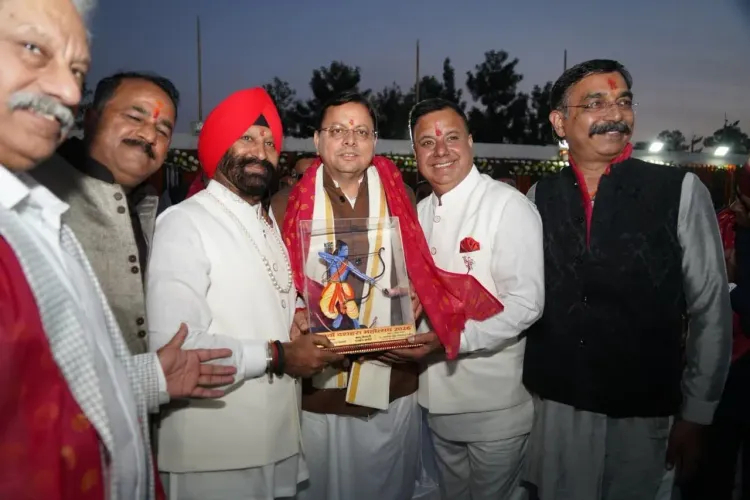
The event was attended by Cabinet Minister Khajan Das and a large number of local residents and community leaders.
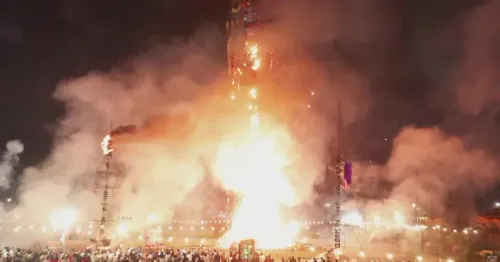
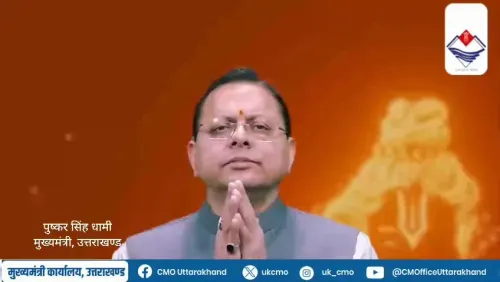
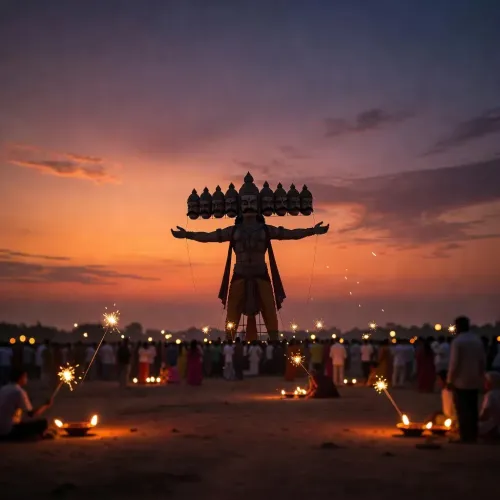
At Parade Ground, Dehradun, on Tuesday, 20 October 2026, Chief Minister Pushkar Singh Dhami stood before a packed Dussehra Mahotsav audience organised by the Bannu Biradari and turned a festival stage into a policy pulpit — weaving together the mythology of Ram's victory over Ravana with a pointed government agenda on land encroachment, law and order, education, and jobs.
From Ravana's effigy to a governance manifesto
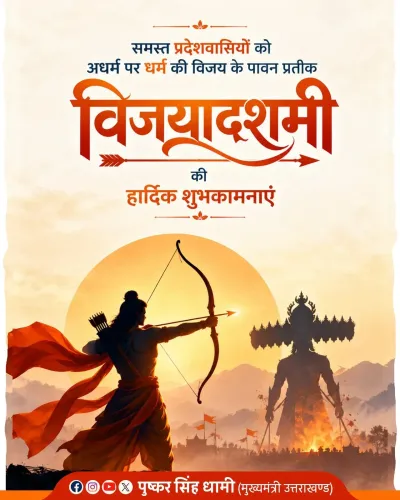
Dhami told the gathering that Vijayadashami (the festival of victory of good over evil) is 'not merely the burning of Ravana's effigy, but an occasion for introspection and self-purification.' He drew the classic moral: however powerful arrogance and unrighteousness may grow, truth and righteousness ultimately prevail. That framing, drawn from the Ram–Ravana arc, quickly pivoted to the present. The Chief Minister invoked the concept of Ram Rajya — a governance ideal rooted in justice, equality and public welfare — and declared that his government is working, under Prime Minister Narendra Modi's guidance, toward making Uttarakhand the country's finest state.
The move is textbook BJP political communication: sacred narrative provides the moral scaffolding; policy announcements fill the structure beneath it. It has been deployed at state festivals before, but the specificity of Dhami's claims on this occasion gave the address added weight.
Over 13,000 acres reclaimed, anti-riot law enforced
The most concrete claims came on law and order. Dhami stated that a wide-scale campaign to free government land from encroachment has recovered more than 13,000 acres of state land. He added that a strict anti-riot law has been enacted to recover compensation from those who damage public and private property during riots. Action is also being taken, he said, against individuals who mislead or defraud people in the name of religion and faith.
Together, the measures signal a governance posture that pairs cultural pride with a firm enforcement message — a combination that resonates strongly in Uttarakhand, a Himalayan state where pilgrimage tourism and land rights are perennial flashpoints.
Education overhaul and a jobs agenda for Uttarakhand's youth
Dhami called quality, modern, and science-based education for every child a necessity, not an aspiration. His government's priority, he said, is to build knowledge, innovation, and logical thinking in children so they are ready for future challenges. On the economy, he stressed that expanding investment, entrepreneurship, and employment is essential for the state's economic progress, with local traders, entrepreneurs, and MSMEs singled out as vital contributors.
The Chief Minister appealed to residents to mark Vijayadashami by committing to the ideals of truth, righteousness, dignity and duty in their own lives — and to collectively build an Uttarakhand where every person receives justice, youth find opportunity, women live in safety, and development reaches the last person in society.
Bannu Biradari's Mahotsav and who shared the stage
The Dussehra Mahotsav was hosted by the Bannu Biradari, a community organisation with roots in the partition-era migration from Bannu (now in Pakistan's Khyber Pakhtunkhwa). Cabinet Minister Khajan Das, office-bearers and members of the Bannu Biradari, representatives of the organising committee, and a large number of local residents were present at Parade Ground.
In a state whose identity is inseparable from pilgrimage, mountains, and cultural memory, the annual Dussehra Mahotsav is one of Dehradun's most visible public gatherings — a natural stage for a Chief Minister to consolidate both cultural credibility and governance narrative heading into the next legislative session.
Point of View
Lending moral legitimacy to administrative actions like land reclamation and riot-compensation laws. The invocation of Ram Rajya as a governance template is not merely ceremonial — it positions Uttarakhand's development agenda within a civilisational narrative that differentiates BJP-ruled hill states from purely technocratic governance models. The emphasis on MSMEs, youth employment, and science-based education, delivered from a festival stage, also signals that the government is preparing its economic messaging ahead of potential assembly scrutiny. Whether the 13,000-acre land recovery figure and the anti-riot law's enforcement record can withstand legislative examination will determine how durable this festival-framing proves.
NationPress
20 Oct 2026
Frequently Asked Questions
What did CM Dhami say at the Dussehra Mahotsav in Dehradun?
CM Pushkar Singh Dhami attended the Bannu Biradari's Dussehra Mahotsav at Parade Ground, Dehradun on 20 October 2026, where he highlighted government achievements including recovering over 13,000 acres of encroached land, enforcing an anti-riot law, and pledged to expand education quality and youth employment.
What is the Bannu Biradari and why does it organise Dussehra in Dehradun?
The Bannu Biradari is a community organisation in Dehradun with origins tracing back to migrants from Bannu, now in Pakistan. It organises the annual Dussehra Mahotsav at Parade Ground as a major cultural and religious event for the city.
How much government land has Uttarakhand reclaimed from encroachment?
Chief Minister Dhami stated at the Dussehra event that the state government's encroachment-removal campaign has freed more than 13,000 acres of government land.
What is Uttarakhand's anti-riot law about?
According to CM Dhami's statement at the Dussehra Mahotsav, Uttarakhand has enacted a strict anti-riot law aimed at recovering financial compensation from individuals who damage public and private properties during riots.
What is Ram Rajya and why does CM Dhami invoke it?
Ram Rajya refers to the ideal governance described in Hindu tradition as practised by Lord Ram — characterised by justice, equality, good governance and public welfare. CM Dhami invoked it at the Dussehra event to frame his government's development and law-and-order agenda within a values-based narrative.