CM Dhami Hits AAP Govt Over Punjab Drug Trade
Synopsis
Uttarakhand CM Pushkar Singh Dhami accused the AAP-led Punjab government of silently enabling a growing drug trade, contrasting it with PM Modi's nationwide anti-narcotics push under the Nasha Mukt Bharat Abhiyan on September 26, 2026.
Key Takeaways
CM Pushkar Singh Dhami publicly accused the AAP government in Punjab of giving 'silent support' to a growing drug trade on September 26, 2026 .
Dhami framed the attack around PM Narendra Modi's national anti-narcotics drive as the benchmark for state governance.
The Nasha Mukt Bharat Abhiyan , launched in 2020 , is the central government's flagship multi-agency framework against narcotics.
AAP won the 2022 Punjab elections in part on an explicit pledge to eliminate the state's drug problem, making enforcement outcomes a key accountability test.
BJP leaders have routinely used Punjab's drug record to contrast central enforcement with opposition-state governance.
The specific claim of 'silent support' from the Punjab government to the drug trade is a political allegation and is not verified by established public record.
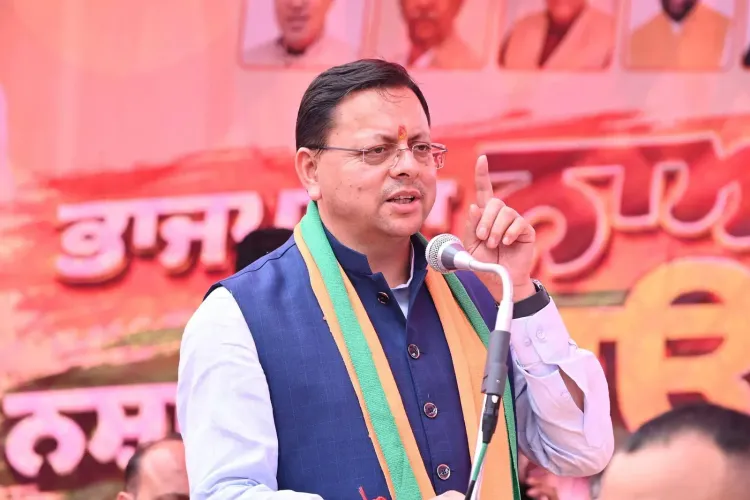
While the central government escalates its war on narcotics nationwide, Uttarakhand Chief Minister Pushkar Singh Dhami has turned the spotlight sharply on Punjab — accusing the Aam Aadmi Party government there of providing silent cover to a growing drug trade. The post, shared on Saturday, September 26, 2026, draws a pointed contrast between Prime Minister Modi's enforcement drive and what Dhami calls deliberate inaction in the AAP-ruled state.
Posting in Hindi, Dhami wrote: 'एक ओर आदरणीय प्रधानमंत्री श्री @narendramodi जी के नेतृत्व में देशभर में नशे के खिलाफ कठोर कार्रवाई की जा रही है वहीं पंजाब में आम आदमी पार्टी की सरकार नशे के बढ़ते कारोबार को मौन समर्थन दे रही है।' — translated: 'On one side, strict action is being taken against drugs across the country under the leadership of respected Prime Minister Shri Narendra Modi ji; on the other, the Aam Aadmi Party government in Punjab is giving silent support to the growing drug trade.'Modi's Anti-Narcotics Drive as the Political Benchmark
The Nasha Mukt Bharat Abhiyan, launched in 2020, has served as the central government's flagship framework for coordinating awareness campaigns, de-addiction outreach, and enforcement against narcotics across all states. The Narcotics Control Bureau has operated as the operational spine of that push, conducting seizure drives and inter-agency operations. Amendments to the Narcotic Drugs and Psychotropic Substances Act under the current government tenure further stiffened penalties and expanded enforcement scope.
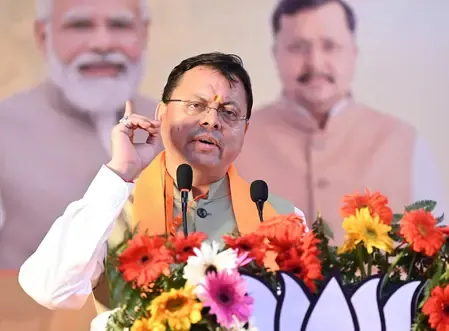
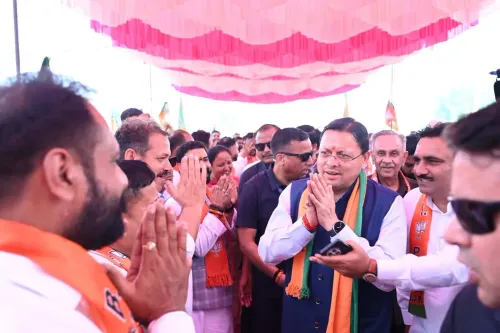
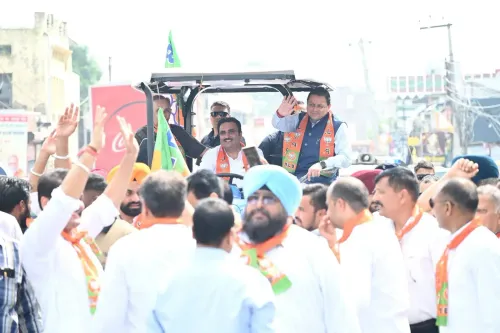
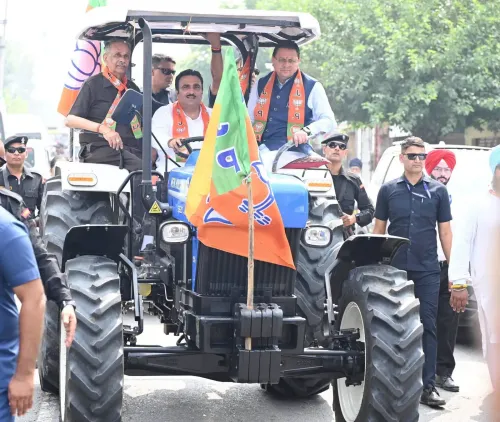
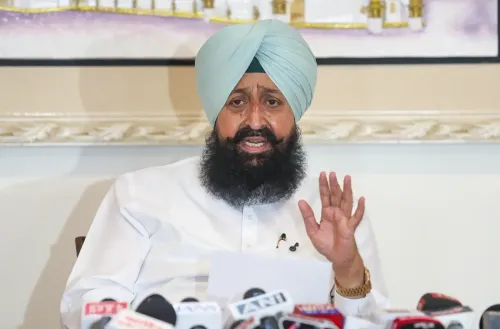
Dhami's post positions this central machinery as the benchmark — and frames Punjab's record as the counter-example. The four images attached to his post, though their specific contents were not independently detailed, suggest the accusation is accompanied by documented visual material aimed at amplifying the charge.
Punjab's Drug Problem — A Long Shadow
Punjab has carried the weight of a cross-border drug trafficking crisis for decades, shaped heavily by its porous border with Pakistan. The issue became a defining election promise for AAP during its landslide 2022 Punjab campaign — the party explicitly vowed to eliminate the drug problem and won a sweeping mandate partly on that pledge. Four years on, that promise has become the most politically sensitive accountability test facing the state government.
BJP leaders have made it a recurring practice to contrast the central government's enforcement record with governance outcomes in opposition-ruled states. The pattern intensifies whenever state-centre friction is high — and a sitting chief minister publicly amplifying the attack, with imagery, signals this is a coordinated political pressure point rather than a stray remark.
AAP's 2022 Promise — Now BJP's Sharpest Weapon
The irony is hard to miss. AAP won Punjab in part by making drug eradication a central campaign promise. BJP has methodically turned that promise into a liability, benchmarking every enforcement update against the gap between pledge and delivery. Dhami's post is the latest instalment — and the explicit framing around 'silent support' to a 'growing trade' is a direct escalation of the language used in earlier critiques.
It is worth noting, as the research establishes clearly, that specific claims of active government patronage of the drug trade — 'silent support' — remain unverified allegations. The Punjab government has not, in established public record, been found to formally back narcotics trafficking. The charge is political; its factual foundation rests on enforcement outcomes, which remain contested between the two sides.
Point of View
The BJP reinforces a centre-versus-state narrative that frames governance quality as a binary between ruling-party competence and opposition negligence. The language — 'silent support' — is a deliberate escalation from earlier 'inaction' framing, raising the stakes of the charge without requiring documentary proof. What is missing, and what would shift the debate from political to consequential, is verifiable enforcement data from either side that can be independently compared.
NationPress
26 Sept 2026
Frequently Asked Questions
What did CM Dhami say about Punjab's drug problem?
On September 26, 2026, Uttarakhand CM Pushkar Singh Dhami accused the AAP government in Punjab of giving 'silent support' to a growing drug trade, contrasting this with PM Narendra Modi's nationwide crackdown on narcotics.
What is the Nasha Mukt Bharat Abhiyan?
The Nasha Mukt Bharat Abhiyan is a central government initiative launched in 2020 to coordinate anti-narcotics awareness, de-addiction services, and enforcement efforts across India through agencies like the Narcotics Control Bureau.
Did AAP promise to end Punjab's drug problem?
Yes, the Aam Aadmi Party made eliminating Punjab's drug crisis a central campaign promise in the 2022 state elections, winning a large majority; BJP has since used enforcement outcomes as a measure of whether that promise has been kept.
Why does Punjab have a severe drug problem?
Punjab has a long-documented history of drug trafficking linked largely to cross-border routes from Pakistan, leading to high rates of substance abuse that have persisted across multiple state governments over the decades.
Is the Punjab government officially linked to the drug trade?
No, Dhami's claim of 'silent support' is a political allegation. There is no established public record verifying that the AAP government in Punjab formally backs or enables narcotics trafficking.