CM Dhami meets Akshay Kumar, pitches Uttarakhand Film Policy-2024
Synopsis
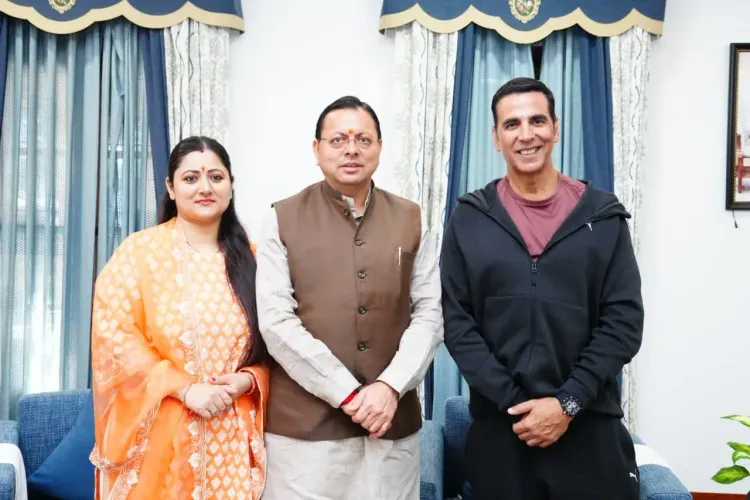
Chief Minister Pushkar Singh Dhami met Bollywood actor Akshay Kumar on 18 October 2026 in Dehradun to discuss Uttarakhand Film Policy-2024, single-window shoot clearances, grants, and employment generation, as Kumar shoots his next film in Mussoorie and Landour.
Key Takeaways
Akshay Kumar is currently filming an upcoming Bollywood project in Mussoorie and Landour , Uttarakhand.
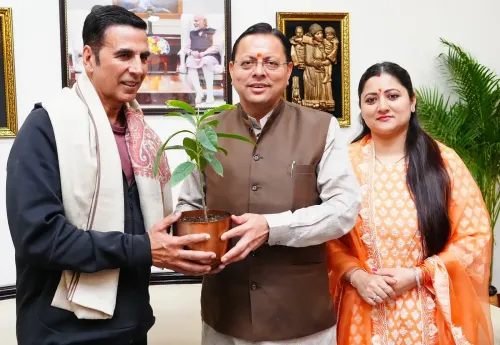
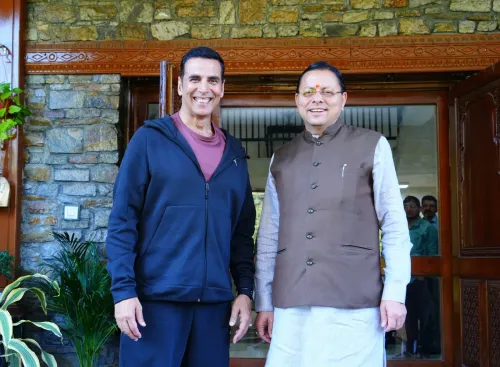
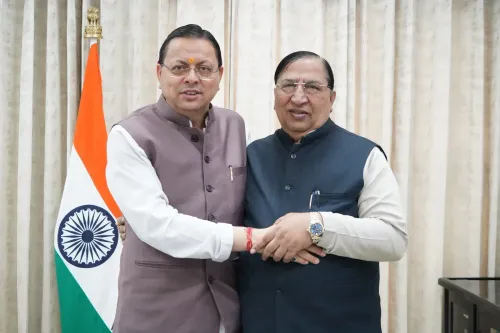
He met CM Pushkar Singh Dhami on 18 October 2026 at the Chief Minister's official residence in Dehradun for a courtesy-cum-policy discussion.
The Uttarakhand Film Policy-2024 offers producers a single-window clearance system for shooting permissions and direct grants.
CM Dhami stated the policy's aim is to create employment and self-employment for local artists, technicians, and youth .
Film shoots in the state also benefit tourism, hospitality, and transport sectors , according to the Chief Minister.
Uttarakhand has been building its identity as a top film-shooting destination since at least the mid-2010s, with the 2024 policy marking its most formal push yet.
Bollywood star Akshay Kumar is already on location in the hills — shooting his next film across Mussoorie and Landour — and on Sunday, 18 October 2026, he took a break from the shoot to call on Chief Minister Pushkar Singh Dhami at the official residence in Dehradun. The courtesy visit turned into a working conversation about Uttarakhand's growing ambitions as a premier film-shooting destination.
Akshay Kumar shoots in Mussoorie and Landour
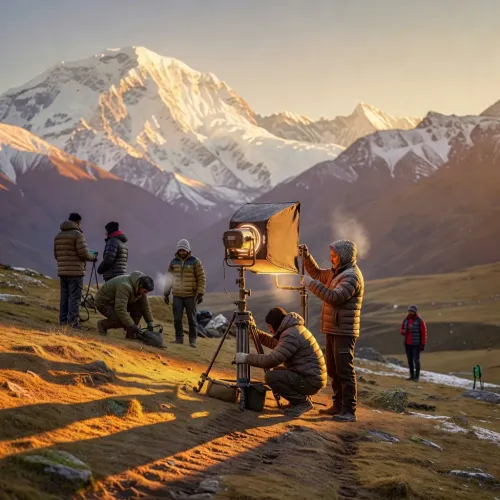
The meeting was not just ceremonial. Kumar is currently filming an upcoming Bollywood project in the scenic Mussoorie–Landour belt, a stretch of the lower Himalayas that has long drawn directors for its colonial architecture, pine-forested ridges, and reliable weather windows. His presence on location gave the discussion an immediacy that a routine industry delegation rarely carries — a marquee name, actively spending production budget in the state, sitting down with the government that wants many more like him to follow.
What the Uttarakhand Film Policy-2024 puts on the table
The centrepiece of CM Dhami's pitch was the Uttarakhand Film Policy-2024, the state's most structured attempt yet to formalise its appeal to producers. The policy consolidates several incentive tracks into a single framework: a single-window clearance system for shooting permissions, direct grants to productions that choose Uttarakhand locations, and support infrastructure aimed at reducing the friction that often pushes crews to more familiar destinations.
Dhami told Kumar that the policy is already yielding results. 'Uttarakhand Film Niti-2024 ke sakaratmak parinaam samne aa rahe hain' ('Positive outcomes of the Uttarakhand Film Policy-2024 are becoming visible'), he said, framing the state not as an aspirant but as a proven address for large-scale productions.
Jobs, tourism, and the economics behind the lens
The Chief Minister was explicit about the downstream logic. Every major film shoot that sets up in Uttarakhand generates work for local artists, technicians, and young crew members, and feeds spending into hotels, transport operators, and ancillary vendors. Dhami said the state government's goal is to create new employment and self-employment opportunities for residents — film policy as industrial policy, dressed in the language of culture.
That framing fits a well-established pattern. Indian states from Himachal Pradesh to Rajasthan now compete aggressively for film shoots, recognising that a single week-long production unit can inject significant revenue into a local economy while simultaneously building destination recognition that benefits tourism long after the cameras leave. Uttarakhand, with its diversity of terrain — glacial highlands, river valleys, hill-station promenades, and dense forests — is playing a strong hand.
Uttarakhand's decade-long climb as a film destination
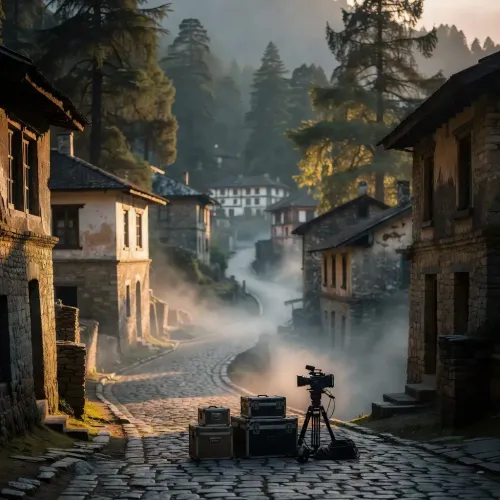
The state's push to attract shoots did not begin with the 2024 policy. Tourism-linked incentives and informal facilitation go back at least to the mid-2010s, but the consolidation into a formal, grant-backed framework under Dhami's government represents a step-change in ambition. Landour itself — a cantonment town perched above Mussoorie, known for its stone cottages and deodar canopies — has featured in several notable productions precisely because it offers a visual grammar that is difficult to replicate on a studio lot.
With Kumar's shoot under way and the Chief Minister personally engaged, the state is making a clear statement: Uttarakhand is open for big film business, and the government will back that claim with policy and personal bandwidth.
Point of View
The policy becomes a replicable template; if not, it risks remaining good optics on a pretty hillside.
NationPress
18 Oct 2026
Frequently Asked Questions
What is the Uttarakhand Film Policy-2024?
The Uttarakhand Film Policy-2024 is a state government initiative that offers film producers a single-window system for shooting permissions, direct grants to encourage productions in the state, and support to generate employment for local artists, technicians, and youth.
Why is Akshay Kumar in Mussoorie and Landour?
Akshay Kumar is currently shooting an upcoming Bollywood film in the Mussoorie and Landour area of Uttarakhand, chosen for its Himalayan scenery, colonial-era architecture, and diverse landscapes.
What did CM Dhami discuss with Akshay Kumar on 18 October 2026?
CM Pushkar Singh Dhami met Akshay Kumar at his official residence in Dehradun and discussed Uttarakhand's Film Policy-2024, possibilities for film production in the state, and efforts to promote the film industry, including employment generation for locals.
What incentives does Uttarakhand offer to film producers?
Uttarakhand offers film producers single-window clearance for shooting permissions and grants to incentivise production in the state under the Film Policy-2024.
How does film shooting benefit Uttarakhand's local economy?
According to CM Dhami, major film shoots in Uttarakhand boost employment for local artists and crew, and generate revenue for tourism, hotels, transport operators, and other ancillary businesses in the state.