CM Dhami Offers Navratri Puja at Official Residence
Synopsis
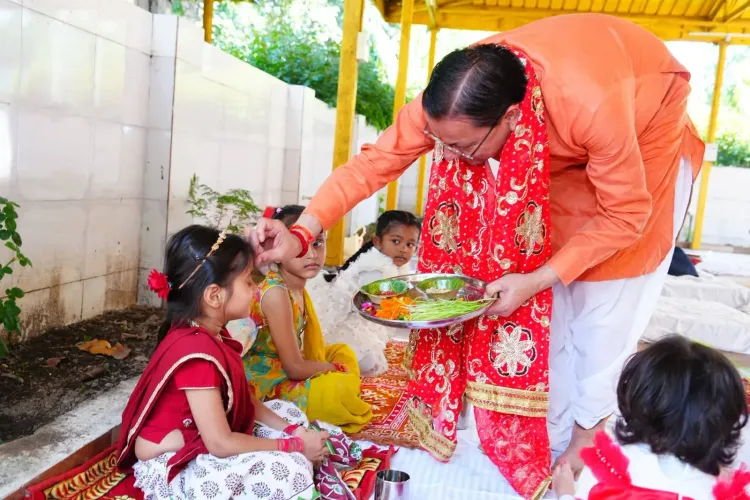
Uttarakhand Chief Minister Pushkar Singh Dhami performed Sharadiya Navratri puja at his official residence on 20 October 2026, offering prayers to Maa Durga and Mahadev for global welfare and state prosperity, and conducted Kanya Pujan to honour young girls as divine embodiments.
Key Takeaways
Pushkar Singh Dhami performed Sharadiya Navratri puja at his official residence on 20 October 2026 .
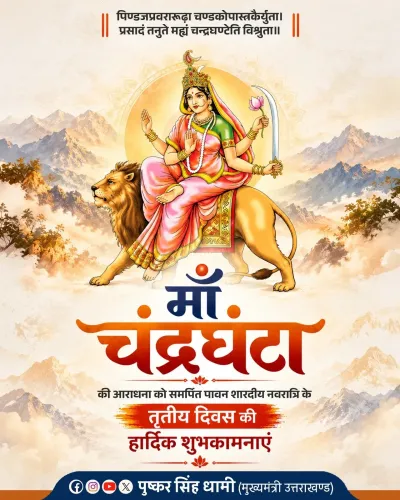
Prayers were offered to all nine forms of Maa Durga and Devadhi Dev Mahadev for world welfare and the prosperity of Uttarakhand residents.
Dhami conducted Kanya Pujan , honouring young girls as living embodiments of the goddess and receiving their blessings.
The observance was held at the shaskiya avas (official residence), integrating religious tradition with the office of the Chief Minister.
Uttarakhand, known as Devbhoomi , has a strong tradition of state leaders visibly participating in major Hindu festivals.
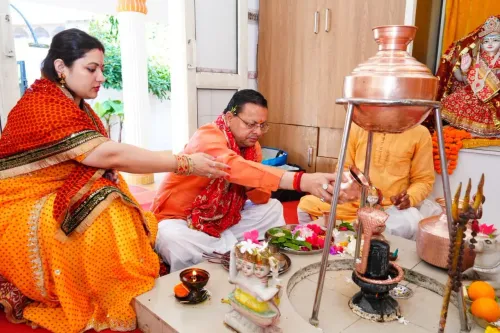
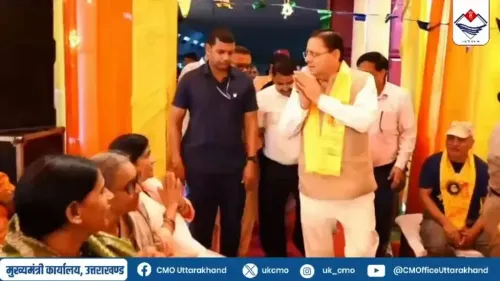
On the auspicious occasion of Sharadiya Navratri, Uttarakhand Chief Minister Pushkar Singh Dhami performed a formal vidhi-vidhan puja (ritual worship) at his official residence on Tuesday, 20 October 2026, praying for the welfare of the world and the happiness and prosperity of the people of Uttarakhand.
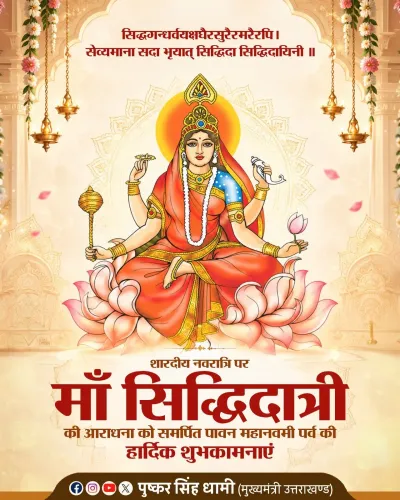
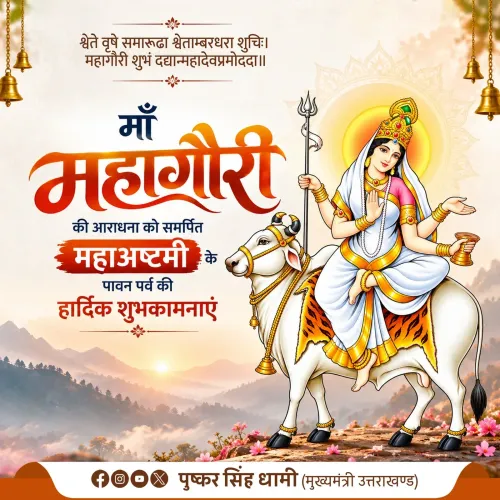
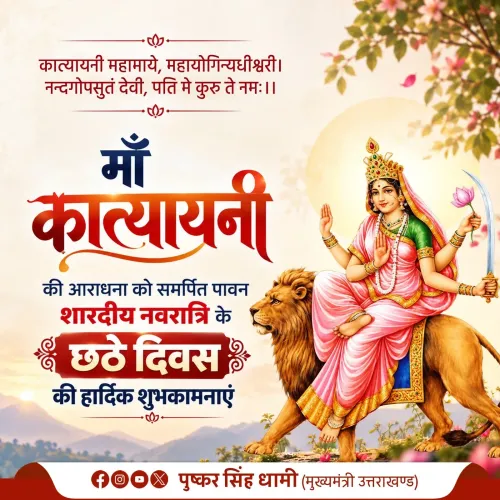
Dhami offered prayers to all the divine forms of Maa Durga and Devadhi Dev Mahadev — a combined invocation of the goddess and Lord Shiva that is central to the Navratri tradition in the hill state. He also performed Kanya Pujan, the ritual honouring young girls as living embodiments of the goddess, and received their blessings — a practice considered among the most spiritually significant acts of the nine-night festival.
Navratri at the Heart of Uttarakhand's Cultural Identity
Sharadiya Navratri, observed every autumn, is one of the most widely celebrated Hindu festivals across India, with particular resonance in Uttarakhand — a Himalayan state home to some of Hinduism's most revered shrines, including those in the Char Dham circuit. The festival's nine nights celebrate the nine forms of Goddess Durga, culminating in Vijayadashami (Dussehra).
State leaders in Uttarakhand have long maintained visible participation in major Hindu festivals, presenting these observances as expressions of personal faith and cultural continuity deeply woven into the state's social fabric. The Kanya Pujan ritual — in which young girls are worshipped, fed, and gifted — carries particular weight, symbolising the veneration of feminine divinity in everyday life.
Dhami's Public Faith and Uttarakhand's Temple-State Identity
Chief Minister Pushkar Singh Dhami, a BJP leader, has consistently foregrounded his personal religious observances as part of his public persona since assuming office. Uttarakhand's identity as the 'Devbhoomi' — the Land of the Gods — makes such participation by the Chief Minister a ritual expectation as much as a personal choice. The state's political culture has historically accorded religious festival observances a prominent role in public governance optics.
By conducting the puja at his official (shaskiya) residence rather than a temple, Dhami brought the sanctity of the festival into the seat of state power — a gesture that blends the personal and the institutional in a manner common to Navratri observances across India's states.
Point of View
Reinforcing the state's identity as a spiritual heartland. The visible conduct of Kanya Pujan at the official residence signals an attempt to project both personal piety and sensitivity to feminine divinity, a messaging choice that resonates strongly with the state's electorate ahead of future political cycles. It is, in the end, a well-understood political grammar: faith as statecraft, and statecraft expressed through faith.
NationPress
20 Oct 2026
Frequently Asked Questions
What is Sharadiya Navratri and when is it celebrated?
Sharadiya Navratri is a nine-night Hindu festival honouring the nine forms of Goddess Durga, celebrated every autumn across India. In 2026 it falls in October.
What is Kanya Pujan during Navratri?
Kanya Pujan is a Navratri ritual in which young girls are worshipped as living representations of the goddess, offered food and gifts, and asked to bestow their blessings. It is one of the most spiritually significant acts of the festival.
Why did CM Dhami perform Navratri puja at his official residence?
Dhami conducted the puja at his shaskiya avas to pray for world welfare and the prosperity of Uttarakhand's residents, combining personal devotion with his role as head of the state government.
What is the significance of Uttarakhand being called Devbhoomi?
Devbhoomi means 'Land of the Gods' and reflects Uttarakhand's identity as a state housing some of Hinduism's holiest shrines, including the Char Dham pilgrimage sites. This deeply shapes the state's political and cultural life.
Who is Pushkar Singh Dhami?
Pushkar Singh Dhami is the Chief Minister of Uttarakhand and a senior BJP leader, known for his visible participation in Hindu religious observances as part of his public persona.