CM Dhami Pays Tribute to Jana Sangh Founder Dr. Shyama Prasad Mukherjee
Synopsis
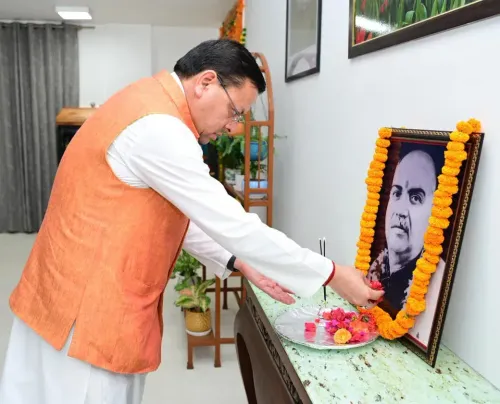
Uttarakhand Chief Minister Pushkar Singh Dhami on 6 July 2026 paid tribute to Dr. Shyama Prasad Mukherjee on his birth anniversary, honouring the Bharatiya Jana Sangh founder as a champion of national integration and cultural consciousness whose vision continues to guide the BJP's ideological identity.
Key Takeaways
CM Pushkar Singh Dhami posted a tribute to Dr.
Shyama Prasad Mukherjee on his birth anniversary on 6 July 2026 .
Mukherjee , born in 1901 , founded the Bharatiya Jana Sangh in 1951 , the ideological predecessor of the BJP .
Dhami hailed Mukherjee as a 'pioneer of national integration' and champion of an undivided India.
The BJP traces its founding ideology to the Jana Sangh and marks 6 July as a day of ideological reaffirmation.
The abrogation of Article 370 in 2019 was framed by the party as the fulfilment of Mukherjee's demand for full integration of Jammu and Kashmir .
Such tributes from BJP state chief ministers form part of a wider pattern linking current governance to historical nationalist continuity.
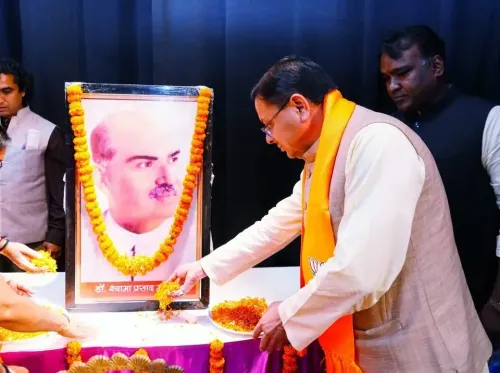
Uttarakhand Chief Minister Pushkar Singh Dhami on Monday, 6 July 2026, paid tribute to Dr. Shyama Prasad Mukherjee on his birth anniversary, hailing the Jana Sangh founder as an immortal bearer of India's cultural consciousness and national pride.
Context
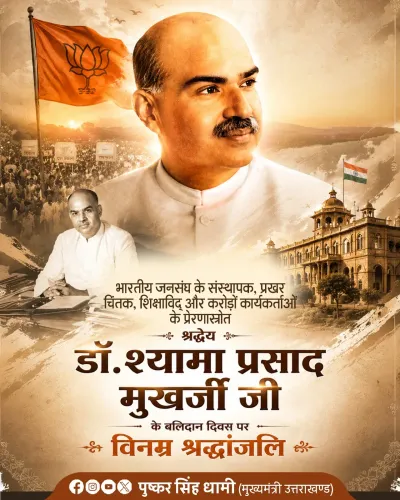
In his post on X, CM Dhami offered what he called 'kotishaः naman' — salutations from millions — to Dr. Mukherjee, describing him as a 'pioneer of national integration, a great educationist, and a resolute thinker of nationalism.' He added that Mukherjee's 'inspiring life, nation-devoted ideas, and unwavering resolve for an undivided India will always illuminate the path of the country's people.'
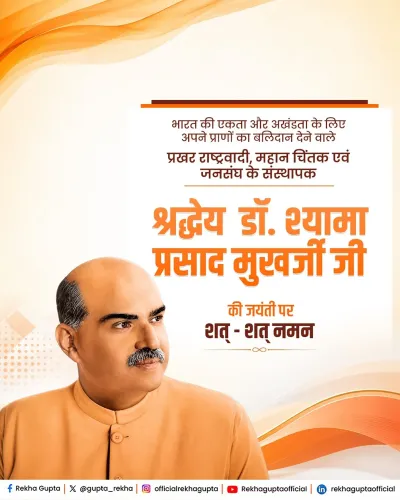
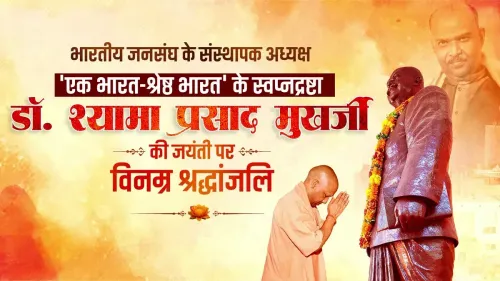
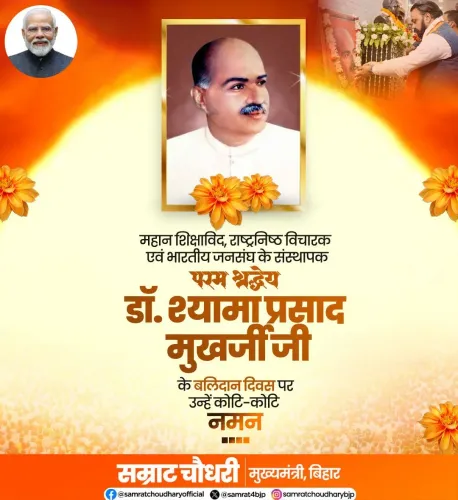
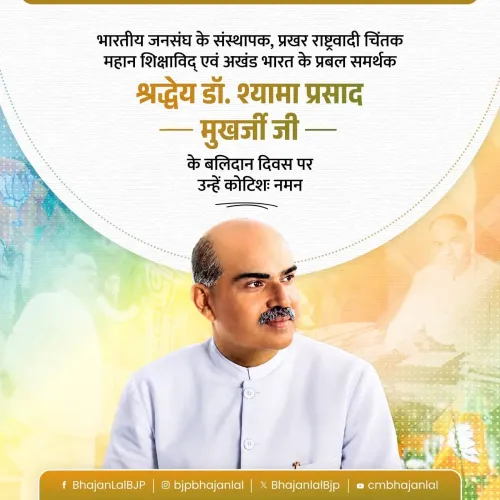
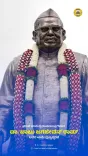
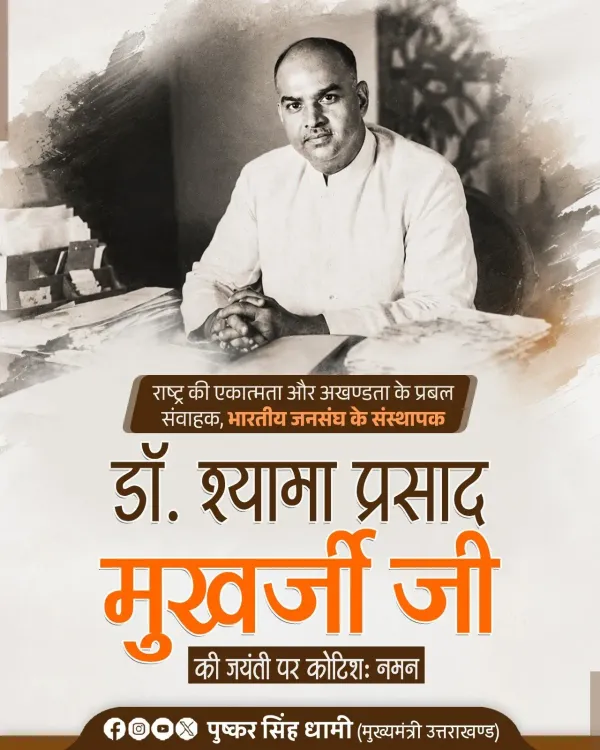
The tribute was accompanied by an image and posted from Dhami's official X account at 8:22 AM IST, consistent with the BJP's practice of marking 6 July — Mukherjee's birth anniversary — with public messaging on national integration.
Policy Backdrop
Dr. Shyama Prasad Mukherjee, born in 1901, founded the Bharatiya Jana Sangh in 1951 as a nationalist alternative to the then-dominant Congress, championing the full integration of Jammu and Kashmir into the Indian Union. That demand — symbolised by his slogan of 'Ek desh mein do Vidhan, do Pradhan, do Nishan — nahin chalenge' (one country cannot have two constitutions, two prime ministers, two emblems) — remained a defining plank of the Jana Sangh and its successor, the Bharatiya Janata Party.
The BJP, formed in 1980 by leaders who traced their political lineage to the Jana Sangh, regards Mukherjee as a founding ideological ancestor. The abrogation of Article 370 in 2019 was widely framed by the party as the fulfilment of Mukherjee's core demand for the complete integration of Jammu and Kashmir.
Stakeholders and Impact
The tribute is directed at BJP workers, nationalist organisations, and a broader public audience in Uttarakhand and beyond. For the party's cadre, such commemorations reinforce ideological continuity — connecting current governance under Prime Minister Narendra Modi and state leaders like Dhami to the pre-independence and early post-independence nationalist tradition.
As Uttarakhand's chief minister since 2021, Dhami has consistently used state and national platforms to amplify messages of cultural identity and national unity, making his tribute to Mukherjee part of a recognisable pattern of ideological messaging from BJP-governed states.
What's Next
Similar tributes from other BJP chief ministers and senior party leaders are expected throughout the day, as 6 July is observed across the party's national network as an occasion to reaffirm its roots. State-level educational programmes or events invoking Dr. Mukherjee's legacy in Uttarakhand in the coming weeks would be consistent with the party's broader pattern of commemorating nationalist figures. The anniversary also serves as a recurring moment for the BJP to publicly link its present policy agenda — particularly on national integration — to the vision articulated by its ideological forebears.
Point of View
Reinforcing the party's self-image as the custodian of Mukherjee's unfinished nationalist project. By invoking the language of 'Akhand Bharat' and 'cultural consciousness,' Dhami aligns Uttarakhand's governance narrative with the BJP's central ideological brand at a time when national integration remains a politically potent theme. The timing — a morning post on the birth anniversary — is calibrated for maximum resonance among party workers and sympathetic audiences ahead of the day's news cycle. Across BJP-governed states, such coordinated commemorations function as soft-power messaging, projecting ideological discipline and historical legitimacy simultaneously.
NationPress
6 Jul 2026
Frequently Asked Questions
Who was Dr. Shyama Prasad Mukherjee?
Dr. Shyama Prasad Mukherjee was an Indian politician and educationist born in 1901 who founded the Bharatiya Jana Sangh in 1951, advocating for national integration and the full merger of Jammu and Kashmir into India. The Jana Sangh later contributed to the formation of the BJP in 1980.
Why do BJP leaders pay tribute to Shyama Prasad Mukherjee on 6 July?
6 July is observed as Dr. Shyama Prasad Mukherjee's birth anniversary. The BJP regards him as a founding ideological ancestor, and the party's leaders across the country use the occasion to reaffirm their commitment to his vision of national integration and cultural nationalism.
What is Pushkar Singh Dhami's connection to Shyama Prasad Mukherjee?
Pushkar Singh Dhami is the BJP Chief Minister of Uttarakhand and a member of the same party that traces its lineage to Mukherjee's Bharatiya Jana Sangh. Dhami regularly issues tributes to BJP ideological figures as part of the party's broader commemorative messaging.
What was the Bharatiya Jana Sangh?
The Bharatiya Jana Sangh was a nationalist political party founded by Dr. Shyama Prasad Mukherjee in 1951. It championed Hindu nationalist and integrationist positions and eventually merged with other parties to form the Bharatiya Janata Party in 1980.
How does Mukherjee's legacy connect to the abrogation of Article 370?
Dr. Mukherjee was a prominent advocate for the complete integration of Jammu and Kashmir into India and opposed the special status granted under Article 370. The BJP framed its abrogation of Article 370 in 2019 as the fulfilment of Mukherjee's long-held demand.