CM Dhami: People Are Supreme in Democracy
Synopsis
Chief Minister Pushkar Singh Dhami of Uttarakhand declared on 11 July 2026 that the public is supreme in democracy and that the government must work for people's welfare with sincerity, sensitivity, and dedication — a statement shared by the official Chief Minister's Office on X.
Key Takeaways
The Chief Minister's Office of Uttarakhand shared the statement on 11 July 2026 via its official X account.
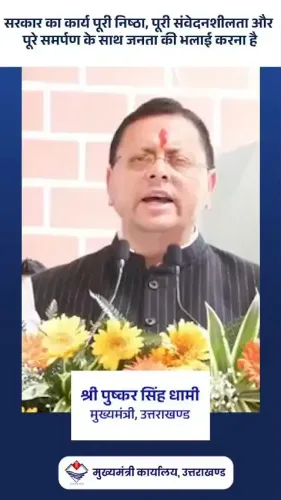
CM Pushkar Singh Dhami stated that 'the public is supreme in a democracy.' He emphasised that government must serve citizens with 'complete dedication, sensitivity, and commitment.' Uttarakhand was formed in 2000 specifically to ensure more responsive governance for its hill-region population.
Dhami has led the state since 2021 under the Bharatiya Janata Party , with a stated focus on public welfare delivery.
The Chief Minister's Office of Uttarakhand, on Saturday, 11 July 2026, shared a governance statement by Chief Minister Pushkar Singh Dhami reaffirming the primacy of citizens in a democratic system and the government's duty to serve them with sincerity, sensitivity, and dedication.
Context
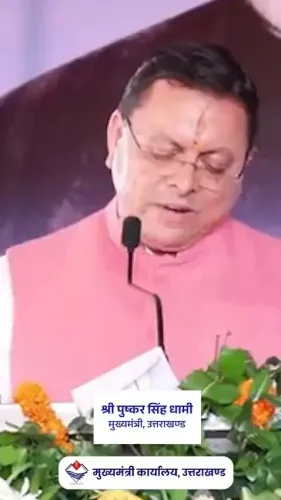
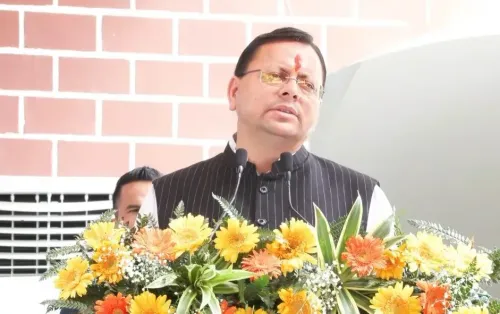
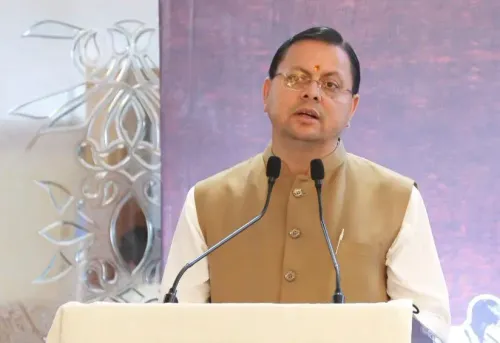
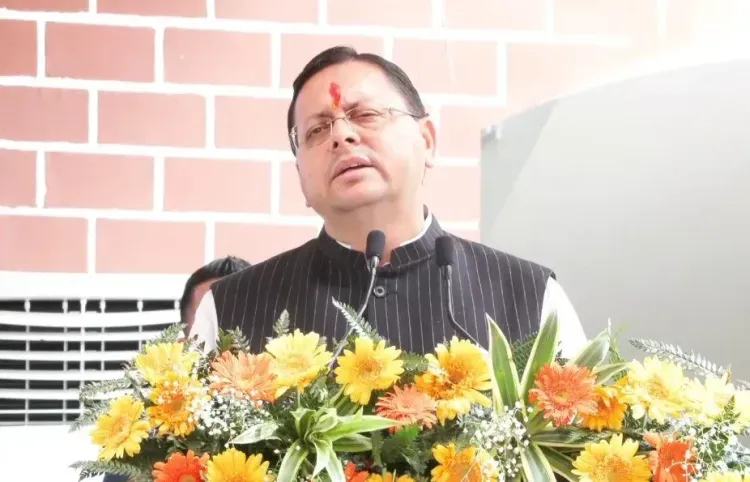
The post quotes Chief Minister Dhami directly: 'जनता ही लोकतंत्र में सर्वोपरि होती है।' ('The public is supreme in a democracy.') He added that the government's work is to act for the welfare of the people with complete dedication, sensitivity, and commitment. The statement was shared with an accompanying image through the official Chief Minister's Office handle on X.
Such affirmations of democratic values are a recurring feature of governance communication in Indian states, where chief ministers periodically articulate the philosophical underpinning of their administration's approach to public service.
Policy Backdrop
Uttarakhand, carved out as a separate state on 9 November 2000 from Uttar Pradesh, was formed precisely on the demand for more responsive governance for the people of the hill region. The state's founding rationale — better representation and administration for a geographically distinct population — lends particular resonance to statements about people-centric governance.
Chief Minister Pushkar Singh Dhami, who has led the state since 2021 representing the Bharatiya Janata Party, has consistently positioned his administration around themes of welfare delivery, public outreach, and administrative sensitivity. The BJP-led government in Dehradun has framed several of its flagship programmes around direct citizen benefit.
Stakeholders and Impact
The statement is directed at Uttarakhand's residents — a population spread across challenging hill terrain, where access to government services has historically been a concern. Messaging that foregrounds government accountability and public welfare carries practical significance for communities in remote districts of the state.
For the broader political landscape, such statements serve as a signal of administrative intent. Indian state governments routinely use such public communications to reinforce trust with citizens, particularly ahead of welfare scheme announcements or public outreach drives.
What's Next
The statement may precede specific policy announcements or public engagement initiatives by the Uttarakhand government. Observers of state politics will watch for follow-through in the form of welfare measures, administrative reforms, or grassroots outreach programmes that give concrete shape to the governance philosophy articulated by CM Dhami.
For a state whose very creation was rooted in the aspiration for more accountable governance, such reaffirmations carry weight — and the administration will be expected to demonstrate these principles through measurable outcomes for citizens across Uttarakhand's hills and plains.
Point of View
Not just intent, is what citizens in remote Uttarakhand districts evaluate. In the broader arc of BJP-led state governance, such messaging often precedes welfare announcements or administrative restructuring. The durability of this communication strategy will ultimately be tested by the concrete programmes that follow.
NationPress
10 Oct 2026
Frequently Asked Questions
What did CM Pushkar Singh Dhami say about democracy?
CM Pushkar Singh Dhami stated that the public is supreme in a democracy and that the government must work for people's welfare with complete dedication, sensitivity, and commitment.
When did the Uttarakhand Chief Minister's Office post this statement?
The statement was posted on Saturday, 11 July 2026 through the official Chief Minister's Office account on X.
Who is the Chief Minister of Uttarakhand?
Pushkar Singh Dhami is the Chief Minister of Uttarakhand, representing the Bharatiya Janata Party , and has held the position since 2021 .
Why was Uttarakhand created as a separate state?
Uttarakhand was carved out of Uttar Pradesh on 9 November 2000 in response to demands for better representation and more responsive governance for the people of the hill region.
What is the significance of CM Dhami's governance statement?
The statement reaffirms the administration's people-first philosophy and may signal upcoming welfare announcements or public outreach initiatives by the Uttarakhand government.