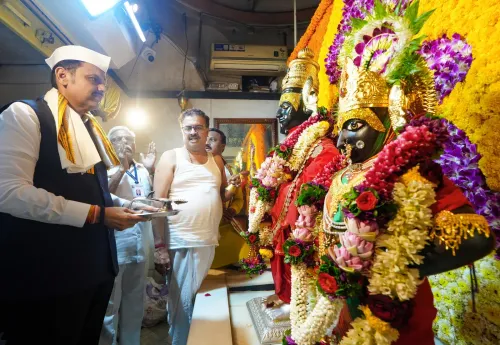
CM Fadnavis backs Pandharpur temple corridor for Warkari pilgrims

Synopsis
Maharashtra CM Devendra Fadnavis on 25 July 2026 reaffirmed that a temple corridor is being built at Pandharpur to improve darshan access for rising numbers of Warkari pilgrims, making the announcement during a felicitation event for the Mahapuja-leading Warkari couple on Ashadhi Ekadashi.
Key Takeaways
CM Devendra Fadnavis confirmed the Pandharpur temple corridor is under construction, aimed at improving darshan access for growing pilgrim numbers.
The announcement was made at a function in Pandharpur on 25 July 2026 during Ashadhi Ekadashi celebrations.
A Warkari couple honoured as the principal celebrants of the Mahapuja was felicitated at the event.
The corridor follows a national model of pilgrim-infrastructure upgrades seen at sites such as the Kashi Vishwanath Corridor inaugurated in 2021 .
Primary beneficiaries are the Warkari community, who undertake foot pilgrimages to Pandharpur twice yearly to seek darshan of Lord Vithoba .
The project timeline and budget provisions remain the key milestones to watch ahead of future Ashadhi Ekadashi gatherings.
Maharashtra Chief Minister Devendra Fadnavis on Saturday, 25 July 2026 reaffirmed the state government's commitment to building a temple corridor at Pandharpur, saying the project is designed to ease darshan arrangements for the growing number of devotees who converge on the sacred town each year. The announcement came on the occasion of honouring a Warkari couple recognised as the principal celebrants of the Mahapuja (grand ritual worship) at Pandharpur.
Context
In his post on X, CM Fadnavis wrote in both Marathi and Hindi: 'वाढती भाविकसंख्या लक्षात घेऊन मंदिर कॉरिडॉरची उभारणी केली जात आहे' — 'Keeping in mind the increasing number of devotees, the temple corridor is being constructed, which will make the darshan arrangements more accessible, organised and convenient.' The post was tagged #PandharpurWari and #AshadhiEkadashi, linking it directly to the annual Warkari pilgrimage season.
The statement was made during a function at Pandharpur on 25 July 2026, where a Warkari couple who held the honour of leading the Mahapuja was felicitated — a gesture that underscored the government's engagement with the Warkari community and its traditions.
Policy Backdrop
The Pandharpur corridor project fits into a broader national pattern of state-led infrastructure upgrades at high-volume pilgrimage sites. The model gained prominence with the Kashi Vishwanath Corridor inaugurated in 2021, which widened access routes, reorganised queuing systems and added pilgrim amenities around the historic temple in Varanasi. Maharashtra's initiative follows the same administrative logic: as footfall rises, physical infrastructure must scale to prevent crowd-management failures.
Ashadhi Ekadashi, the principal festival of the Warkari calendar, draws hundreds of thousands of devotees to Pandharpur annually to seek the darshan of Lord Vithoba. The Warkari tradition — rooted in the teachings of saints such as Dnyaneshwar and Tukaram — involves foot pilgrimages undertaken twice a year, making the town one of Maharashtra's most significant religious destinations and placing sustained pressure on existing access infrastructure.
Stakeholders and Impact
The primary beneficiaries of the corridor project are the Warkari pilgrims, many of whom travel on foot for days before reaching the Vithoba temple. For this community, ease of darshan — the act of beholding the deity — is the culmination of an arduous journey, making queue management and access routes a matter of deep personal significance. The Pandharpur temple administration is also a key stakeholder, as improved infrastructure directly affects its capacity to handle peak-season crowds safely.
Beyond the religious dimension, the project has economic implications for the town's hospitality and small-trade ecosystem, which depends heavily on pilgrim footfall during festival seasons. Smoother crowd flow can extend the effective window for commerce and reduce the risk of incidents that have historically disrupted large gatherings.
What's Next
Attention will now focus on the construction timeline for the Pandharpur corridor and whether the state will announce dedicated budget provisions to accelerate completion ahead of future Ashadhi Ekadashi gatherings. The government's willingness to publicly champion the project during the 2026 pilgrimage season signals that it remains a priority, and observers will watch for formal project milestones and ground-level progress in the months ahead. For the Warkari community, the corridor's delivery will be a concrete test of the state's commitment to the tradition it has publicly honoured.
Point of View
CM Fadnavis maximises symbolic reach with a community that cuts across caste lines and commands deep moral authority in Maharashtra. The felicitation of the Mahapuja Warkari couple adds a layer of cultural legitimacy that goes beyond brick-and-mortar infrastructure. Whether the corridor is delivered on schedule will determine if the gesture translates into durable goodwill or becomes a liability ahead of the next electoral cycle.
NationPress
25 Jul 2026
Frequently Asked Questions
What is the Pandharpur temple corridor project?
The Pandharpur temple corridor is a state government infrastructure initiative to widen access routes, organise queuing and improve facilities around the Vithoba temple in Pandharpur , Maharashtra, to handle the growing number of pilgrims visiting for darshan.
What did CM Fadnavis say about Pandharpur on Ashadhi Ekadashi 2026?
CM Devendra Fadnavis said on 25 July 2026 that the temple corridor at Pandharpur is being constructed keeping in mind the increasing number of devotees, and that it will make darshan arrangements more accessible, organised and convenient.
What is Ashadhi Ekadashi and why is Pandharpur important?
Ashadhi Ekadashi is the principal annual festival of the Warkari tradition, drawing hundreds of thousands of devotees to Pandharpur in Maharashtra to seek the darshan of Lord Vithoba at the historic temple there.
Who are the Warkaris?
The Warkaris are traditional Hindu pilgrims who undertake foot journeys to Pandharpur twice a year, following the spiritual teachings of Maharashtrian saints such as Dnyaneshwar and Tukaram .
How does the Pandharpur corridor compare to other temple corridor projects in India?
The Pandharpur corridor follows the same model as the Kashi Vishwanath Corridor inaugurated in 2021 , which widened access, reorganised crowds and added amenities around a major Hindu temple — an approach several Indian state governments have since adopted at high-footfall pilgrimage sites.