CM Fadnavis campaigns in Sangli for Mahayuti MLC candidates
Synopsis
Maharashtra CM Devendra Fadnavis campaigned in Sangli on 19 October 2026 at a Mahayuti workers' meet, backing Dr. Smitataai Jadhav for the Pune Graduate MLC seat and Kaustubh Gavade for the Teachers' constituency — contests that will reshape the state's Legislative Council arithmetic.
Key Takeaways
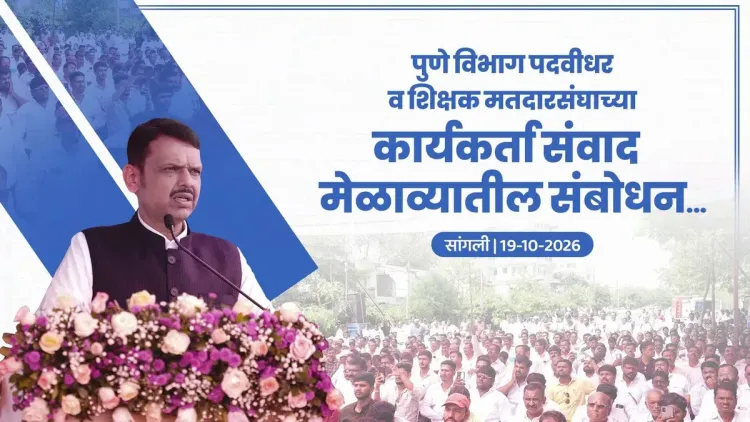
CM Devendra Fadnavis addressed a Karyakarta Sanvad Melava in Sangli on 19 October 2026 .
Smitataai Jadhav is the BJP-Mahayuti candidate for the Pune Division Graduate Constituency Legislative Council seat.
Kaustubh Gavade is the alliance's nominee for the Teachers' Constituency .
Maharashtra's graduate and teachers' MLC seats are contested approximately every six years under the state's post-1960 indirect election framework.
The Mahayuti alliance comprises the BJP , Shiv Sena (Shinde faction) , and NCP (Ajit Pawar faction) .
Results will indicate whether Mahayuti can convert executive dominance into a stronger Legislative Council majority .
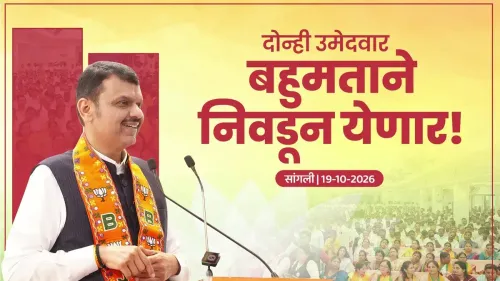
With the Maharashtra Legislative Council's graduate and teachers' constituencies heading to polls, Maharashtra Chief Minister Devendra Fadnavis took the campaign trail to Sangli on Monday, 19 October 2026 — personally addressing a workers' outreach rally for the ruling alliance's nominees and signalling just how seriously the Mahayuti bloc is treating these indirect elections.
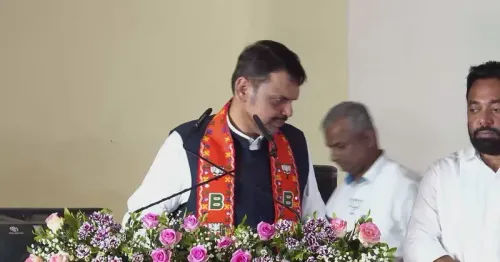
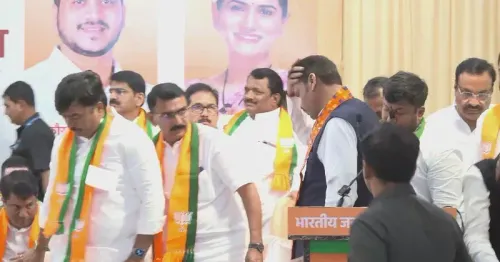
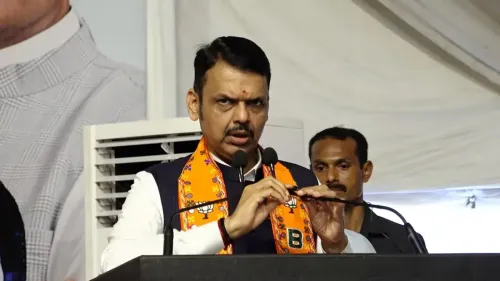
Fadnavis addressed a Karyakarta Sanvad Melava (workers' dialogue meet) in Sangli, throwing his weight behind Dr. Smitataai Jadhav, the BJP and Mahayuti-endorsed candidate for the Pune Division Graduate Constituency, and Kaustubh Gavade, the alliance's nominee for the Teachers' Constituency. The Chief Minister's direct presence at a constituency-level workers' meet — well below the tier of a mass rally — underscores how granular the Mahayuti campaign machinery has become for upper-house seats.
Why these two seats matter to the ruling alliance
Maharashtra's Legislative Council, the state's upper house, elects a set of members from graduate and teachers' constituencies roughly every six years under the indirect election framework that dates to the state's post-1960 reorganisation. Though the electorates are small — registered graduates and practising teachers rather than the general public — these contests carry disproportionate weight: each seat shifts the upper-house arithmetic that determines how smoothly the government can pass legislation and manage Rajya Sabha aspirations.
The Mahayuti alliance — comprising the BJP, Shiv Sena (Shinde faction), and NCP (Ajit Pawar faction) — has held the state's executive power since mid-2023 and reinforced that grip in the 2024 assembly elections. Converting executive dominance into Legislative Council strength is the next logical step, and graduate and teachers' seats — historically contested on personality and local credibility rather than pure party loyalty — are never guaranteed.
Fadnavis in Sangli: a deliberate pitch to an educated electorate
Sangli, a prosperous western Maharashtra city known for its turmeric trade and strong cooperative-sector tradition, sits within the Pune Division's geographic orbit and has an active graduate voter base. Holding a karyakarta melava here rather than a street-corner rally is a studied choice: the format puts Fadnavis in direct conversation with booth-level workers who will actually mobilise the limited, list-based electorate. In graduate and teachers' polls, ground organisation — tracking registered voters, ensuring turnout, managing preferences — matters far more than crowd optics.
The Chief Minister's appearance also functions as an endorsement amplifier for both Dr. Jadhav and Gavade, lending the full weight of the state government's brand to nominees who must otherwise build individual rapport with niche voter pools.
Upper-house chess: what the results will reveal
Watcher eyes will be on the results of both the Pune Graduate and the Teachers' constituencies to see whether Mahayuti's ground campaign converts the CM's personal push into seats — and whether the opposition can hold any traditional strongholds in educated-voter blocs. Every gain in the Legislative Council inches the ruling alliance closer to a working majority in the upper house, smoothing the legislative calendar for the remainder of Fadnavis's term.
In Maharashtra's perpetually fluid politics, even a council by-poll in Sangli can ripple far wider than its formal mandate.
Point of View
Not crowd spectacle, so deploying the Chief Minister at the grassroots level is a deliberate resource allocation. The move signals that Mahayuti views Legislative Council composition as a genuine second-order priority after its assembly dominance. Securing both Pune Graduate and Teachers' seats would give the alliance tighter upper-house control, easing legislative throughput and narrowing spaces for opposition disruption. It also reinforces Fadnavis's role as the coalition's chief campaigner — cementing personal loyalty from workers across even non-assembly contests.
NationPress
19 Oct 2026
Frequently Asked Questions
What is the Pune Division Graduate Constituency election?
It is a Maharashtra Legislative Council seat elected by registered graduate voters in the Pune Division roughly every six years under the state's indirect election framework; BJP-Mahayuti nominee Dr. Smitataai Jadhav is contesting the 2026 cycle.
Who is Kaustubh Gavade?
Kaustubh Gavade is the BJP and Mahayuti-endorsed candidate for the Teachers' Constituency in the Maharashtra Legislative Council elections, backed publicly by Chief Minister Devendra Fadnavis at the Sangli rally on 19 October 2026.
Why did Devendra Fadnavis go to Sangli for a workers' meet?
Graduate and teachers' MLC constituencies have small, list-based electorates where booth-level worker mobilisation is decisive; Fadnavis chose a workers' dialogue format in Sangli to energise local campaign machinery rather than hold a mass public rally.
What is the Mahayuti alliance in Maharashtra?
Mahayuti is the ruling coalition in Maharashtra comprising the BJP, Shiv Sena led by Eknath Shinde, and NCP led by Ajit Pawar; it has governed the state since 2023 and won a reinforced mandate in the 2024 assembly elections.
How important are Maharashtra Legislative Council graduate and teachers' seats?
Though elected by small specialist electorates, these seats shift upper-house arithmetic, affecting the ruling alliance's ability to pass legislation smoothly and influencing the political balance in the Maharashtra Legislative Council.