CM Fadnavis decodes the Simhastha Kumbh Dharmdhwaj's symbols
Synopsis
Maharashtra CM Devendra Fadnavis decoded the eight sacred symbols on the Simhastha Kumbh Mela Dharmdhwaj at Trimbakeshwar — from the Jupiter-Leo astronomical trigger to the Godavari's Makar — marking an active public phase of preparations for the 12-yearly pilgrimage.
Key Takeaways
CM Devendra Fadnavis publicly explained the iconography of the Simhastha Kumbh Mela Dharmdhwaj raised at Trimbakeshwar on 31 October 2026 .
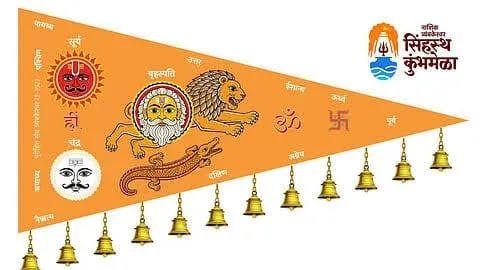
The flag carries eight symbols : Sun-Moon-Jupiter, Jupiter in Leo, twelve bells, Makar (Godavari's vehicle), Om and Swastika, ten directions, and the Beej mantra Hreem .
Jupiter's entry into Leo (Simha Rashi) is the astronomical event that determines when the Simhastha Kumbh is held — once every twelve years .
The Godavari river at Nashik-Trimbakeshwar is the only Kumbh site centred on this river; the previous edition was held in 2015 .
The Nashik-Trimbakeshwar Kumbh Mela Authority (NTKMA) is the official organising body tagged in the CM's post.
The post signals the Maharashtra government's communication around the Simhastha is now in an active public phase, with infrastructure and security announcements expected to follow.
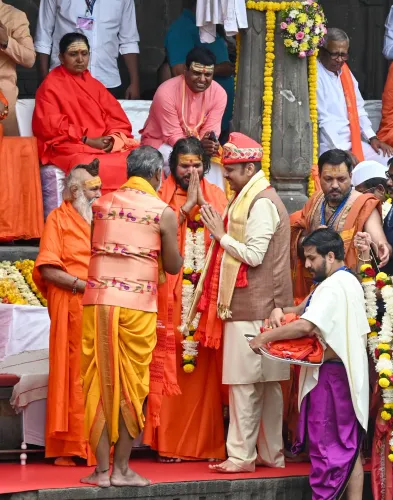
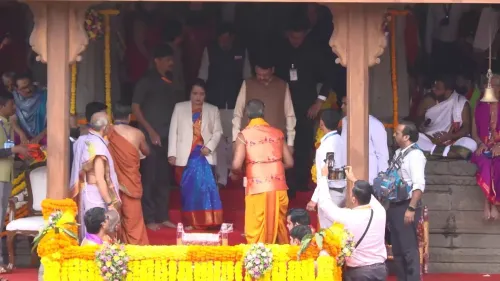
Every symbol on a flag tells a story — and the Simhastha Kumbh Mela Dharmdhwaj raised at Shrikshetra Trimbakeshwar is dense with twelve centuries of mythology, astronomy, and riverine devotion. Maharashtra Chief Minister Devendra Fadnavis unpacked that story on Saturday, 31 October 2026, explaining the layered iconography of the official flag for the upcoming Simhastha Kumbh Mela at Nashik-Trimbakeshwar to his followers on X.
What the Dharmdhwaj carries — symbol by symbol
Fadnavis described the flag as a confluence of three great traditions: 'अमृत कुंभाची पौराणिक परंपरा, ज्योतिषीय कालचक्र आणि गोदावरीच्या तीर्थपरंपरा' — the mythological tradition of the Amrit Kumbh, the astrological cycle of time, and the sacred river heritage of the Godavari.
The flag carries eight distinct symbols, each anchored in scripture or astronomy. The Sun, Moon, and Jupiter (Brihaspati) represent the planetary guardians of the Amrit Kumbh in Puranic lore. Jupiter's entry into Leo (Simha Rashi) is the very astronomical trigger that determines when the Simhastha Kumbh is held — making it both a religious and a calendrical marker. Twelve bells stand for the twelve zodiac signs and Jupiter's twelve-year orbital cycle, the heartbeat of the Kumbh's recurrence.
The Makar (crocodile) is the vehicle of the Godavari river — the sacred waterway whose banks at Nashik and Trimbakeshwar host the mela. Om and the Swastika appear as auspicious marks. The ten directions — East, West, North, South, Northeast, Southeast, Southwest, Northwest, and the vertical pair of Zenith and Nadir — are inscribed to convey the all-encompassing reach of the Simhastha. Finally, the Beej mantra 'Hreem' (ह्रीं) encodes cosmic consciousness, Maya, and creative energy in a single sound.
Trimbakeshwar and the 12-year cycle
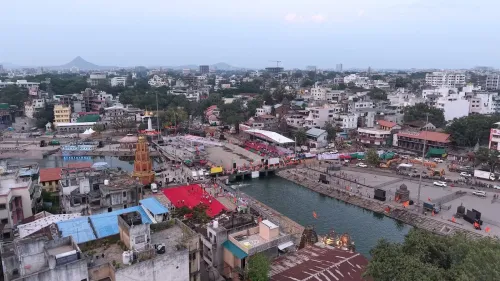
Trimbakeshwar, a temple town in Nashik district, is one of the four principal Kumbh Mela sites in India and the only one centred on the Godavari. The Simhastha Kumbh is held here every twelve years, synchronised with Jupiter's transit into Leo — a cycle that draws millions of pilgrims for ritual bathing at the river's source. The previous edition was held in 2015, when the state government coordinated large-scale logistics and facilities for the gathering.
The Nashik-Trimbakeshwar Kumbh Mela Authority (NTKMA), tagged in Fadnavis's post, is the official body managing the event's organisation. The Dharmdhwaj's formal unveiling and the CM's detailed public explanation signal that preparations for the next edition are now in an active public phase.
Why a flag explanation matters politically
Maharashtra governments have a long tradition of foregrounding cultural and religious symbolism during the run-up to large-scale pilgrimages. By personally decoding each icon on the Dharmdhwaj, Fadnavis positions the state administration as both a custodian of Hindu heritage and a logistical guarantor of one of the world's largest peaceful public gatherings. The post, written in Marathi and directed at the NTKMA's official account, signals that the government's communication machinery around the Simhastha is now fully engaged.
Millions of pilgrims, Nashik residents, and religious organisations will be watching for follow-up announcements on infrastructure, security, and the ritual calendar as the mela approaches.
The Dharmdhwaj is up. The twelve-year wait is nearly over.
Point of View
Symbol-by-symbol breakdown of the Dharmdhwaj is a calibrated act of cultural statecraft — it frames the BJP-led Maharashtra government as the steward of a living Puranic tradition, not merely a logistics administrator. With the Simhastha returning after eleven years, the ruling party has a clear incentive to be visibly and intimately associated with one of Hinduism's most attended pilgrimages. The move also serves a softer purpose: educating a younger, urban Marathi audience about the astronomical and scriptural depth behind a mega-event they may otherwise see only as a crowd-management challenge. Watch for this cultural communication to intensify as the mela date approaches and state spending on infrastructure comes under scrutiny.
NationPress
31 Oct 2026
Frequently Asked Questions
What is the Simhastha Kumbh Mela and where is it held?
The Simhastha Kumbh Mela is a major Hindu pilgrimage held every twelve years at Nashik and Trimbakeshwar in Maharashtra, on the banks of the Godavari river. It is triggered astronomically by Jupiter's entry into the Leo zodiac sign.
What does the Simhastha Kumbh Mela Dharmdhwaj symbolise?
The Dharmdhwaj carries eight symbols representing the Amrit Kumbh mythology (Sun, Moon, Jupiter), the twelve-year astrological cycle (twelve bells, Jupiter in Leo), the Godavari river (Makar), auspicious marks (Om, Swastika), the ten directions, and the Beej mantra Hreem for cosmic energy.
When was the last Simhastha Kumbh Mela in Nashik?
The previous Simhastha Kumbh Mela in Nashik-Trimbakeshwar was held in 2015, with the Maharashtra state government coordinating logistics and facilities for the event.
Why is Jupiter's entry into Leo significant for the Kumbh Mela?
Jupiter (Brihaspati) entering Leo (Simha Rashi) is the key astronomical event that determines the timing of the Simhastha Kumbh Mela. Because Jupiter completes one orbit of the Sun in approximately twelve years, this transit recurs on a twelve-year cycle, setting the mela's schedule.