CM Fadnavis flags Quebec investment, Solapur corridor, Atrocity Act
Synopsis
Chief Minister Devendra Fadnavis on 3 July 2026 met a Quebec delegation for investment talks, directed higher Atrocity Act conviction rates, announced the Solapur Elevated Corridor for industrial growth, and pledged farmer consent for the Pavana pipeline project.
Key Takeaways
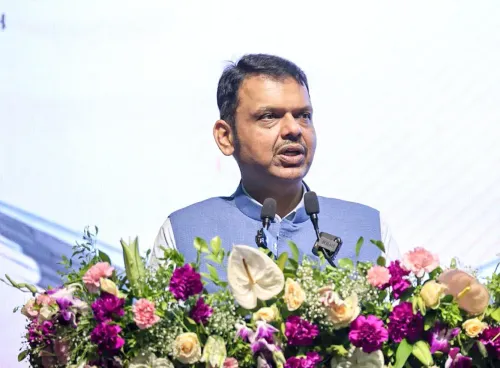
CM Devendra Fadnavis met a delegation from Quebec, Canada and said the partnership will bring major investment to Maharashtra .
Fadnavis chaired the State-level Vigilance and Monitoring Committee and directed officials to raise conviction rates under the SC/ST (Prevention of Atrocities) Act .
The proposed Solapur Elevated Corridor was cited as a permanent solution to traffic congestion and a driver of industrial development in Solapur .
The Pavana Direct Parallel Pipeline Project will be implemented only with the consent of farmers in the region, the CM stated.
All four announcements were consolidated in the CMO's official daily summary released on Friday, 3 July 2026 .
The Chief Minister's Office of Maharashtra released its daily governance summary for Friday, 3 July 2026, highlighting four key developments from Chief Minister Devendra Fadnavis's schedule — spanning international investment outreach, social-justice oversight, urban infrastructure, and farmer-sensitive water policy.
Context
The CMO's end-of-day digest, posted at 11:30 PM IST, consolidates official announcements across departments into a single public communication — a format the office has used to maintain transparency on the Chief Minister's daily engagements. Friday's summary covered four distinct policy domains, signalling the breadth of the administration's concurrent priorities.
The post, originally in Marathi, translates to: 'आजच्या दिवसाचा सारांश' (Today's day summary), followed by four headline announcements attributed directly to CM Fadnavis.
Policy Backdrop
A delegation from the Canadian province of Quebec met CM Devendra Fadnavis, with the Chief Minister stating that the partnership would bring 'major investment' to Maharashtra. Quebec has established interests in aerospace, clean technology, and advanced manufacturing — sectors that align with Maharashtra's industrial profile. The meeting continues a pattern of bilateral provincial-level economic outreach that the Fadnavis administration has pursued since the landmark Magnetic Maharashtra Global Investment Summit of 2018.
On social justice, CM Fadnavis chaired the State-level Vigilance and Monitoring Committee meeting and directed officials to increase the conviction rate in cases registered under the Scheduled Castes and Scheduled Tribes (Prevention of Atrocities) Act — commonly referred to as the 'Atrocity Act'. Statutory monitoring committees at the state level have operated since 2015 amendments to the Act, with a mandate to track implementation and judicial outcomes for SC/ST communities.
In urban infrastructure, the Chief Minister stated that the proposed Solapur Elevated Corridor would provide 'a permanent solution to traffic congestion' and boost industrial development in Solapur district. Maharashtra has pursued elevated corridors and ring-road projects in tier-2 cities since 2015 to address urban mobility bottlenecks.
On water policy, CM Fadnavis assured that the Pavana Direct Parallel Pipeline Project would be implemented only with the consent of farmers in the region — a statement aimed at addressing concerns among agricultural communities in the Pavana catchment area.
Stakeholders and Impact
The Quebec delegation meeting directly affects potential investors and industrial units in Maharashtra eyeing foreign capital inflows. The Atrocities Act monitoring directive has immediate relevance for SC/ST communities across the state, for whom conviction rates under the Act have historically remained a point of concern.
The Solapur Elevated Corridor announcement is significant for industrial units, commuters, and logistics operators in Solapur. Meanwhile, the farmer-consent assurance on the Pavana pipeline is directed at agricultural stakeholders in the region, reflecting the administration's effort to pre-empt land and water-use disputes.
What's Next
Concrete investment figures and sectoral commitments from the Quebec delegation are expected to be formalised in follow-up announcements. Progress on the Solapur Elevated Corridor — including tendering and land-acquisition timelines — will be closely watched by urban planners and industry bodies in the region.
The Pavana pipeline project's farmer-consultation process will determine its implementation pace, while the state government's next Vigilance Committee report will indicate whether conviction rates under the Atrocities Act show measurable improvement following Friday's directive.
Point of View
A playbook Fadnavis has refined since 2018. The farmer-consent clause on the Pavana pipeline and the Atrocities Act directive suggest the CM is also managing political sensitivities ahead of any major project rollouts. Taken together, the daily digest format itself is a governance communication tool — condensing diverse policy signals into a single daily narrative for public consumption.
NationPress
4 Jul 2026
Frequently Asked Questions
What did Quebec's delegation discuss with CM Devendra Fadnavis?
A delegation from the Canadian province of Quebec met CM Devendra Fadnavis on 3 July 2026, with the Chief Minister stating that the partnership would bring major investment to Maharashtra. Specific investment figures and sectors are yet to be formally announced.
What did CM Fadnavis say about the Atrocity Act?
CM Fadnavis, chairing the State-level Vigilance and Monitoring Committee meeting, directed officials to increase the conviction rate in cases registered under the Scheduled Castes and Scheduled Tribes (Prevention of Atrocities) Act.
What is the Solapur Elevated Corridor project?
The Solapur Elevated Corridor is a proposed urban infrastructure project in Solapur district of Maharashtra, aimed at permanently resolving traffic congestion and boosting industrial development in the region.
Will the Pavana pipeline project affect farmers?
CM Devendra Fadnavis assured that the Pavana Direct Parallel Pipeline Project will be implemented only with the consent of farmers in the region, addressing concerns among agricultural communities in the Pavana catchment area.
What is the CMO Maharashtra daily summary?
The Chief Minister's Office of Maharashtra publishes an end-of-day digest consolidating key announcements and engagements from the Chief Minister's schedule, providing a single public record of the day's governance activities.