CM Fadnavis: Navi Mumbai Named India's Cleanest City 2025-26
Synopsis
Navi Mumbai was named India's Cleanest City at the Swachh Survekshan Awards 2025-26, presented by President Droupadi Murmu in New Delhi. Maharashtra swept five categories, with Vita, Panchgani, Ratnagiri, and Pimpri-Chinchwad also winning national honours. CM Devendra Fadnavis credited the state's 'Swachhata Warriors' for the achievement.
Key Takeaways
Navi Mumbai ranked 1st in the country in the 'Super Clean City' category at the Swachh Survekshan Awards 2025-26 .
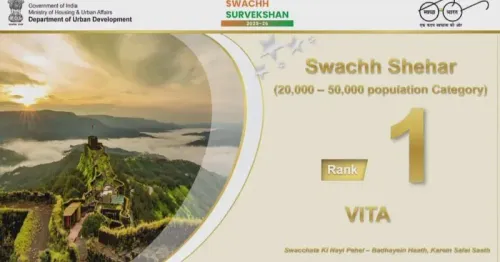
Sangli) ranked 1st among cities with a population of 20,000–50,000 .
Satara) ranked 2nd among cities with a population below 20,000 .
Ratnagiri ranked 3rd in the Swachh Coastal Town category.
Pimpri-Chinchwad was recognised as the State First Swachh City of Maharashtra .
Awards were presented by President Droupadi Murmu in New Delhi on 11 November 2026 .
Five Maharashtra cities swept the Swachh Survekshan Awards 2025-26 on Wednesday, 11 November 2026, with Navi Mumbai claiming the crown as India's Cleanest City in the 'Super Clean City' category — a haul that makes it the state's most decorated single-night performance in the survey's decade-long run. Maharashtra Chief Minister Devendra Fadnavis broke the news on X, congratulating the cities and their 'Swachhata Warriors' in both English and Marathi.
Navi Mumbai at the top, four more cities in the frame
President Droupadi Murmu presented the awards at a ceremony in New Delhi, elevating Navi Mumbai to the top of the national cleanliness rankings. The planned satellite city across the creek from Mumbai has long invested in organised waste management and open-space upkeep — and that consistency now has a national gold medal to show for it.
The state's sweep stretched across categories and geographies. Vita (District Sangli) ranked 1st among cities with a population of 20,000–50,000. Panchgani (District Satara) came 2nd among cities with a population below 20,000 — a remarkable result for a small hill station. Ratnagiri finished 3rd in the Swachh Coastal Town category, and Pimpri-Chinchwad was recognised as the State First Swachh City of Maharashtra.
What Swachh Survekshan actually measures — and why states fight for it
The Swachh Survekshan is the annual report card of the Swachh Bharat Mission, launched in 2014 to eliminate open defecation and overhaul urban solid-waste management across India. The survey itself was first conducted in 2016, deliberately designed as a competitive ranking to push cities and states to outperform each other year on year.
Over successive editions, the survey has expanded its architecture — adding population-tier categories, coastal-town tracks, and 'super clean' designations — precisely to bring smaller cities and specialised geographies into the competition. That design choice is why Vita and Panchgani, towns that would barely register in a single all-India list, now have their own national podiums. Maharashtra has featured consistently among the top-performing states since the mission's early years.
The grassroots workforce behind the trophies
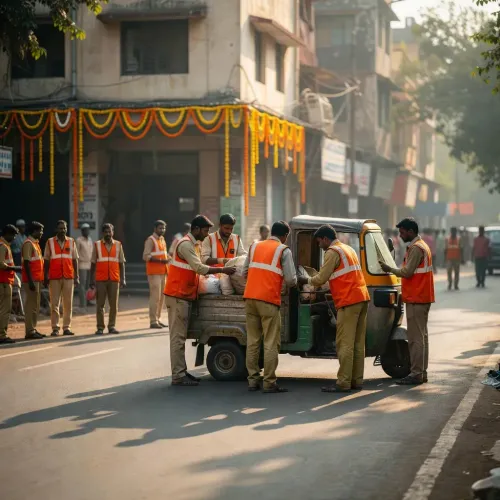
Fadnavis's post was pointed in crediting 'Swachhata Warriors' — the sanitation workers, supervisors, and municipal employees who handle daily collection, segregation, and disposal on the ground. It is a deliberate framing: the award ceremony happens in New Delhi, but the work happens block by block in every ward.
The recognition also lands at an important moment for urban local bodies navigating Swachh Bharat Mission-Urban 2.0, the mission's expanded second phase, which raises the bar on scientific waste processing and wastewater management. For cities like Navi Mumbai and Pimpri-Chinchwad, this year's rankings are both a vindication and a benchmark they will now have to defend.
Five trophies, one night, and a state now firmly at the front of India's urban cleanliness race. The next Swachh Survekshan cycle will show whether Maharashtra can hold the line — or raise it further.
Point of View
The results arrive as a timely political dividend, validating the state government's municipal governance at a moment when urban infrastructure is a growing electoral talking point. The inclusion of small towns like Vita and Panchgani in the winners' list signals that the survey's expanding category architecture is finally pulling smaller urban bodies into the sanitation competition with tangible results. The real test, under Swachh Bharat Mission-Urban 2.0's tougher waste-processing mandates, will be whether these cities can sustain and institutionalise what earned them the award.
NationPress
11 Nov 2026
Frequently Asked Questions
Which city won India's Cleanest City award in Swachh Survekshan 2025-26?
Navi Mumbai won the title of India's Cleanest City, ranking 1st in the 'Super Clean City' category at the Swachh Survekshan Awards 2025-26.
Who presented the Swachh Survekshan Awards 2025-26?
President Droupadi Murmu presented the Swachh Survekshan Awards 2025-26 at a ceremony held in New Delhi on 11 November 2026.
Which Maharashtra cities won at Swachh Survekshan 2025-26?
Five Maharashtra cities won: Navi Mumbai (1st, Super Clean City), Vita/Sangli (1st, 20,000–50,000 population category), Panchgani/Satara (2nd, below 20,000 population category), Ratnagiri (3rd, Coastal Town), and Pimpri-Chinchwad (State First Swachh City of Maharashtra).
What is Swachh Survekshan and when did it start?
Swachh Survekshan is an annual national cleanliness survey under the Swachh Bharat Mission that ranks Indian cities on sanitation parameters. It was first conducted in 2016 to incentivise competition among urban local bodies.
What is the Swachh Bharat Mission?
The Swachh Bharat Mission is a national programme launched in 2014 aimed at eliminating open defecation and improving solid waste management across India's urban and rural areas.