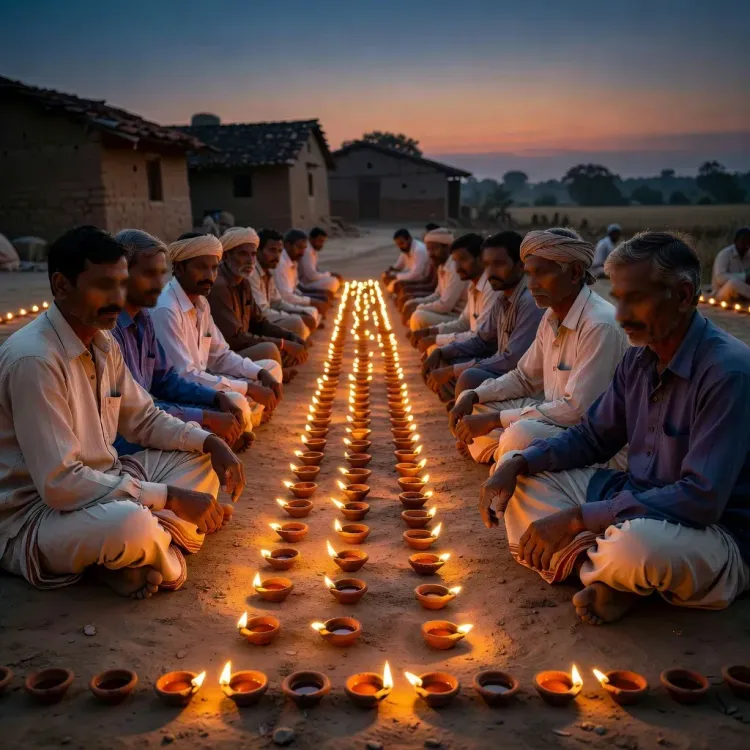
CM Fadnavis Spends Diwali With Farmers in Nagpur
Synopsis
On Diwali 2026, Maharashtra CM Devendra Fadnavis celebrated with farmers in Nagpur while PM Modi spent the festival with soldiers — the Chief Minister's Office invoking the classic 'Jai Jawan Jai Kisan' slogan to frame both gestures as a unified national compact.
Key Takeaways
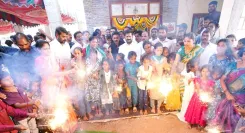
CM Devendra Fadnavis spent Diwali 2026 with farmers in Nagpur , Maharashtra's winter capital.
PM Narendra Modi marked Diwali with soldiers, creating a symbolic national-state parallel.
The post invokes the slogan 'Jai Jawan Jai Kisan' , first popularised by PM Lal Bahadur Shastri in 1965 .
The Chief Minister's Office of Maharashtra shared the update on 8 November 2026 .
Farmer welfare remains a central political and policy concern in Maharashtra, giving the outreach added significance.
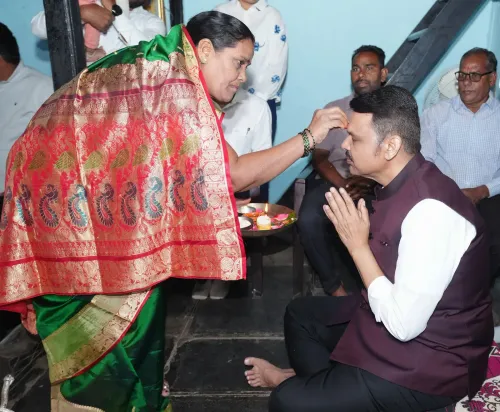
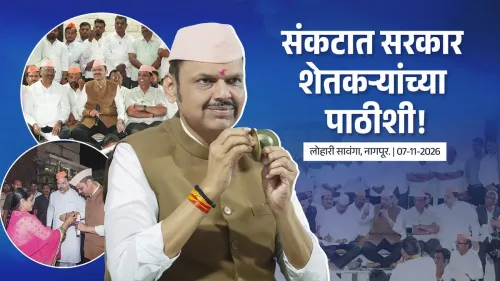
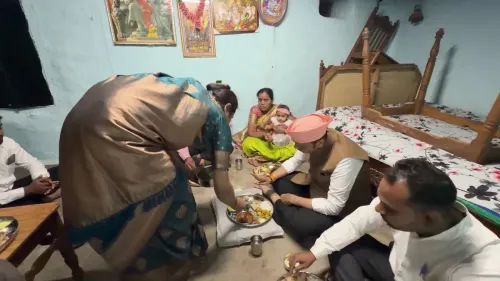
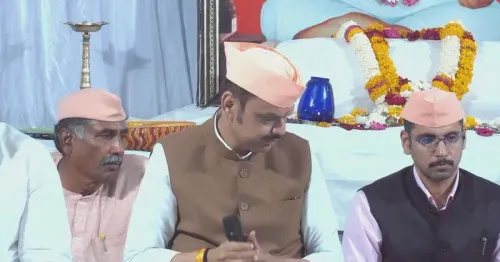
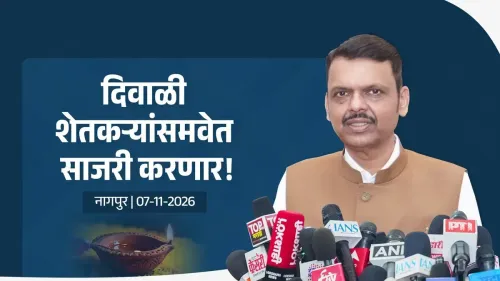
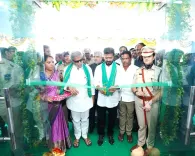
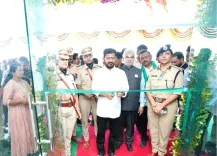
While Prime Minister Narendra Modi marked Diwali 2026 alongside soldiers on the front lines, Maharashtra Chief Minister Devendra Fadnavis chose to celebrate the festival of lights with the state's farming community in Nagpur — a pointed, symbolic pairing that the Chief Minister's Office of Maharashtra captured in a single post on Sunday, 8 November 2026.
The post invokes the timeless slogan 'Jai Jawan, Jai Kisan' — 'Hail the Soldier, Hail the Farmer' — first raised by Prime Minister Lal Bahadur Shastri in 1965 during a moment of acute national crisis. Sixty-one years on, the phrase still resonates as a shorthand for India's twin pillars of security and sustenance, and its use here is deliberate: one leader with the men in uniform, another with the men behind the plough.
Nagpur, Diwali, and a Chief Minister Among Farmers
Nagpur, Maharashtra's winter capital and Fadnavis's home turf, served as the backdrop for the Chief Minister's farmer outreach. The gesture fits a well-worn tradition in Indian public life — senior leaders spending major festivals not at official residences but in the field, in a visible show of solidarity with the communities that form the state's backbone.
Maharashtra's farming belt has faced persistent stress in recent years — drought cycles, shifting monsoon patterns, and debt burdens that have kept agrarian welfare at the centre of state politics. A Diwali visit to farmers is as much political communication as it is cultural participation: it signals that the government's attention has not drifted.
The Shastri Echo — and Why It Still Works
The choice of 'Jai Jawan, Jai Kisan' as the frame for a 2026 Diwali post is not accidental. Shastri's slogan was born in wartime and famine — a compression of everything the Indian state owed its protectors. Its revival here, applied symmetrically to Modi and Fadnavis, positions both leaders as custodians of that original compact: the soldier guards the border, the farmer feeds the nation, and the state honours both.
Indian political leaders across party lines have long used festival seasons to stage exactly this kind of outreach — it is a durable, low-risk, high-visibility ritual. What gives this iteration texture is the deliberate national-to-state parallel: the Prime Minister's gesture with jawans provides the patriotic frame; the Chief Minister's gesture with kisans fills in the domestic, agrarian dimension.
Point of View
Fadnavis with kisans) is a deliberate image-management choice that reinforces the BJP's agrarian-solidarity narrative ahead of any upcoming electoral or budget cycle in Maharashtra. Festival outreach of this kind costs little but lands consistently with rural constituencies. It is routine in form, but its invocation of a 60-year-old slogan signals an intent to root current leadership in a broader, emotionally resonant national story.
NationPress
8 Nov 2026
Frequently Asked Questions
Where did CM Devendra Fadnavis celebrate Diwali 2026?
CM Devendra Fadnavis celebrated Diwali 2026 with farmers in Nagpur, the winter capital of Maharashtra.
What does 'Jai Jawan Jai Kisan' mean?
'Jai Jawan Jai Kisan' translates to 'Hail the Soldier, Hail the Farmer' — a slogan first popularised by Prime Minister Lal Bahadur Shastri in 1965 to honour India's armed forces and farming community.
Who started the slogan Jai Jawan Jai Kisan?
The slogan was first raised by Prime Minister Lal Bahadur Shastri in 1965 during a period of war and food scarcity in India.
What did PM Modi do on Diwali 2026?
According to the Chief Minister's Office of Maharashtra's post, PM Narendra Modi spent Diwali 2026 with soldiers, while CM Fadnavis celebrated with farmers.
Why does Maharashtra CM celebrate Diwali with farmers?
Maharashtra has a large and politically significant farming community facing ongoing agrarian stress; festival outreach by state leaders is a longstanding tradition of solidarity and public engagement.