CM Fadnavis Wishes MoS S P Singh Baghel on Birthday
Synopsis
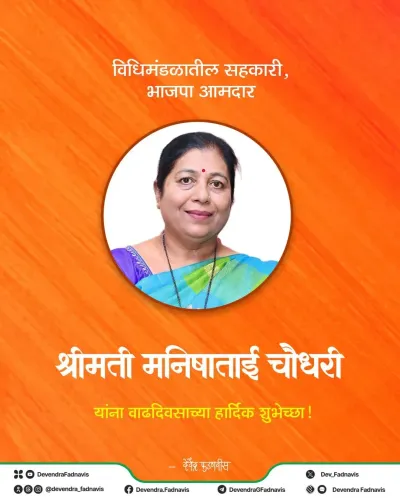
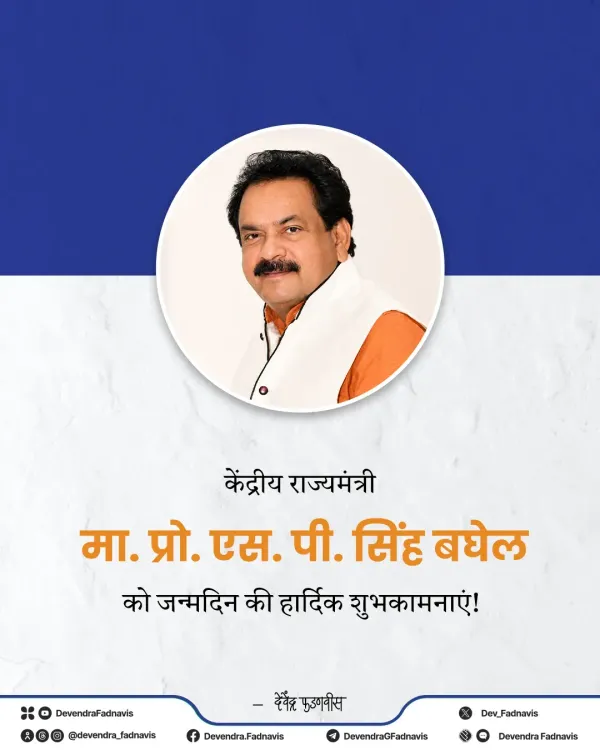
Maharashtra Chief Minister Devendra Fadnavis on June 21, 2026 publicly wished Union Minister of State Prof. S P Singh Baghel a happy birthday in a bilingual English-Hindi post on X, reflecting routine BJP inter-tier solidarity.
Key Takeaways
Maharashtra Chief Minister Devendra Fadnavis posted birthday greetings for Union MoS Prof.
S P Singh Baghel on June 21, 2026 .
The message was bilingual, posted in both English and Hindi on the X platform.
S P Singh Baghel is a BJP parliamentarian serving as a Union Minister of State in the central government.
Such exchanges are routine among senior BJP leaders and reflect visible party solidarity across state and central government tiers.
The post underscores ongoing coordination between the Maharashtra government and the BJP -led Union cabinet.
Maharashtra Chief Minister Devendra Fadnavis extended birthday greetings to Union Minister of State Prof. S P Singh Baghel on Sunday, June 21, 2026, wishing him long life and good health in a public message posted on X.
Context
Fadnavis addressed Baghel as 'Hon'ble Union MoS' (Union Minister of State), offering greetings in both English and Hindi. The Hindi portion reads: 'Kendriya Rajyamantri manya Prof. S. P. Singh Baghel ji ko janmadin ki hardik shubhkamnayen!' — translated as 'Heartiest birthday wishes to Union Minister of State Prof. S. P. Singh Baghel ji!'
Prof. S P Singh Baghel is a senior BJP parliamentarian who serves as a Union Minister of State in the central government. He is a prominent figure within the party's organisational structure.
Policy Backdrop
Public birthday exchanges between state chief ministers and Union ministers are a routine feature of senior BJP political culture. Such gestures signal ongoing coordination between state governments and the central administration.
For Maharashtra, which is governed by a BJP-led Mahayuti alliance, maintaining visible ties with Union ministers reflects the broader pattern of inter-tier governance alignment that has characterised the party's approach since returning to power in the state.
Stakeholders and Impact
The exchange is primarily significant within BJP party circles, reinforcing solidarity between the Maharashtra government and the Union cabinet. Such public acknowledgements are part of the party's visible discipline and cohesion across government levels.
For Prof. Baghel, the public greeting from a chief minister of Maharashtra's stature adds to his public profile as a Union minister with cross-state recognition within the party.
What's Next
Observers will watch for any joint public events or coordinated policy announcements between the Maharashtra government and Prof. Baghel's ministry, which could give substance to the visible goodwill expressed through such exchanges. Routine inter-party communication of this kind often precedes or accompanies collaborative governance initiatives between state and central leadership.
Point of View
But within the BJP's political culture they serve a functional purpose: reinforcing visible solidarity and inter-tier loyalty. For Fadnavis, who leads a coalition government in Maharashtra, maintaining warm public ties with Union ministers signals stability and alignment with the central leadership. This pattern of routine public acknowledgement is a consistent feature of BJP governance communication, distinguishing the party's approach from more transactional inter-government relations seen elsewhere. The exchange is unlikely to carry immediate policy weight but contributes to the broader optics of a unified BJP ecosystem spanning state and centre.
NationPress
21 Jun 2026
Frequently Asked Questions
Why did CM Devendra Fadnavis wish S P Singh Baghel on his birthday?
Fadnavis posted a public birthday greeting for Union MoS Prof. S P Singh Baghel on June 21, 2026, as part of the routine practice among senior BJP leaders of publicly acknowledging colleagues' birthdays to reinforce party solidarity.
Who is Prof. S P Singh Baghel?
Prof. S P Singh Baghel is a senior BJP parliamentarian who serves as a Union Minister of State in the central government of India.
What did Devendra Fadnavis post on X on June 21 2026?
Fadnavis posted a bilingual birthday message in English and Hindi wishing Union MoS Prof. S P Singh Baghel long life and good health.
Is Devendra Fadnavis the Chief Minister of Maharashtra?
Yes, Devendra Fadnavis is the Chief Minister of Maharashtra and a senior leader of the Bharatiya Janata Party (BJP).
What is the significance of BJP leaders exchanging public birthday wishes?
Within BJP political culture, public birthday greetings between state and central leaders are a routine gesture that signals inter-tier coordination, party discipline, and visible solidarity across government levels.