CM Rekha Gupta Marks Akshay Urja Diwas, Flags Delhi Solar Push

Synopsis
On National Renewable Energy Day, Delhi Chief Minister Rekha Gupta credited PM Modi's leadership for making renewables central to India's energy security and said Delhi is accelerating its push to become a clean, solar-powered capital.
Key Takeaways
Akshay Urja Diwas is observed on 20 August annually to promote non-conventional energy across India.
Delhi CM Rekha Gupta called renewable energy a 'strong cornerstone' of India's energy security and self-reliance under PM Modi .
Gupta stated Delhi is advancing rapidly toward becoming a clean, green, and energy-capable capital through solar expansion.
India's National Solar Mission (launched 2010 ) and membership in the International Solar Alliance (joined 2015 ) underpin the national renewable framework.
Specific Delhi solar capacity figures and new scheme details remain to be officially announced.
On National Renewable Energy Day, Delhi Chief Minister Rekha Gupta used the occasion to frame solar energy not merely as a policy target but as the structural backbone of India's energy independence — and positioned Delhi as a capital racing to match that national ambition.
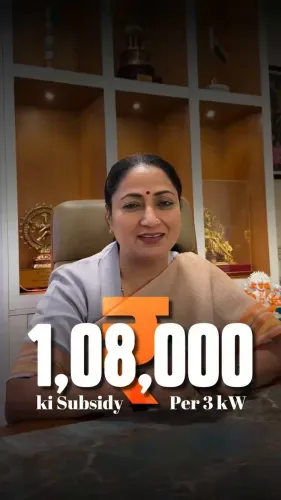
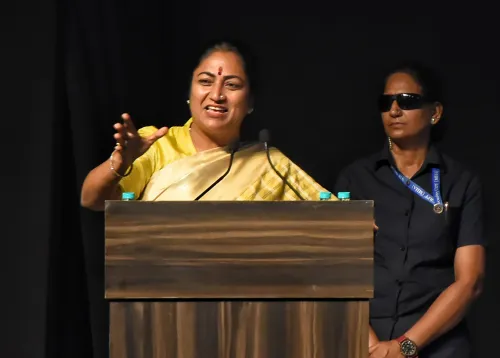
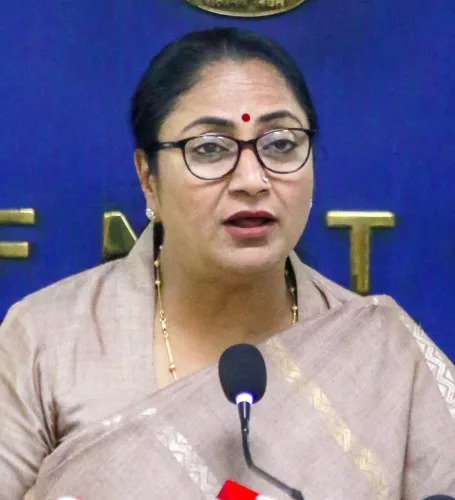
Posting on 20 August 2026, Gupta extended greetings for Akshay Urja Diwas [National Renewable Energy Day] and credited Prime Minister Narendra Modi's leadership for making renewable energy 'a strong cornerstone of India's energy security, self-reliance, and the resolve for a Viksit Bharat [Developed India].' Delhi, she added, is 'rapidly moving towards becoming a clean, green, and energy-capable capital through the wide expansion of solar energy.'
Why August 20 Matters for India's Renewable Calendar
Akshay Urja Diwas is observed every year on 20 August to promote non-conventional energy sources across the country. The date carries symbolic weight — it coincides with the birth anniversary of former Prime Minister Rajiv Gandhi — and serves as an annual checkpoint for states and the Centre to highlight progress on clean energy goals. For a government that has staked significant political capital on the energy transition, the day is as much a communications moment as a policy one.
India's renewable energy ambitions have deep institutional roots. The National Solar Mission, launched in 2010, set the framework for large-scale solar capacity addition. India's entry into the International Solar Alliance in 2015 further locked in the country's commitment at a global level, signalling that solar deployment would be a centrepiece of both energy security and climate diplomacy.
Delhi's Solar Expansion and the Urban Energy Equation
Gupta's remarks place Delhi squarely within this national arc. Major cities present a distinct challenge for the energy transition — dense, high-demand, and heavily reliant on grid power — and solar rooftop programmes have emerged as the primary tool to shift urban consumption patterns. The Chief Minister's framing of Delhi as an 'energy-capable capital' signals that solar expansion is being integrated into the city's broader infrastructure planning, even as specific project timelines and capacity figures remain to be announced officially.
The broader pattern is consistent: sub-national governments across India have increasingly aligned urban energy plans with central renewable targets, using national schemes as both a funding lever and a political signal. Delhi's push, if it materialises at scale, would carry outsized symbolic value — a capital city running clean is a headline that travels.
The real test will come in state budget allocations and the pace of rooftop and utility-scale solar rollouts in the months ahead. Intentions declared on Akshay Urja Diwas have a habit of becoming the baseline against which delivery is measured.
Point of View
Making any future shortfall in delivery a political liability. For a Chief Minister still consolidating her position in a high-visibility capital, framing infrastructure ambition in the language of national purpose is as much about political identity as it is about policy.
NationPress
5 Oct 2026
Frequently Asked Questions
What is Akshay Urja Diwas and when is it celebrated?
Akshay Urja Diwas , or National Renewable Energy Day, is observed on 20 August every year in India to promote the use of non-conventional and renewable energy sources.
What did Delhi CM Rekha Gupta say on Akshay Urja Diwas 2026?
Delhi Chief Minister Rekha Gupta said renewable energy is becoming a strong cornerstone of India's energy security and self-reliance under PM Modi , and that Delhi is rapidly advancing toward becoming a clean, green, solar-powered capital.
What is India's National Solar Mission?
The National Solar Mission was launched in 2010 and provides the framework for large-scale solar capacity addition across Indian states and cities, forming the backbone of the country's solar deployment strategy.
What is the International Solar Alliance and when did India join?
The International Solar Alliance is a multilateral body aimed at accelerating solar energy adoption globally. India joined in 2015 , cementing solar energy as a pillar of both its energy security and climate diplomacy.
What solar energy plans does Delhi have?
Delhi is pursuing wider solar rooftop and utility-scale solar projects to reduce fossil fuel dependence in the capital, though specific capacity targets and new scheme details are yet to be officially announced.