CM Rekha Gupta hails India's 39-medal CWG 2026 haul

Synopsis
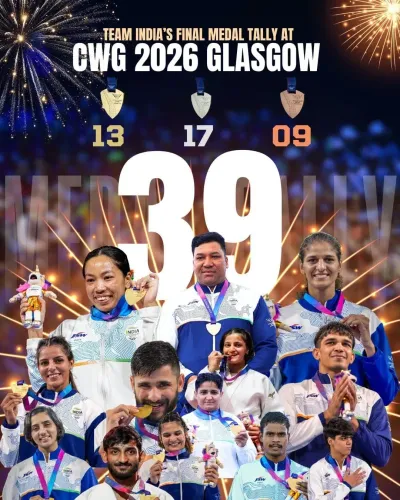
Delhi Chief Minister Rekha Gupta praised Team India's 39-medal haul — 13 gold — at the 2026 Commonwealth Games in Glasgow, crediting PM Modi's sports policy push and calling the result a step toward India becoming a global sports superpower.
Key Takeaways
Team India won 39 medals including 13 gold at the 2026 Commonwealth Games in Glasgow .
Delhi CM Rekha Gupta extended congratulations to the entire Indian contingent on 3 August 2026 .
Gupta credited PM Narendra Modi's leadership for building a new sports culture in India.
The Khelo India scheme (2017) and Target Olympic Podium Scheme (2014) form the policy backbone behind India's multi-sport push.
Gupta framed the Glasgow result as evidence of India's growing resolve to become a sports superpower .
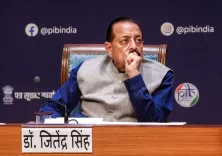
Thirty-nine medals. Thirteen gold. From the tracks and courts of Glasgow, Team India has returned with a performance that Delhi Chief Minister Rekha Gupta says has lit pride in every home and planted fresh belief in every young athlete's dream. On Monday, 3 August 2026, Gupta took to X to salute the contingent and credit the momentum to a decade of deliberate policy under Prime Minister Narendra Modi.
In her post, Gupta wrote — 'ग्लासगो से आई हर जीत ने भारत के हर घर में गर्व... जगाया है' — 'Every victory from Glasgow has ignited pride in every Indian home, enthusiasm in every young mind, and new confidence in every athlete's dream.' She called the tally an 'impressive introduction to India's rising power on the world sports stage.'
39 medals and what they signal
The Commonwealth Games 2026, hosted by Glasgow, mark a significant benchmark for Indian sport. A haul of 39 medals — including 13 gold — places the contingent among the top performers at the Games. Gupta's congratulations were directed at the 'entire Indian contingent,' underlining the breadth of disciplines that contributed rather than any single star performance.
The result arrives at a moment when India's multi-sport ambitions have been backed by sustained institutional investment. The Khelo India scheme, launched in 2017, was designed precisely to widen the talent pipeline beyond cricket — identifying grassroots athletes and channelling them into structured training. The Target Olympic Podium Scheme (TOPS), started in 2014, layered elite-level funding and coaching access on top of that base.
The policy arc behind the podium
Gupta's post is explicitly political in framing — she attributes the 'new momentum in sports culture' directly to Modi's leadership — but the policy scaffolding she points to is real. Indian administrations have progressively raised budgetary allocations for non-cricket sports and used multi-sport events like the Commonwealth Games and Asian Games as live tests of that investment.
The Glasgow Games serve as a mid-cycle check on whether that infrastructure is producing results at the elite level. A 13-gold return suggests the pipeline is converting. Gupta called the performance a reinforcement of India's 'resolve to become a sports superpower in the years ahead' — framing Glasgow not as a destination but as a waypoint.
With the next Olympic cycle accelerating and central budget discussions on sports funding expected, the Glasgow medal table will almost certainly be cited as evidence for continued — or expanded — investment. The athletes who stood on Glasgow's podiums have just made that argument for policymakers.
Point of View
Not just athletic achievement. The explicit attribution to PM Modi's leadership ahead of any future budget cycle is deliberate: Glasgow's medal table becomes a political asset. What makes this moment substantive, however, is that the policy scaffolding — Khelo India, TOPS — predates the results and gives the narrative a factual foundation. The real test will be whether the Glasgow momentum translates into Olympic podiums, where India's record has historically lagged its Commonwealth Games performance.
NationPress
17 Sept 2026
Frequently Asked Questions
How many medals did India win at the 2026 Commonwealth Games?
India won 39 medals in total, including 13 gold , at the 2026 Commonwealth Games held in Glasgow , according to Delhi CM Rekha Gupta's post on 3 August 2026.
Where were the 2026 Commonwealth Games held?
The 2026 Commonwealth Games were held in Glasgow , Scotland.
What did Delhi CM Rekha Gupta say about CWG 2026?
Delhi CM Rekha Gupta congratulated the entire Indian contingent and said every victory from Glasgow had ignited pride in Indian homes. She credited PM Narendra Modi's leadership for building a new sports culture and called the medal haul a step toward India becoming a sports superpower.
What is the Khelo India scheme?
Khelo India is a central government scheme launched in 2017 to promote grassroots sports participation and identify sporting talent across India, forming a key pillar of the country's push to improve global competitiveness in non-cricket sports.
What is the Target Olympic Podium Scheme?
The Target Olympic Podium Scheme (TOPS) , started in 2014 , provides elite Indian athletes with targeted funding, coaching, and training support to improve their chances of winning medals at the Olympics and other top international competitions.