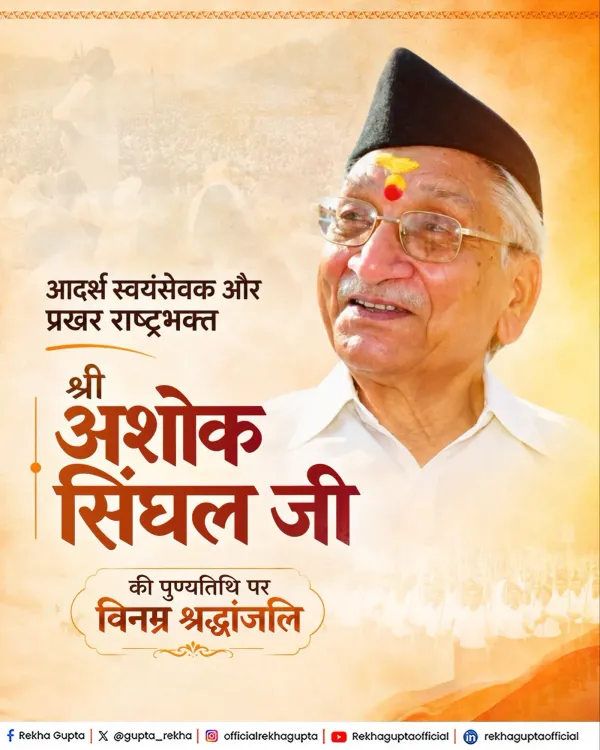
CM Rekha Gupta pays tribute to Ashok Singhal on his punyatithi
Synopsis
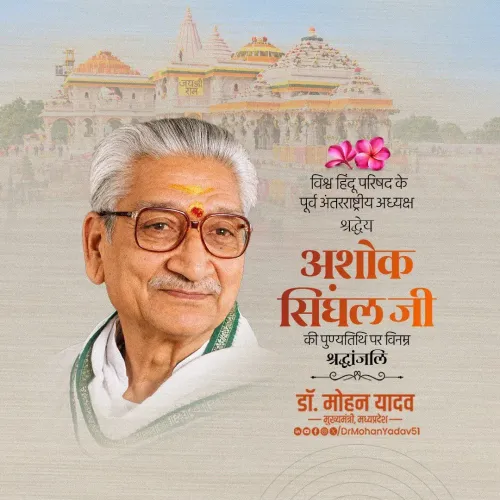
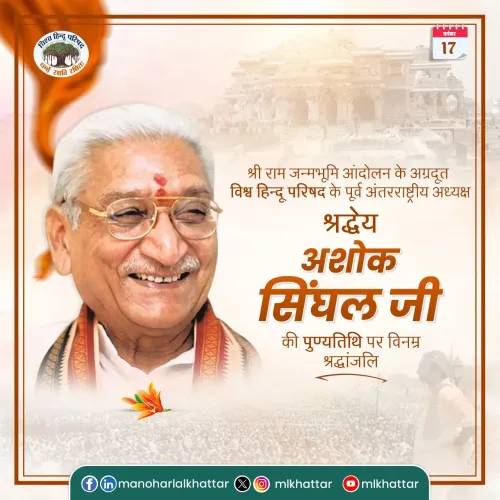
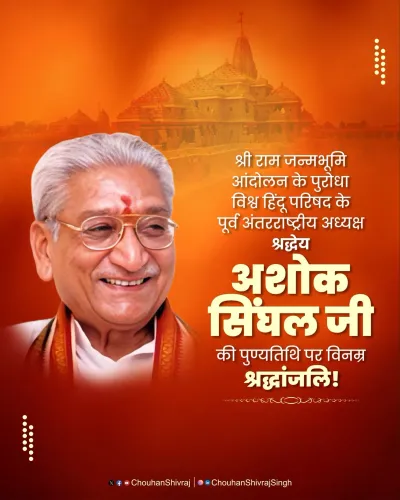
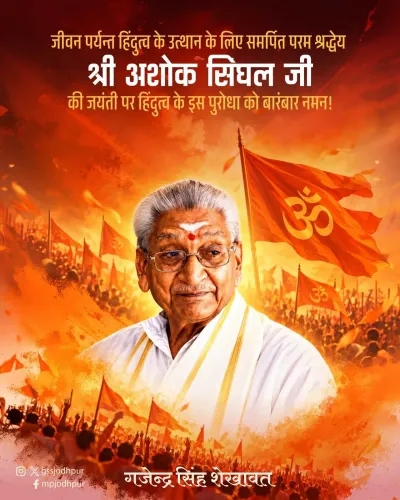
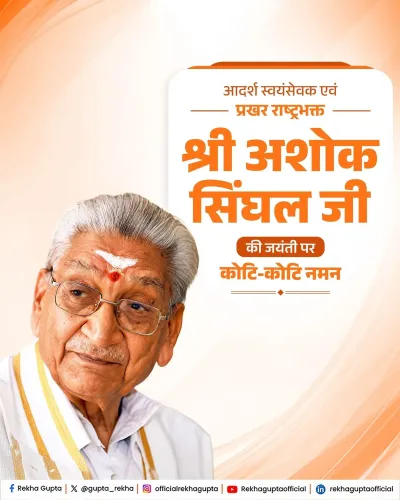
Delhi Chief Minister Rekha Gupta paid tribute to late VHP international president Ashok Singhal on his death anniversary, crediting him with carrying the Ram Janmabhoomi resolve to every Indian and calling his dedication to Rashtra Dharma and cultural self-respect eternally memorable.
Key Takeaways
Delhi CM Rekha Gupta posted a tribute to Ashok Singhal on his punyatithi on November 17, 2026 .
Singhal served as the former international president of the Vishva Hindu Parishad (VHP) , founded in 1964 .
He was a leading figure in the Shri Ram Janmabhoomi Andolan , the decades-long campaign for a temple at Lord Rama's birthplace in Ayodhya .
CM Gupta described his contribution to Sanatana culture's renaissance and Hindu societal organisation as 'unforgettable.' The tribute follows a broader BJP and Sangh Parivar pattern of marking anniversaries of key Ram Janmabhoomi figures, particularly after the Ram Mandir's consecration in January 2024 .
A movement that reshaped modern India's political and religious landscape had no more devoted a foot-soldier than Ashok Singhal — and on his death anniversary, Delhi Chief Minister Rekha Gupta paused to remember the man who carried the Ram Janmabhoomi cause to every corner of the country.
Posting on X on Tuesday, November 17, 2026, CM Gupta offered what she called 'koti-koti naman' — 'a crore-fold salute' — to the former international president of the Vishva Hindu Parishad (VHP), honouring his life's work on what Hindus observe as his punyatithi, or sacred death anniversary.
In her post, she wrote that Singhal's contribution to 'the renaissance of Sanatana culture, the organisation of Hindu society, and carrying the resolve of Shri Ram Janmabhoomi to every person' was 'unforgettable.' She added that 'his lifelong dedication to Rashtra Dharma and cultural self-respect shall always be remembered.'
Who was Ashok Singhal — and why the movement still invokes his name
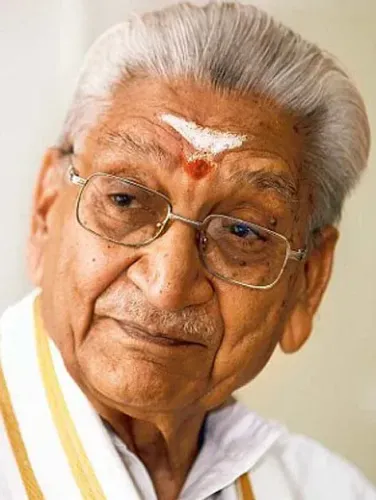
Ashok Singhal served as the international president of the Vishva Hindu Parishad, the 1964-founded Hindu nationalist organisation that became the organisational backbone of the Shri Ram Janmabhoomi Andolan. The movement, spanning decades of litigation, mass mobilisation, and political controversy, ultimately culminated in the Supreme Court's landmark verdict of November 2019 and the consecration of the Ram Mandir in Ayodhya in January 2024 — events Singhal did not live to see but spent his life working toward.
Within the Sangh Parivar ecosystem, Singhal occupies a rare space: a figure credited not merely with organisational leadership, but with giving the Ayodhya campaign its mass character — turning a legal dispute into a civilisational assertion that mobilised millions.
A recurring tribute within a larger pattern
BJP and VHP leaders regularly mark the death anniversaries of figures central to the Ram Janmabhoomi movement with public tributes. CM Gupta's post fits squarely within that tradition — especially resonant now that the temple stands constructed and the movement has passed from aspiration into accomplished history. For the BJP, honouring Singhal is also a way of connecting the present political moment to the long arc of a cause that the party has long considered foundational to its identity.
The tribute also arrives at a time when Delhi — where CM Gupta leads the government — remains a key stage for Hindutva-linked political messaging, with the city's large and diverse electorate always attentive to cultural signalling from its chief minister.
Point of View
BJP leaders reinforce the narrative that the Ram Mandir is the fulfilment of a generations-long promise, not merely a legal outcome. For Gupta, governing Delhi's politically complex electorate, public alignment with Hindutva cultural figures also serves as a consistent ideological signal. These commemorative gestures are part of a broader BJP playbook that keeps the Ayodhya movement's emotional architecture alive well beyond its legal conclusion — turning historical figures into ongoing political touchstones.
NationPress
17 Nov 2026
Frequently Asked Questions
Who was Ashok Singhal?
Ashok Singhal was the former international president of the Vishva Hindu Parishad (VHP) and one of the foremost leaders of the Shri Ram Janmabhoomi movement that campaigned for the construction of a Ram temple in Ayodhya.
What is the Vishva Hindu Parishad (VHP)?
The Vishva Hindu Parishad is a Hindu nationalist organisation founded in 1964. It was a key organisational force behind the Ram Janmabhoomi Andolan and maintains close ideological ties with the broader Sangh Parivar.
What did Rekha Gupta say about Ashok Singhal?
Delhi CM Rekha Gupta called Singhal's contribution to the renaissance of Sanatana culture, the organisation of Hindu society, and carrying the Ram Janmabhoomi resolve to every citizen 'unforgettable,' and said his lifelong dedication to Rashtra Dharma would always be remembered.
What is a punyatithi?
A punyatithi is the Hindu observance of a person's death anniversary, considered a sacred occasion on which followers and admirers pay tribute to the deceased's memory and legacy.
What was the Shri Ram Janmabhoomi Andolan?
The Shri Ram Janmabhoomi Andolan was a long-running political and religious campaign demanding the construction of a temple at the site believed to be Lord Rama's birthplace in Ayodhya. It culminated in a Supreme Court verdict in 2019 and the consecration of the Ram Mandir in January 2024.