CM Rekha Gupta Links Modi's 25-Year Legacy to Viksit Delhi
Synopsis
Delhi Chief Minister Rekha Gupta penned an opinion piece marking PM Modi's 25 years of public service, drawing on Antyodaya, women-led development, and innovation to outline her governance roadmap for a Viksit Delhi contributing to Viksit Bharat by 2047.
Key Takeaways
Delhi CM Rekha Gupta published an opinion piece on October 9, 2026 reflecting on PM Modi's 25 years of public service.
The piece centres on Antyodaya — welfare-first governance — as the defining thread of Modi's leadership and a guide for Delhi's future.
Gupta identifies women-led development, education, healthcare, and innovation as the four priority pillars for Delhi.
The stated goal is a ' Viksit Delhi ' that actively contributes to the national ' Viksit Bharat @2047 ' vision.
The piece was timed to coincide with the BJP's #25YearsOfSeva campaign marking Modi's quarter-century in public life.
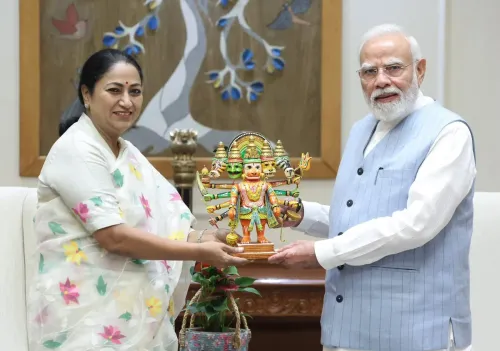
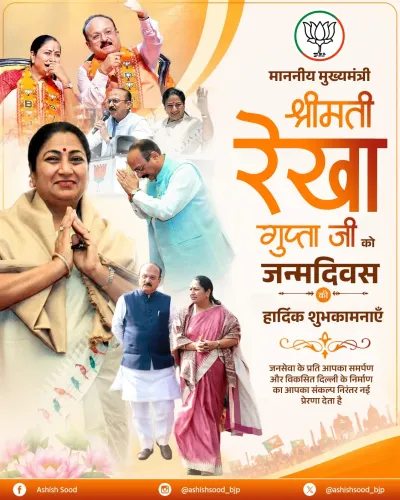
Twenty-five years of unbroken public service — and Delhi Chief Minister Rekha Gupta is using that milestone to map out what it means for India's capital. On Friday, October 9, 2026, the BJP leader shared an opinion piece she authored, drawing a direct line between Prime Minister Narendra Modi's governance philosophy and her own administration's blueprint for Delhi.
Antyodaya to Viksit Delhi: the governing thread
The piece, published in a leading national daily, centres on the principle of Antyodaya — the idea that good governance must first reach the last person in the queue, the most marginalised citizen. Gupta argues that this conviction has been the spine of Modi's quarter-century in public life, from his tenure as Gujarat Chief Minister to his decade-plus as Prime Minister, and that it now serves as the guiding compass for Delhi's own governance agenda.
She frames women-led development as a second pillar, positioning female empowerment not as a welfare afterthought but as an engine of growth. Alongside that, she flags education, healthcare, and innovation as the sectors where Delhi must make the most consequential gains in the years ahead.
The 2047 horizon and Delhi's role in it
'Viksit Bharat @2047' is not a new phrase in Indian political vocabulary — it is Modi's stated national ambition of a developed India by the centenary of Independence. What Gupta's piece adds is a city-level commitment: a 'Viksit Delhi' that does not merely benefit from national growth but actively contributes to it. The implication is deliberate — Delhi as a model capital, not just a recipient of central largesse.
The timing of the piece, coinciding with the #25YearsOfSeva moment being observed by the BJP and allied organisations, signals the party's intent to use this anniversary as a reaffirmation of governance identity heading into a fresh political cycle in the national capital.
What this signals for Delhi's policy direction
For Delhi residents, the opinion piece is more than a tribute. It lays out a hierarchy of priorities: welfare of the poorest first, women's economic participation second, and institutional improvement in schools, hospitals, and technology third. Whether those remain rhetorical commitments or translate into budgetary choices will be the real test — and one Delhi's voters will be watching closely.
An administration that defines itself by Antyodaya sets a high bar. Every scheme, every budget line, every service delivery decision becomes measurable against one simple question: did it reach the person who needed it most?
Point of View
She signals a shift in the BJP-Delhi narrative from confrontation with the previous administration to a proactive, welfare-first agenda of its own. The 2047 framing is strategically clever: it gives her government a long-enough runway to promise transformation without being held to short-term deliverables. Whether the Antyodaya benchmark becomes a genuine accountability mechanism or remains a rhetorical flourish will define how voters read this moment in retrospect.
NationPress
9 Oct 2026
Frequently Asked Questions
What is Rekha Gupta's opinion piece about?
Delhi Chief Minister Rekha Gupta's opinion piece reflects on PM Modi's 25 years of public service and draws lessons from his governance philosophy — particularly Antyodaya and women-led development — as a blueprint for building a Viksit Delhi.
What does Antyodaya mean in the context of Delhi governance?
Antyodaya literally means 'rise of the last person.' In governance terms, it is the principle that policies and services must prioritise the most marginalised citizens first. Gupta cites it as the core lesson she draws from Modi's leadership for Delhi's own development agenda.
What is Viksit Bharat 2047?
Viksit Bharat @2047 is PM Modi's national vision of a fully developed India by the centenary of Independence in 2047. Gupta's piece positions a 'Viksit Delhi' as Delhi's contribution to this broader national goal.
Why is the #25YearsOfSeva milestone significant for the BJP?
The BJP is using PM Modi's 25th year in continuous public life as a political milestone to reinforce his governance legacy and rally its state-level leaders, including Delhi CM Rekha Gupta, around a shared narrative of service-oriented administration.
What are Rekha Gupta's stated priorities for Delhi?
According to her opinion piece, the four priority pillars are women-led development, education, healthcare, and innovation — all framed within the Antyodaya principle of reaching the most vulnerable citizens first.