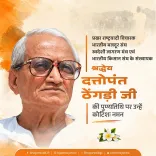
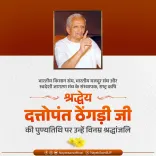
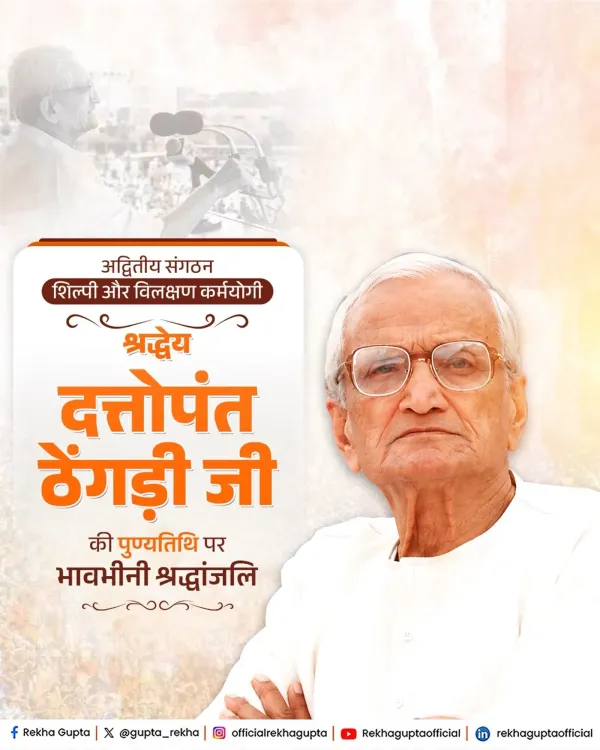
CM Rekha Gupta pays tribute to Dattopant Thengdi on death anniversary
Synopsis
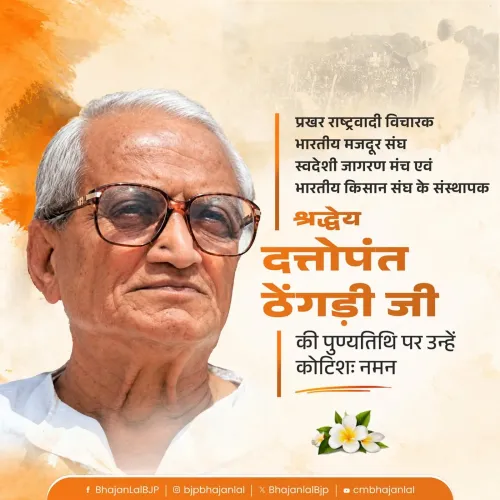
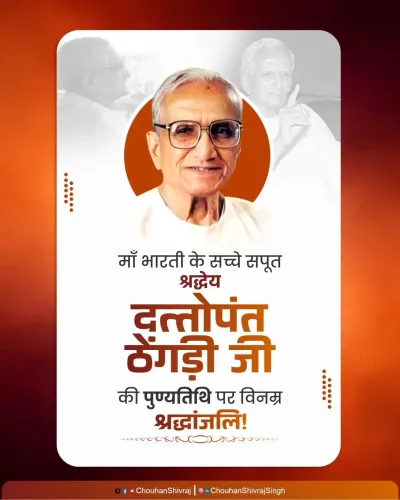
Delhi Chief Minister Rekha Gupta marked the death anniversary of Dattopant Thengdi, the RSS ideologue who founded Bharatiya Mazdoor Sangh in 1955, Bharatiya Kisan Sangh in 1978, and Swadeshi Jagran Manch in 1991, honouring his lifetime of nationalist labour and farmer organising.
Key Takeaways
Dattopant Thengdi founded Bharatiya Mazdoor Sangh in 1955 , now India's largest trade union.
He established Bharatiya Kisan Sangh in 1978 to organise farmers on indigenous economic principles.
Swadeshi Jagran Manch was co-founded in 1991 as an ideological counter to economic liberalisation.
Thengdi's work was rooted in Ekatm Manav Darshan (Integral Humanism) , the philosophy of Deendayal Upadhyaya .
Delhi CM Rekha Gupta described him as a 'fierce nationalist thinker' and 'great organisational architect' on his death anniversary.
Three organisations. Millions of workers and farmers. One lifetime of ideological labour. On the death anniversary of Dattopant Thengdi, Delhi Chief Minister Rekha Gupta offered a solemn tribute to the RSS pracharak and thinker who built the institutional scaffolding of India's nationalist labour and agrarian movements.
In her post on 14 October 2026, CM Gupta remembered Thengdi as a 'prrakhar rashtrachintак' — a fierce nationalist thinker — and a 'great organisational architect' who founded the Bharatiya Mazdoor Sangh (BMS), the Bharatiya Kisan Sangh (BKS), and the Swadeshi Jagran Manch (SJM). She wrote that, placing the nation above all else, he made swadeshi thought, dignity of labour, farmer welfare, and economic self-reliance the bedrock of organised people's power.
The three pillars Thengdi built
Thengdi founded the Bharatiya Mazdoor Sangh in 1955, channelling RSS ideology into the organised labour movement to create what would grow into India's largest trade union. His conviction was simple and radical: workers needed a nationalist home, not a communist one. The BMS positioned itself as an alternative to Left-affiliated unions by anchoring worker rights in the concept of national interest rather than class struggle.
In 1978, he established the Bharatiya Kisan Sangh to bring farmers into the same nationalist organising framework, addressing agrarian distress through indigenous economic thought rather than Western ideological templates. Then, as India opened its economy in 1991, Thengdi co-founded the Swadeshi Jagran Manch — a direct ideological counter to liberalisation policies, arguing for economic self-reliance at a moment when the policy tide ran strongly the other way.
Integral Humanism as the ideological thread
CM Gupta specifically invoked Thengdi's allegiance to Ekatm Manav Darshan — Integral Humanism — the philosophy developed by Deendayal Upadhyaya that today serves as the formal ideological foundation of the BJP. Thengdi translated that philosophical framework into mass organisational practice, connecting millions of workers and farmers to a vision of national development rooted in Indian value systems.
Gupta wrote that his legacy of 'organisational dedication and national service' would 'guide generations to come' — a tribute that underscores the ideological continuity BJP leaders draw between Sangh Parivar founders and contemporary governance priorities around economic self-reliance and rural welfare.
Point of View
Tying Thengdi's legacy directly to policy priorities around self-reliance that the current central government champions. The tribute also implicitly positions the BMS, BKS, and SJM as legitimate stakeholders in the ruling party's labour and agrarian policy conversations. For Delhi's BJP government, it is as much a statement of ideological identity as it is a memorial gesture.
NationPress
14 Oct 2026
Frequently Asked Questions
Who was Dattopant Thengdi?
Dattopant Thengdi was an RSS pracharak and nationalist ideologue who founded the Bharatiya Mazdoor Sangh in 1955, Bharatiya Kisan Sangh in 1978, and Swadeshi Jagran Manch in 1991, building India's largest nationalist trade union and farmer organising networks.
What is Bharatiya Mazdoor Sangh?
Bharatiya Mazdoor Sangh (BMS) is India's largest trade union, founded by Dattopant Thengdi in 1955 on principles of swadeshi thought and Integral Humanism, positioning worker rights within a national-interest framework rather than a class-struggle ideology.
What is Swadeshi Jagran Manch?
Swadeshi Jagran Manch (SJM) is an RSS-affiliated forum co-founded by Dattopant Thengdi in 1991 to promote indigenous economic policies and oppose the liberalisation measures introduced that year.
What is Ekatm Manav Darshan or Integral Humanism?
Ekatm Manav Darshan, or Integral Humanism, is a political philosophy developed by BJP ideologue Deendayal Upadhyaya that emphasises a holistic, nation-centred approach to economics and governance. It forms the formal ideological foundation of the BJP and heavily influenced Thengdi's organisational work.
Why did Delhi CM Rekha Gupta pay tribute to Dattopant Thengdi?
Delhi Chief Minister Rekha Gupta offered tribute on Thengdi's death anniversary on 14 October 2026, honouring his role as founder of BMS, BKS, and SJM and his lifelong work connecting workers and farmers to a nationalist vision of development rooted in swadeshi thought.