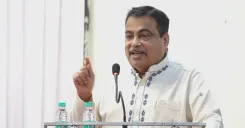
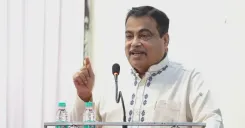
CM Himanta Backs Assam Youth Via CMAAA and NijutBabuMoina
Synopsis
Assam Chief Minister Himanta Biswa Sarma on 15 October 2026 publicly reaffirmed his government's youth empowerment agenda, spotlighting the CMAAA and NijutBabuMoina schemes as the state's twin tools for channelling young Assamese toward entrepreneurship and national services.
Key Takeaways
CM Himanta Biswa Sarma posted on 15 October 2026 reaffirming Assam's youth empowerment drive.
Two specific schemes were named: CMAAA and NijutBabuMoina , targeting entrepreneurship and national services.
Assam's BJP-led government has intensified youth and skill initiatives since 2021 , focused on reducing out-migration from the Northeast.
Sarma is the convenor of the North-East Democratic Alliance (NEDA) , giving his youth policy agenda a broader regional dimension.
Scheme allocations and guidelines are expected to face scrutiny in the next Assam legislative session .
Assam's youth have been handed a direct message from the top: aim higher, dream bigger, and expect the state to back you up. Assam Chief Minister Himanta Biswa Sarma on Thursday, 15 October 2026, took to X to reaffirm his government's commitment to youth empowerment, pointing specifically to two ongoing initiatives — CMAAA and NijutBabuMoina — as the vehicles driving that ambition.
What CM Sarma said — and who he said it to
'The dreams of Assam's youth must know no limits,' Sarma wrote, framing the message as a call to action across two distinct pathways: entrepreneurship and national services. The post is short but deliberate — it names two specific schemes and stakes a clear political promise around them. For a state government that has consistently positioned youth welfare as a central plank since 2021, it is another public reiteration of that agenda.
CMAAA and NijutBabuMoina: the two pillars
Assam's BJP-led administration has run a layered portfolio of youth-facing schemes since it first came to power in 2016, with the intensity noticeably increasing after Sarma took over as Chief Minister. The broader policy goal has been to reduce out-migration — a persistent demographic pressure on the Northeast — by creating pathways to employment and enterprise within the state itself.
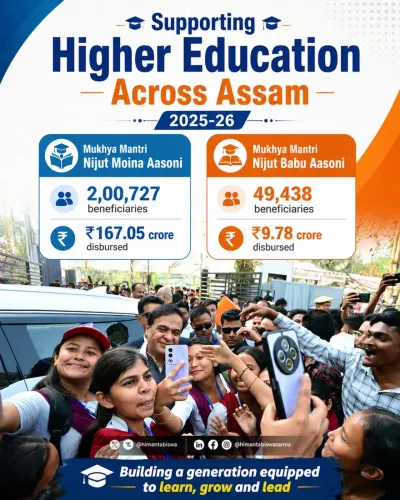
NijutBabuMoina (nijut means 'one lakh' in Assamese, broadly signalling scale) has been publicly associated with youth employment and skill linkages. CMAAA — the Chief Minister's scheme initialism — sits alongside it as part of this integrated youth push. Together, the two are being positioned by Sarma as the twin engines of a generation-defining effort.
The bigger Northeast pattern
Assam's youth-scheme push does not exist in isolation. Across the Northeast, state governments have faced a common structural challenge: educated young people leaving for metros, leaving behind skill gaps and demographic imbalance. Sarma, as convenor of the North-East Democratic Alliance (NEDA), has been one of the region's most vocal advocates for state-level solutions to what is fundamentally a regional economic problem.
The emphasis on both 'entrepreneurship' and 'national services' in Wednesday's post is telling — it signals that the government is not betting on a single career pathway but trying to widen the aperture of what success looks like for an Assamese young person in 2026.
Whether CMAAA and NijutBabuMoina deliver on that promise at scale will be tested in the next Assam legislative session, when state budget allocations and formal scheme guidelines are expected to come under scrutiny. The political benchmark has now been set publicly — by the Chief Minister himself.
Point of View
Branded welfare initiatives to build a direct emotional contract with young voters — a playbook refined at the national level and now deeply embedded in Assam's state politics. By framing both entrepreneurship and government-service careers as equally valid aspirations, the administration is hedging against the uneven performance of any single employment pathway. The timing, ahead of what is likely to be a budget-cycle period, also reads as a pre-emptive political anchor: the promise is on record, and accountability will follow. For NEDA's credibility across the Northeast, how well these schemes scale beyond Assam will matter as much as their domestic outcomes.
NationPress
15 Oct 2026
Frequently Asked Questions
What is NijutBabuMoina in Assam?
NijutBabuMoina is an Assam government scheme aimed at youth employment and skill development, publicly cited by Chief Minister Himanta Biswa Sarma as part of the state's broader youth empowerment agenda.
What is CMAAA scheme in Assam?
CMAAA is a Chief Minister-initiated scheme in Assam focused on empowering youth, referenced alongside NijutBabuMoina as one of the state government's key youth welfare programmes.
What is Himanta Biswa Sarma's youth policy for Assam?
CM Sarma's youth policy centres on reducing out-migration from the Northeast and creating pathways to both entrepreneurship and national services through targeted state schemes.
When did Himanta Biswa Sarma become Chief Minister of Assam?
Himanta Biswa Sarma became Chief Minister of Assam in 2021 , after the BJP retained power in the state assembly elections.
What is NEDA and who is its convenor?
NEDA, the North-East Democratic Alliance, is a BJP-led political grouping of parties in India's Northeast. Himanta Biswa Sarma is its convenor.