CM Himanta Pledges Support for Divyang PhD Scholar in Assam
Synopsis
Assam Chief Minister Himanta Biswa Sarma met a divyang PhD scholar from a poor family and pledged to connect him with research opportunities, signalling the state government's focus on disability welfare and inclusive education in the Northeast.
Key Takeaways
CM Himanta Biswa Sarma met a divyang PhD scholar from a low-income family on 26 July 2026 and announced support via social media on 27 July 2026 .
The Chief Minister pledged to connect the scholar with 'the right opportunities' for research and family welfare, though no specific scheme or grant was named.
The Rights of Persons with Disabilities Act, 2016 raised the reservation quota for persons with disabilities in higher education and government jobs from 3% to 4% .
The Assam government under the BJP -led dispensation has repeatedly highlighted targeted support for divyang individuals in education and skill development.
No name, institution, or specific opportunity was disclosed; follow-up action from the state education or social welfare department is awaited.
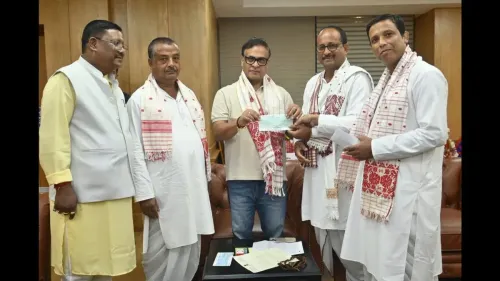
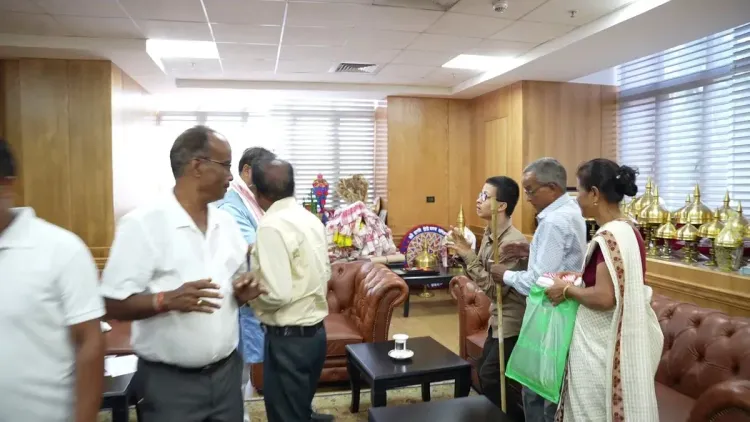
Assam Chief Minister Himanta Biswa Sarma on Monday, 27 July 2026, announced his intention to help a divyang PhD scholar from a poor family access research opportunities, sharing the account on social media after a personal meeting with the student.
Context
In his post, CM Sarma wrote that the scholar's 'determination and hard work' had brought him to the doctoral level despite coming from an economically disadvantaged background. The Chief Minister said his office would 'help connect him with the right opportunities so he can pursue his research and secure a better future for his family.' The post did not name the scholar or the institution involved.
The intervention reflects a pattern of direct, case-by-case outreach that CM Sarma has maintained through social media, where individual stories are used to signal the state government's broader welfare priorities. Assam's BJP-led administration has repeatedly highlighted targeted support for persons with disabilities alongside schemes for economically weaker sections in education and skill development.
Policy Backdrop
The meeting comes against the backdrop of the Rights of Persons with Disabilities Act, 2016, a central legislation that expanded the definition of disability and raised the reservation quota for persons with disabilities in higher education and government jobs from 3% to 4%. The Act also mandates equal opportunities in employment, making it a key instrument for scholars like the one CM Sarma met.
At the state level, the Assam government has aligned several education and skill-development initiatives with the central framework, seeking to ensure that candidates from the divyang community in the Northeast are not excluded from academic and professional pathways. A PhD scholar from a low-income family sits at the intersection of multiple eligibility criteria — disability, economic disadvantage, and academic achievement — that existing schemes are designed to address.
Stakeholders and Impact
The immediate beneficiary is the unnamed divyang PhD scholar, whose access to research funding, institutional support, or placement linkages could determine whether he completes his doctorate. More broadly, the episode draws attention to the gap between entitlements guaranteed under the 2016 Act and their on-the-ground reach in states like Assam, where disability welfare infrastructure is still being built out.
Advocacy groups working with persons with disabilities in Northeast India have long argued that doctoral-level scholars from the divyang community face compounded barriers — limited research grants, inaccessible campus infrastructure, and employer reluctance — that statutory quotas alone cannot resolve. A chief ministerial nudge, if followed by concrete institutional action, could open pathways that routine administrative channels have not.
What's Next
Observers will watch for any follow-up announcements from the Assam education department or the state's social welfare ministry, particularly around research grants, scholarship extensions, or placement linkages for divyang candidates. The next Assam Legislative Assembly session and education department reviews are the most likely forums where such commitments, if formalised, would be disclosed.
More broadly, the episode may prompt a wider audit of how the Rights of Persons with Disabilities Act, 2016 is being implemented at the university level across Assam — a question that student groups and disability-rights advocates have raised with increasing urgency in recent years.
Point of View
Or sometimes substitutes for, formal policy announcements. The post stops short of naming a scheme or committing funds, leaving the actual outcome dependent on bureaucratic follow-through that is rarely publicised with the same visibility. For disability-rights advocates, the episode underscores a persistent tension in Indian welfare delivery: the gap between high-profile political intent and the structural reforms needed to make the Rights of Persons with Disabilities Act, 2016, meaningful at the doctoral level.
NationPress
26 Oct 2026
Frequently Asked Questions
Who is the divyang PhD scholar CM Himanta Biswa Sarma met in Assam?
The scholar has not been named publicly. CM Sarma's post described him only as a divyang PhD student from a poor family whose determination brought him to the doctoral level.
What support will the Assam government provide to the divyang PhD scholar?
CM Sarma said his office would help connect the scholar with 'the right opportunities' for research and a better future, but no specific scheme, grant, or institution was named in the post.
What does the Rights of Persons with Disabilities Act 2016 say about higher education?
The Act raised the reservation quota for persons with disabilities in higher education institutions and government jobs from 3% to 4%, and mandates equal opportunities and accessible infrastructure.
What is Himanta Biswa Sarma's role in Northeast India politics?
Himanta Biswa Sarma is the Chief Minister of Assam and a senior BJP leader. He also serves as the convenor of the North-East Democratic Alliance (NEDA), a BJP-led coalition of regional parties across the Northeast.
Does the Assam government have scholarships for disabled students?
The Assam government has aligned several education and skill-development initiatives with central disability welfare frameworks, though specific state-level scholarship details for divyang PhD scholars at the doctoral level were not disclosed in this announcement.