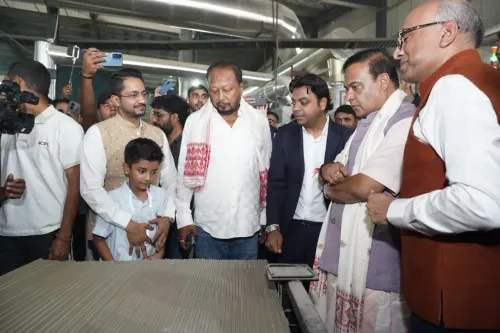
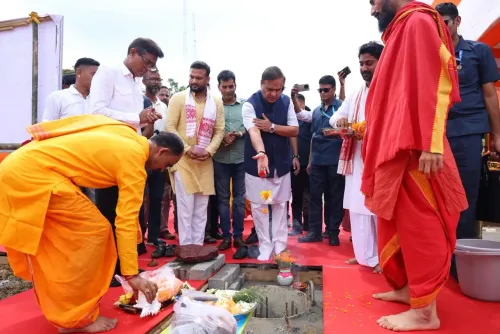
CM Himanta Launches ₹1,800 Cr JK Lakshmi Cement Plant in Assam
Synopsis
Chief Minister Himanta Biswa Sarma performed the Bhumi Pujan for JK Lakshmi Cement's Project Kamakshi at Umrangso, Dima Hasao, launching a ₹1,800 crore first phase with three limestone mines, an integrated cement plant, and a grinding unit at Lanka, Hojai under the Advantage Assam 2 initiative.
Key Takeaways
CM Himanta Biswa Sarma performed the Bhumi Pujan for JK Lakshmi Cement's Project Kamakshi at Umrangso, Dima Hasao on October 30, 2026 .
The first phase of the project involves an investment of ₹1,800 crore across mining and manufacturing infrastructure.
Three limestone mines will come up at Umrangso , feeding an integrated plant at 19 Kilo, New Umrangso with approximately 1 million tonnes annual capacity each of clinker and cement.
A dedicated cement grinding unit will be established at Lanka, Hojai , extending the project's industrial footprint to a second district.
The project is anchored under the Advantage Assam 2 investment promotion framework and is designed to generate local employment.
Further investment phases are planned but exact timelines and totals have not yet been officially confirmed.
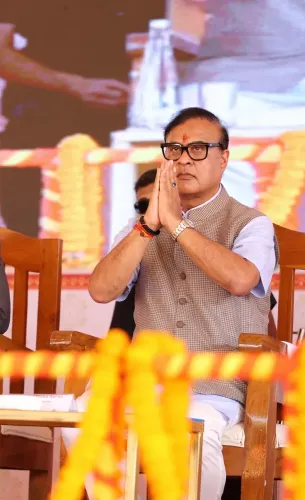
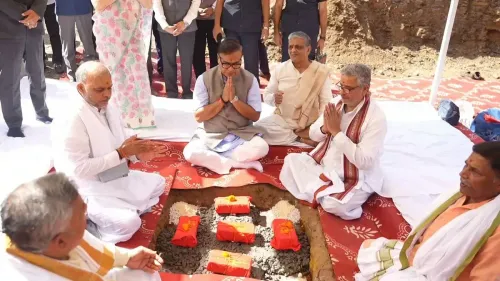
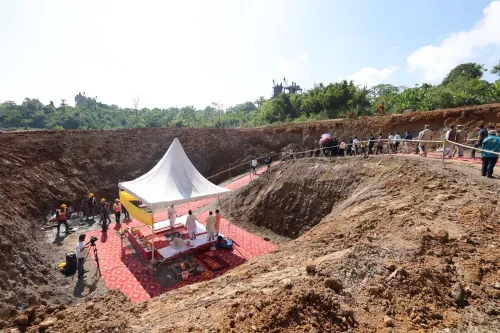
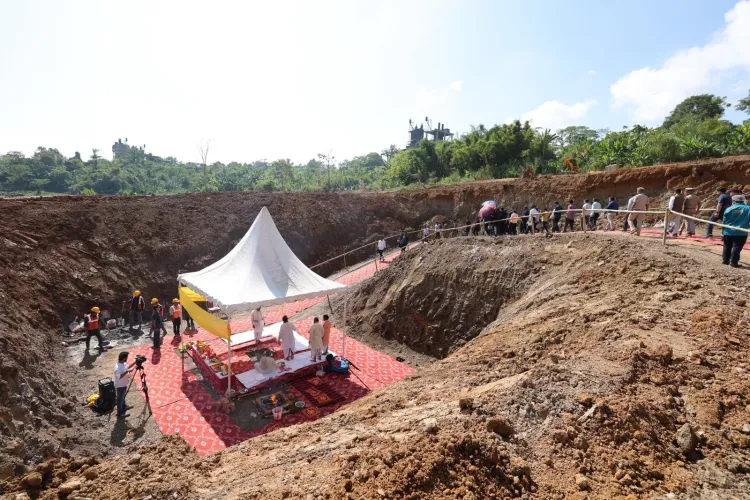
A limestone-rich hill district in Assam just became the launchpad for one of the Northeast's largest private cement investments. Chief Minister Dr. Himanta Biswa Sarma performed the Bhumi Pujan and laid the foundation stone of JK Lakshmi Cement's 'Project Kamakshi' at Umrangso, Dima Hasao, on Friday, October 30, 2026, marking the first concrete step in a multi-phase industrial commitment to the state.
What Phase One of Project Kamakshi Actually Builds
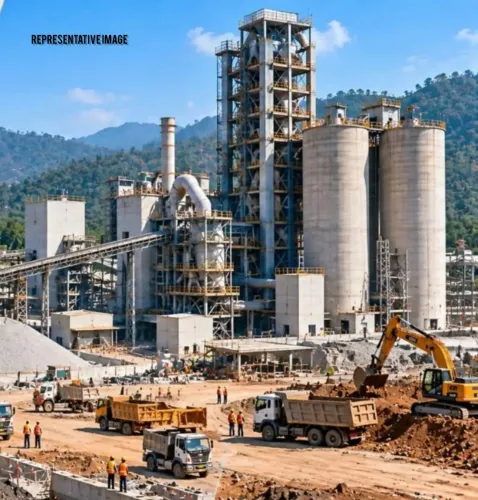
The first phase alone carries a price tag of ₹1,800 crore — and it is not a single facility but an interconnected industrial chain. Three limestone mines will open at Umrangso, feeding raw material directly into an integrated cement plant at 19 Kilo, New Umrangso, which is designed to produce approximately 1 million tonnes each of clinker and cement annually. A dedicated cement grinding unit will also come up at Lanka, Hojai, extending the project's footprint beyond Dima Hasao into a second Assam district.
The architecture of the project — mines, integrated plant, and a separate grinding unit — signals a full-stack manufacturing approach rather than a simple processing facility. It is built to capture value at every stage of the cement production chain.
Dima Hasao's Limestone Belt and the Advantage Assam 2 Push
Dima Hasao has long sat on some of Assam's most significant limestone reserves, a geological advantage the state has been methodically trying to convert into industrial activity. The Advantage Assam investment summit series, launched around 2017–2018, was designed precisely to attract private capital into sectors like minerals and manufacturing where the state holds natural assets but historically lacked private-sector depth.
Project Kamakshi is a direct fruit of that strategy. Under the Advantage Assam 2 banner, the Sarma government has continued the push to transform investment pledges into ground-level construction — and a Bhumi Pujan is the most visible proof that a commitment has cleared bureaucratic and logistical hurdles.
Employment and the Broader Northeast Manufacturing Bet
The Chief Minister's Office flagged employment generation and acceleration of industrial development as twin goals alongside the investment figure. Assam's approach — leveraging local mineral wealth to anchor private-sector manufacturing — reflects a broader pattern across the Northeast, where successive state governments have sought to build manufacturing capacity that reduces dependence on goods transported from distant industrial hubs.
Later phases of Project Kamakshi are expected to deepen the investment further, though exact timelines and final totals across those phases are yet to be confirmed. What Phase One sets in motion is an integrated supply chain — from mine face to grinding unit — that, once operational, could meaningfully shift Assam's position in India's cement map.
For a state whose hill districts have too often been defined by connectivity deficits rather than industrial momentum, the question now is straightforward: can the construction keep pace with the ambition the foundation stone represents?
Point of View
800 crore first phase, structured as a vertically integrated limestone-to-cement chain, is strategically significant because it ties private capital to local mineral extraction — a model that could unlock further investment if execution holds. For Chief Minister Sarma, the project adds industrial credibility to Advantage Assam 2 ahead of any future investor outreach. The real measure, however, will be employment numbers and Phase Two commitments once the first plant is operational.
NationPress
30 Oct 2026
Frequently Asked Questions
What is JK Lakshmi Cement's Project Kamakshi in Assam?
Project Kamakshi is JK Lakshmi Cement's integrated cement manufacturing initiative in Assam, with a first phase costing ₹1,800 crore that includes three limestone mines at Umrangso, an integrated cement plant at 19 Kilo New Umrangso with around 1 million tonnes annual capacity, and a grinding unit at Lanka, Hojai.
Where exactly is the new JK Lakshmi Cement plant being built in Assam?
The integrated cement plant is being set up at 19 Kilo, New Umrangso in Dima Hasao district, with associated limestone mines also at Umrangso and a grinding unit at Lanka in Hojai district.
What is Advantage Assam 2?
Advantage Assam 2 is the state government's investment promotion platform — a continuation of the Advantage Assam summit series that began around 2017–2018 — designed to attract private-sector manufacturing and industrial projects into Assam.
How much is JK Lakshmi Cement investing in Assam?
The first phase of Project Kamakshi involves an investment of ₹1,800 crore. The project is planned in multiple phases, with later phases yet to be officially quantified.
Why is Dima Hasao chosen for cement manufacturing in Assam?
Dima Hasao is rich in limestone reserves, the primary raw material for cement production, making it a strategic location for mineral-based industrialisation in Assam's hill districts.