CM Himanta Attends North East EAP Seminar in Shillong
Synopsis
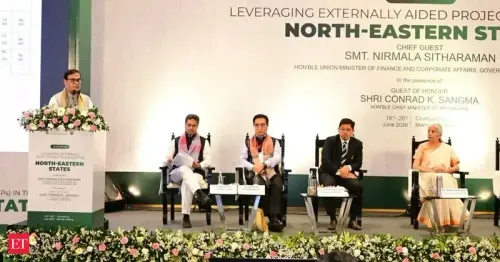
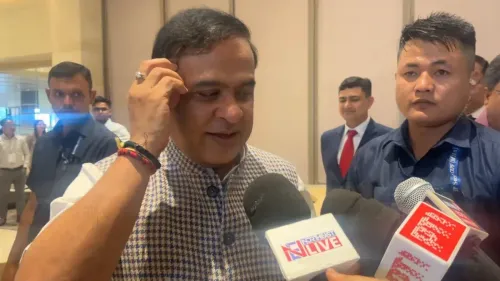
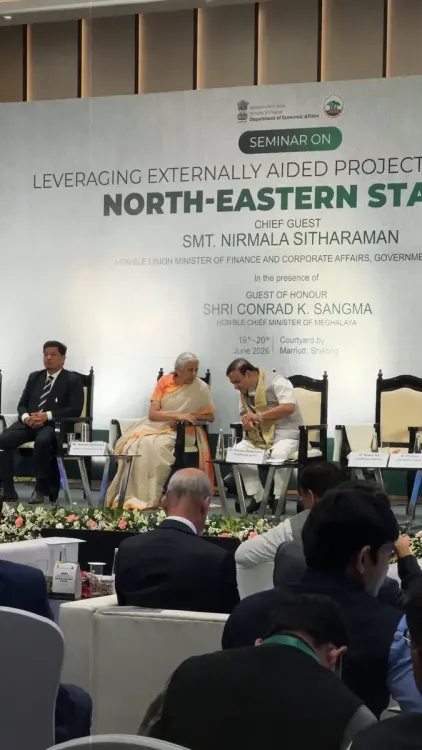
Assam Chief Minister Dr. Himanta Biswa Sarma attended a regional seminar in Shillong on 19 June 2026 focused on leveraging externally aided projects for the growth and development of India's North Eastern states, underscoring the region's push to improve multilateral funding absorption.
Key Takeaways
Himanta Biswa Sarma attended the seminar 'Leveraging Externally Aided Projects for the Growth and Development of the North Eastern States' in Shillong on 19 June 2026 .
The seminar focuses on improving the design and absorption of projects funded by multilateral agencies such as the World Bank and Asian Development Bank .
Shillong , capital of Meghalaya , serves as a regular venue for inter-state coordination forums across the eight North Eastern states .
The forum aligns with India's Act East Policy (2014) and the North Eastern Region Vision 2020 , both of which prioritise connectivity and development in the region.
The North Eastern Council , established in 1971 , provides the institutional framework for such regional development planning exercises.
The Chief Minister's Office of Assam confirmed on Friday, 19 June 2026 that Chief Minister Dr. Himanta Biswa Sarma is attending a seminar titled 'Leveraging Externally Aided Projects for the Growth and Development of the North Eastern States,' held in Shillong, the capital of Meghalaya.
Context
The seminar brings together stakeholders from across the eight North Eastern states to examine how externally aided projects (EAPs) — funded by multilateral agencies such as the World Bank and the Asian Development Bank — can be better designed, absorbed, and implemented at the state level. Shillong has long served as a regional hub for such inter-state coordination forums, given its central administrative role in the Northeast.
Dr. Himanta Biswa Sarma, who has served as Chief Minister of Assam since May 2021, is among the senior state executives participating. His presence signals Assam's active engagement in regional development planning that extends beyond state boundaries.
Policy Backdrop
External assistance has been a consistent pillar of development financing in India's Northeast. Successive central governments have channelled funds from multilateral lenders into roads, flood management infrastructure, and urban development projects across the region. This approach was formalised in the North Eastern Region Vision 2020, adopted in 2008, which set a framework for accelerating socio-economic progress across the eight states.
The Act East Policy, articulated in 2014, added a strategic dimension by linking Northeast connectivity to broader economic integration with Southeast Asia. The North Eastern Council (NEC), a statutory body established in 1971, continues to coordinate development planning and serves as the institutional backbone for forums of this nature.
A recurring challenge for the region has been the gap between project sanctions and actual fund absorption — a concern that seminars such as this one aim to directly address by improving coordination between state governments and central ministries.
Stakeholders and Impact
The primary stakeholders are the governments of the North Eastern states, which stand to gain improved access to concessional external financing for capital-intensive projects. Multilateral development agencies benefit from stronger state-level implementation capacity, which improves project outcomes and disbursement timelines.
For Assam specifically, EAPs have historically supported flood control, road connectivity, and urban infrastructure — sectors that remain critical given the state's vulnerability to annual flooding and its geographic position as a gateway to the rest of the Northeast. Effective participation in such forums can help the state secure a stronger pipeline of externally aided interventions.
What's Next
Observers will watch for any joint statements, working-group formations, or project-pipeline announcements emerging from the Shillong seminar. Progress on fund absorption and implementation is typically reviewed at subsequent NEC meetings and reflected in Union Budget allocations for the North Eastern region. The outcomes of this seminar could shape how EAP proposals from the Northeast are structured and prioritised in upcoming multilateral lending cycles.
Frequently Asked Questions
What is the seminar CM Himanta Biswa Sarma attended in Shillong?
The seminar is titled 'Leveraging Externally Aided Projects for the Growth and Development of the North Eastern States,' held in Shillong on 19 June 2026, focusing on improving the use of multilateral development funding across India's eight North Eastern states.
What are externally aided projects in India's Northeast?
Externally aided projects are infrastructure and development initiatives funded by multilateral agencies such as the World Bank and Asian Development Bank, covering sectors like roads, flood management, and urban development in the North Eastern region.
Why is Shillong chosen for Northeast regional seminars?
Shillong, the capital of Meghalaya, is a central administrative hub in the Northeast and has historically served as a venue for inter-state coordination forums involving the eight North Eastern states.
What is the North Eastern Council and what role does it play?
The North Eastern Council is a statutory body established in 1971 to coordinate development planning across India's eight North Eastern states; it provides the institutional framework for regional forums and reviews project implementation progress.
How does the Act East Policy relate to development in Northeast India?
The Act East Policy, formally articulated in 2014, aims to improve physical and economic connectivity between Northeast India and Southeast Asia, giving the region strategic importance and driving increased investment in infrastructure through both domestic and external funding.