CM Himanta targets Congress over PM selection, dynastic control
Synopsis
Assam CM Himanta Biswa Sarma attacked Congress on 21 November 2026, saying a 'family table' — not a mandate — decided India's Prime Minister during the UPA era, reigniting the BJP's long-running dynastic-leadership critique of the opposition.
Key Takeaways
Himanta Biswa Sarma posted a pointed attack on Congress on 21 November 2026 , claiming a 'family table' decided India's Prime Minister during Congress rule.
The post targets the 2004 episode when Sonia Gandhi declined the prime ministership and Dr Manmohan Singh was appointed instead.
Sarma is BJP leader, Assam Chief Minister , and convenor of the North-East Democratic Alliance (NEDA) .
The 'dynastic Congress' argument is a recurring pillar of BJP's campaign messaging ahead of state and national elections.
Congress has not, as of this post, issued a public response to Sarma's statement.
A family table, not a mandate — that is how Assam Chief Minister Himanta Biswa Sarma framed the Congress era of governance in a sharp political broadside posted on Saturday, 21 November 2026. In a single pointed sentence, the BJP leader revived one of Indian politics' most enduring fault lines: who really decides who leads India?
Sarma's post reads: 'When Cong WAS in power, the family table decided where India's Prime Minister would sit.' The past tense is deliberate — and loaded. It frames Congress rule not as governance but as a private arrangement, settled before the electorate ever had its say.
The 2004 moment that never stopped echoing
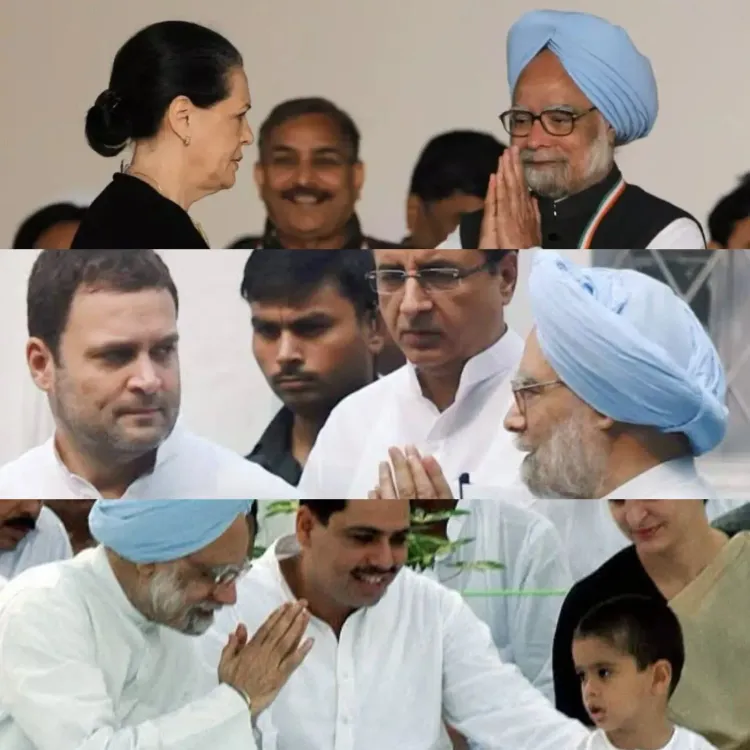
The reference cuts straight to 2004, when the Indian National Congress and its United Progressive Alliance won the general election. Sonia Gandhi, then Congress president, declined the prime ministership — a move that led to the appointment of Dr Manmohan Singh. The decision was widely read, even at the time, as a deliberate choreography: power exercised without the title, legitimacy lent to a figure chosen rather than elected to the top post.
That episode has since become a fixed exhibit in the BJP's political argument. The party's core counter-narrative holds that its own leadership selection flows through organisational structures and electoral mandates — not through bloodlines or household decisions. Sarma, as convenor of the North-East Democratic Alliance (NEDA) and one of the BJP's most combative communicators, has consistently been a frontline voice for this contrast.
Dynasty vs organisation — a campaign argument that keeps working
The 'dynastic Congress' charge is not new, but its durability is itself a political fact worth noting. With state assembly elections on the horizon and the next Lok Sabha cycle always somewhere on the calendar, BJP leaders have an incentive to keep the frame alive and legible. The argument travels easily — it requires no footnotes, only the memory of a moment most Indian voters lived through.
Congress has historically pushed back by pointing to its record on economic growth, welfare schemes, and institutional autonomy during the UPA years. But Sarma's post does not engage that terrain at all. It stays on the constitutional question: who chose the Prime Minister of India, and by whose authority?
That question, blunt and unanswered, is precisely the point — and it lands every time it is asked.
Point of View
He reduces a complex constitutional moment to a single, memorable image that bypasses policy debate entirely. The charge has staying power because it anchors to a real, documented event — Sonia Gandhi's 2004 decision — giving it a factual core that is difficult to fully rebut. As election cycles approach, expect this framing to intensify across BJP leadership communications nationwide.
NationPress
21 Nov 2026
Frequently Asked Questions
What did Himanta Biswa Sarma say about Congress on X?
Sarma posted that when Congress was in power, 'the family table decided where India's Prime Minister would sit,' targeting the perceived dynastic control over leadership selection during the UPA era.
What 2004 event is Sarma referring to?
In 2004, after the Congress-led UPA won the general election, Sonia Gandhi declined the prime ministership and Dr Manmohan Singh was appointed PM instead — a decision widely attributed to internal party and family deliberations.
Why does BJP keep raising the dynastic Congress argument?
BJP has long used the contrast between its own organisational leadership selection and Congress's perceived family-driven power structure as a campaign message, particularly ahead of state and national elections.
Who is Himanta Biswa Sarma?
Himanta Biswa Sarma is the Chief Minister of Assam and a senior BJP leader. He also serves as the convenor of the North-East Democratic Alliance (NEDA), making him one of the party's most prominent voices in the northeast.
Has Congress responded to Sarma's post?
No public response from Congress has been recorded in connection with this specific post as of 21 November 2026.