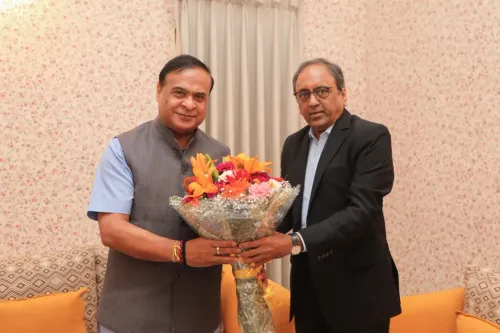
CM Himanta to lay foundation of ₹1,800 cr JK Lakshmi Cement plant in Dima Hasao
Synopsis
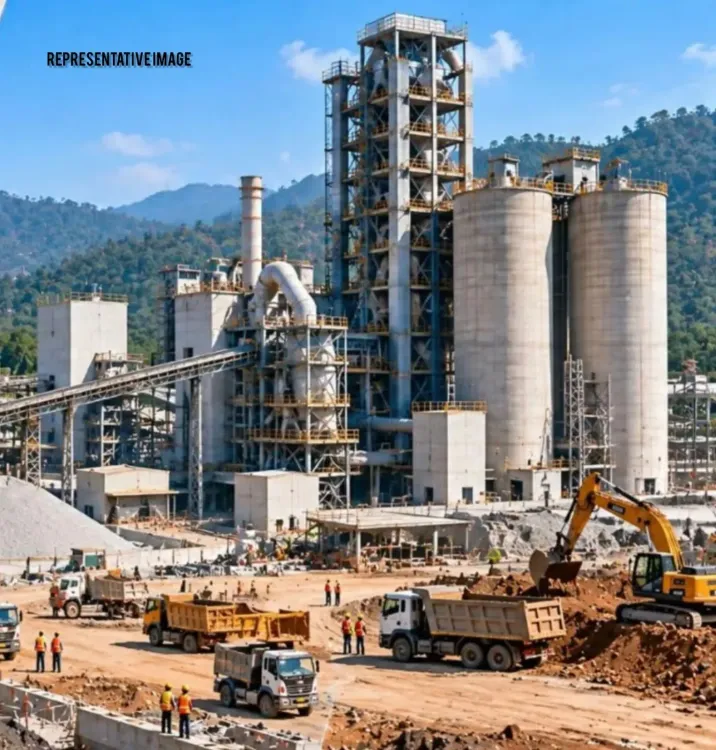
Assam CM Himanta Biswa Sarma will break ground on a ₹1,800 crore JK Lakshmi Cement plant at Umrangso in Dima Hasao on 30 October 2026, citing the 2023 peace accord and Advantage Assam 2 summit as the twin engines of the district's industrial turnaround.
Key Takeaways
JK Lakshmi Cement will set up a ₹1,800 crore plant at Umrangso , Dima Hasao, with foundation stone to be laid on 30 October 2026 .
The project is projected to create over 1,000 jobs in a district historically stunted by insurgency.
The MoU was signed at the Advantage Assam 2 summit; groundbreaking follows in 20 months , which CM Sarma cites as proof of real Ease of Doing Business.
The 2023 peace accord with Dima Hasao insurgent groups is credited with unlocking the district for large-scale industrial investment.
CM Sarma frames this as part of a replicable template — following earlier industrial projects in Tinsukia — for post-conflict economic transformation across Northeast India.
Sarma closed with the political slogan 'Modi Kahi Nahi Jayega' , explicitly linking the project to the BJP's development record in the Northeast.
A district once synonymous with guns and bandhs is about to break ground on an ₹1,800 crore industrial project — and Assam Chief Minister Himanta Biswa Sarma wants the country to notice exactly how that happened. On Thursday, 29 October 2026, Sarma announced he will lay the foundation stone of a JK Lakshmi Cement plant at Umrangso in Dima Hasao district on Friday, a project he says will generate over 1,000 jobs in a region that spent decades in the shadow of insurgency.
From peace accord to plant: Dima Hasao's 20-month turnaround
The timeline Sarma laid out is deliberately precise. The 2023 peace accord with insurgent groups in Dima Hasao ended the violence that had long strangled the district's economy. That security breakthrough was followed by MoUs signed at the Advantage Assam 2 investment summit. Friday's groundbreaking, Sarma says, closes that loop in just 20 months — MoU to shovel in the ground.
Dima Hasao had been among Assam's most militancy-affected districts, with years of armed activity by groups demanding autonomy keeping investors well away. The accord changed the calculation. The state government positioned the district almost immediately as an investment-ready zone, and the JK Lakshmi Cement project is the most visible test of that pitch so far.
Tinsukia first, Dima Hasao now — a replicable template
Sarma framed the announcement inside a deliberate narrative arc: 'After Tinsukia, it's Dima Hasao's turn. After bricks it's now cement's turn.' Tinsukia, another former insurgency-affected district, already hosts industrial projects that the Assam government cites as proof that post-conflict peace dividends can be converted into factory floors. The CM is explicitly positioning that model as portable — district by district, sector by sector.
The cement plant at Umrangso fits the geography: Dima Hasao sits in the hill districts of central Assam with limestone reserves that make it viable for cement manufacturing. A large-scale plant of this size, if it hits its employment targets, would represent a significant economic shift for a district where formal industrial jobs have historically been scarce.
'Modi Kahi Nahi Jayega' — the political punctuation
Sarma closed his post with a sharp political line — 'Isiliye "Modi Kahi Nahi Jayega"' ('That is why Modi is not going anywhere') — framing the industrial momentum directly as a vindication of the BJP-led central and state governments' development agenda in the Northeast. The slogan signals that the Umrangso groundbreaking is not just a local industrial story; it is being deployed as a data point in a larger political argument about governance and economic transformation in a region the BJP has made central to its national narrative.
Sarma also leads the North-East Democratic Alliance (NEDA), the BJP's political platform for coalition-building across the eight northeastern states, giving his framing of Northeast development stories an audience well beyond Assam's borders.
What the Umrangso plant must deliver
The ambition is clear; the execution will be watched closely. The construction timeline for an ₹1,800 crore greenfield cement plant is typically three to five years, and actual job creation numbers often diverge from headline figures at groundbreaking ceremonies. The Advantage Assam 2 summit produced a pipeline of MoUs, and how many of those convert into operational plants at the pace Sarma describes will determine whether the template holds. For Dima Hasao's residents, who lived through the long years of conflict and its economic cost, the measure will not be the foundation stone — it will be the payroll.
Point of View
CM Sarma is building a portfolio argument — not a one-off — aimed squarely at hesitant investors and at NEDA-member states watching from across the Northeast. The 'Modi Kahi Nahi Jayega' coda, however, reminds observers that these industrial milestones are simultaneously political assets being banked for electoral cycles. The true test of the template will be whether Dima Hasao's employment numbers at commissioning match the headline figure at groundbreaking — a metric that has tripped up similar announcements elsewhere in India.
NationPress
29 Oct 2026
Frequently Asked Questions
Where is the JK Lakshmi Cement plant being built in Assam?
The plant will be built at Umrangso in Dima Hasao district of Assam. CM Himanta Biswa Sarma is scheduled to lay the foundation stone on 30 October 2026 .
How much will the JK Lakshmi Cement plant in Dima Hasao cost?
The plant carries an investment of ₹1,800 crore and is expected to create more than 1,000 jobs in the region.
What is the Advantage Assam 2 summit?
Advantage Assam 2 is Assam's state investment summit at which the government signed MoUs with industrial investors. The JK Lakshmi Cement MoU from that summit progressed to groundbreaking within 20 months , which CM Sarma cites as a measure of Assam's Ease of Doing Business.
What was the 2023 peace accord in Dima Hasao?
The 2023 peace accord was an agreement between the Assam government and insurgent groups in Dima Hasao that ended decades of armed conflict in the district, paving the way for large-scale industrial investment. Exact provisions and signatories have not been officially detailed in public records.
What does 'Modi Kahi Nahi Jayega' mean in CM Sarma's post?
The Hindi phrase 'Modi Kahi Nahi Jayega' translates to 'Modi is not going anywhere.' CM Sarma used it to frame the Dima Hasao industrial project as a vindication of the BJP-led government's development agenda in the Northeast.