CM Pema Khandu Hails 12 Years of Stronger, Safer India

Synopsis
Arunachal Pradesh Chief Minister Pema Khandu marked twelve years of BJP governance on 17 June 2026 by crediting PM Modi with building a stronger, self-reliant India through indigenous defence manufacturing, precision strike capability, and firm counter-terrorism action under the #12YearsOfSurakshitBharat banner.
Key Takeaways
CM Pema Khandu posted on 17 June 2026 marking #12YearsOfSurakshitBharat , praising PM Modi's national security record.
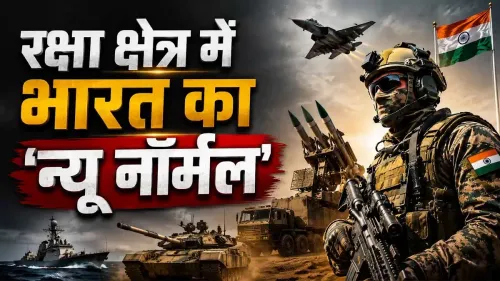
The post highlights three pillars: indigenous defence manufacturing , precision strike capability , and decisive counter-terrorism action .
Make in India (launched September 2014 ) and the Atmanirbhar Bharat initiative ( 2020 ) form the policy backbone of India's defence self-reliance push.
India has steadily increased domestic procurement in defence capital expenditure since 2014 , targeting strategic autonomy.
As CM of a state bordering China , Khandu's emphasis on border security and indigenous capability carries direct regional significance.
The Defence Ministry is expected to announce further negative import lists and indigenous induction schedules in the 2026-27 budget cycle .
Arunachal Pradesh Chief Minister Pema Khandu on Wednesday, 17 June 2026 took to X to mark the #12YearsOfSurakshitBharat milestone, crediting Prime Minister Narendra Modi's leadership for transforming India into a stronger, safer, and self-reliant nation — with particular emphasis on indigenous defence manufacturing, precision strike capability, and decisive counter-terrorism action.
Context
In his post, CM Khandu wrote that 'New India stands stronger, safer, and self-reliant' under PM Modi's 'visionary leadership.' The hashtag #12YearsOfSurakshitBharat — marking twelve years of what the BJP frames as a 'secure India' — anchors the message in the ruling party's broader political narrative ahead of the 2026-27 policy cycle. As a senior BJP leader from a strategically sensitive border state, Khandu's voice carries particular weight on national security themes.
Policy Backdrop
The post's themes align directly with a decade-long policy shift in Indian defence. The Make in India initiative, launched in September 2014, identified defence manufacturing as a priority sector to reduce the country's historically heavy import dependence. Subsequent revisions to the Defence Procurement Procedure — notably in 2016 — and the Atmanirbhar Bharat self-reliance initiative launched in 2020 have progressively expanded domestic procurement targets and set ambitious defence export goals.
Since 2014, India has steadily increased the share of domestic procurement in defence capital expenditure while building capacity in precision munitions and indigenous platforms. These moves are widely seen as part of a strategic push toward strategic autonomy — reducing vulnerability to supply-chain disruptions from foreign vendors during times of conflict.
Stakeholders and Impact
The primary beneficiaries of this policy direction are domestic defence manufacturers — both public-sector undertakings and a growing private-sector ecosystem — alongside the Indian Armed Forces, which are the end-users of indigenously developed systems. For a border state like Arunachal Pradesh, which shares a contested frontier with China, the build-up of indigenous precision capability and enhanced border infrastructure has direct security relevance for residents and local administration alike.
The reference to 'decisive action against terrorism' in CM Khandu's post also resonates with communities along India's northern and western borders, where cross-border threats have historically shaped civilian life and governance priorities.
What's Next
Attention will now turn to the Defence Ministry's expected announcements on further negative import lists — items that can only be sourced domestically — and induction schedules for indigenous systems within the 2026-27 budget cycle. Political messaging around the twelve-year mark is likely to intensify as the BJP looks to consolidate its national security credentials, with leaders across states, including border-region chief ministers like Pema Khandu, amplifying the central government's defence record. The trajectory of indigenisation and counter-terror posture will remain a defining test of whether the 'Surakshit Bharat' narrative translates into measurable strategic outcomes.
Point of View
Where state leaders amplify central government achievements to reinforce a unified national security narrative. Coming from the chief minister of a strategically sensitive border state, the endorsement carries more than symbolic weight — it links ground-level border security realities to the party's broader 'Surakshit Bharat' brand. The twelve-year milestone gives the BJP a natural inflection point to consolidate its defence-and-security credentials before the next electoral cycle. Whether the indigenisation numbers and operational outcomes match the political messaging will be the sharper test that analysts and opposition voices are likely to press.
NationPress
19 Sept 2026
Frequently Asked Questions
What is #12YearsOfSurakshitBharat?
#12YearsOfSurakshitBharat is a BJP hashtag marking twelve years of Narendra Modi-led governance since May 2014, framing the period as one of enhanced national security, defence self-reliance, and counter-terrorism resolve.
Why did Pema Khandu post about national defence?
As Arunachal Pradesh Chief Minister and a senior BJP leader, Pema Khandu regularly amplifies the central government's policy achievements; his post on 17 June 2026 aligned with the party's coordinated messaging around the twelve-year governance milestone.
What is Atmanirbhar Bharat in defence?
Atmanirbhar Bharat, launched in 2020, is India's self-reliance initiative that includes dedicated targets for domestic defence production and exports, building on the Make in India push started in September 2014.
What does indigenous defence manufacturing mean for India?
Indigenous defence manufacturing refers to producing military equipment — from rifles and ammunition to missiles and fighter jets — within India rather than importing them, reducing strategic dependence on foreign suppliers and building domestic industrial capacity.
What is the significance of Arunachal Pradesh in India's defence policy?
Arunachal Pradesh shares a long and contested border with China, making it one of India's most strategically sensitive states; infrastructure development, troop deployment, and indigenous precision capability in this region are central to India's northern border security posture.