CM Majhi Hands Appointment Letters to 1,101 at Odisha's 17th Job Fair
Synopsis
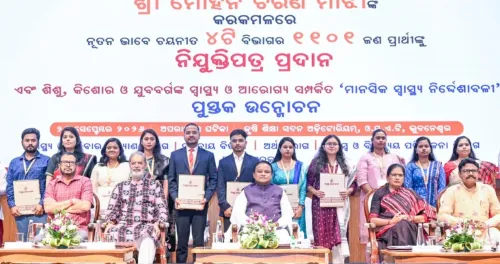
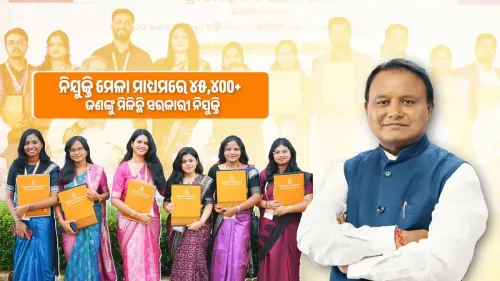
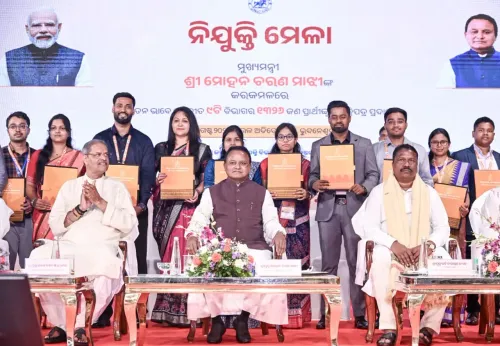
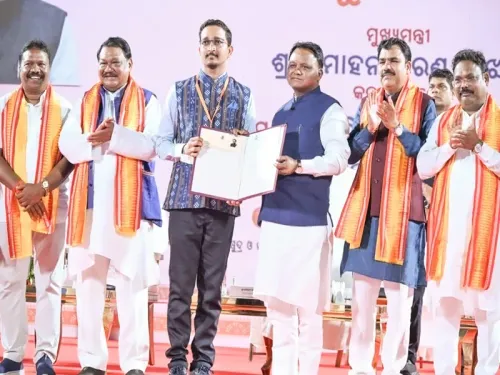
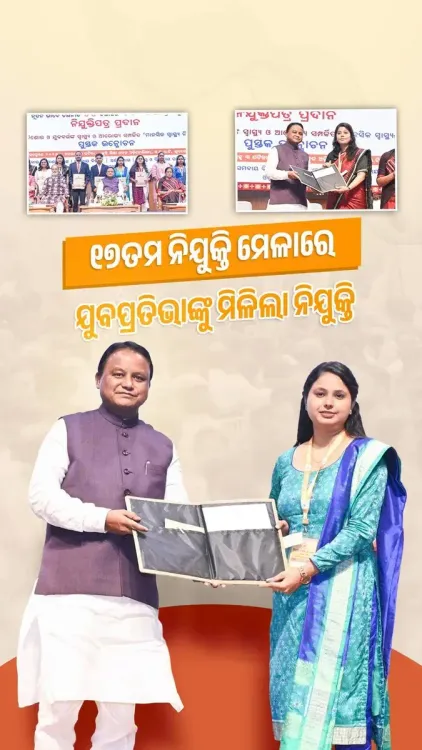
Odisha CM Mohan Charan Majhi handed appointment letters to 1,101 candidates at the state's 17th Employment Fair on 26 September 2026, marking continued delivery on the BJP government's core election promise of prioritising youth employment.
Key Takeaways
1,101 candidates received government appointment letters at Odisha's 17th Employment Fair on 26 September 2026 .
CM Mohan Charan Majhi personally presided over and announced the distribution, framing it as fulfilment of a campaign promise.
The BJP government, which came to power in June 2024 ending 24 years of BJD rule, has made successive employment fairs its signature delivery mechanism.
Majhi described the appointments as 'not merely a job, but a new journey of serving Odisha and the nation.' The serial numbering of fairs (now at the 17th) signals institutional regularity in the state's recruitment drive.
Sectoral distribution and aggregate figures across all seventeen fairs remain the key metric to watch for assessing the programme's full reach.
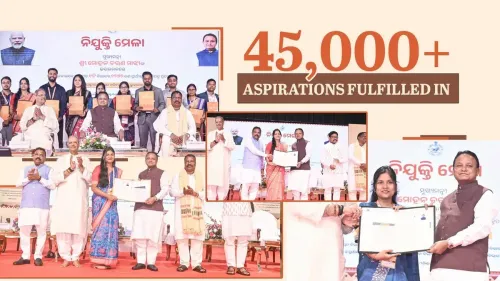
A promise made on the campaign trail became a payslip on Saturday, 26 September 2026, as Odisha Chief Minister Mohan Charan Majhi presided over the state's 17th Employment Fair, placing appointment letters in the hands of 1,101 young candidates — the latest instalment in a sustained effort to put jobs at the centre of his government's identity.
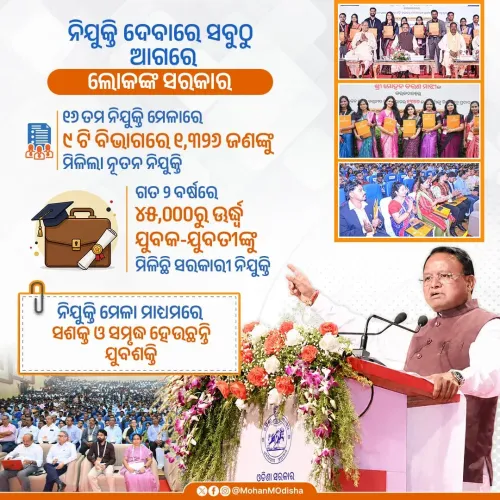
Posting in Odia on X, CM Majhi framed the occasion in unmistakably purposeful language: 'ଲୋକଙ୍କ ସରକାରରେ ନିଯୁକ୍ତିକୁ ପ୍ରାଥମିକତା' — 'employment is the priority of the people's government.' The message was clear: this is not bureaucratic routine, it is a promise being counted, one fair at a time.
'This appointment is not merely a job,' Majhi wrote, 'but a new journey of serving Odisha and the nation.' He congratulated all newly appointed candidates and wished them a bright future, acknowledging their hard work and firm resolve in securing the positions.
BJP's employment promise becomes a serial delivery mechanism
Odisha's BJP government — the party's first in the state after ending 24 years of BJD rule following the June 2024 assembly election — made employment generation a cornerstone of its campaign under the 'people's government' slogan. The succession of numbered employment fairs has since become its most visible tool for demonstrating delivery on that commitment.
Reaching the 17th fair signals institutional regularity, not a one-off event. State governments across India have leaned on recruitment melas to address youth unemployment — an issue that cuts deep in Odisha, where aspirants in both urban centres and rural districts have long faced a scarcity of formal government posts. Each numbered fair adds to a running scorecard the administration can point to.
What the 1,101 appointments represent for Odisha's youth
For the 1,101 candidates who received letters at this fair, the moment closes a chapter of competitive preparation and opens another in public service. CM Majhi's phrasing — 'new responsibility and opportunity' handed to young talent — deliberately elevates the act beyond transactional hiring into a civic narrative: the state investing in its people, and those people investing back in the state.
The pattern to watch now is scale and spread: which departments are absorbing these recruits, how the numbers aggregate across all seventeen fairs, and whether upcoming budgetary decisions lock in a pipeline for future rounds. Employment fairs generate headlines, but sustained recruitment policy is what outlasts any single ceremony.
Point of View
Photographable moment that converts an abstract manifesto promise into a countable record. For CM Majhi, reaching the 17th edition reinforces the narrative of a government that arrived with a jobs mandate and is executing it at pace. The deeper test, however, lies beyond the ceremony: whether the aggregate appointments across all fairs represent a structural expansion of Odisha's public-sector workforce or a repackaging of vacancies that would have been filled regardless. As Odisha approaches the mid-term phase of the current assembly, the employment fair tally will be scrutinised as a barometer of the BJP's transformative ambition — not just its administrative competence.
NationPress
26 Sept 2026
Frequently Asked Questions
What is Odisha's employment fair and who organises it?
Odisha's employment fair, known locally as a 'Niyukti Mela,' is a state government-organised recruitment event where selected candidates receive official appointment letters for government posts. The fairs are organised under the Odisha BJP government led by CM Mohan Charan Majhi as part of its commitment to prioritise youth employment.
How many candidates got jobs at Odisha's 17th employment fair?
A total of 1,101 candidates received appointment letters at Odisha's 17th Employment Fair held on 26 September 2026 , as announced by Chief Minister Mohan Charan Majhi.
When did Mohan Charan Majhi become Chief Minister of Odisha?
Mohan Charan Majhi became Chief Minister of Odisha in June 2024 , after the BJP won the state assembly elections and ended 24 years of Biju Janata Dal (BJD) rule in the state.
What was BJP's employment promise in the 2024 Odisha elections?
In its 2024 Odisha assembly election manifesto, the BJP highlighted employment generation as a core promise under the 'people's government' slogan. The successive series of employment fairs since taking office has been the government's primary mechanism for demonstrating delivery on that pledge.
How many employment fairs has the Odisha government held so far?
The Odisha government under CM Mohan Charan Majhi has held at least 17 employment fairs since taking office in June 2024, with the most recent — the 17th — conducted on 26 September 2026 .