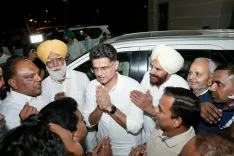
CM Manik Saha joins Maha Shashthi Durga Puja rounds in Ramnagar
Synopsis
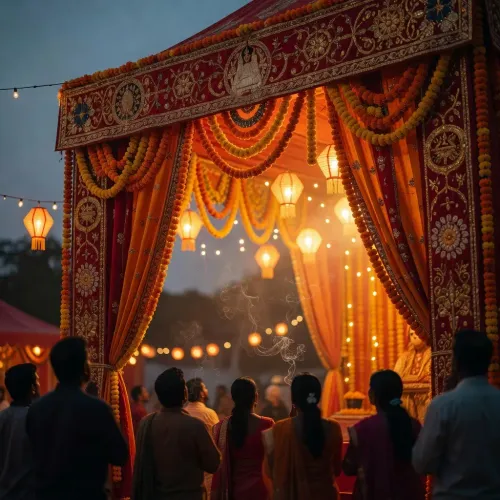
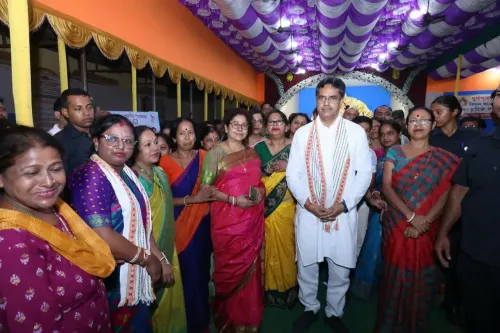
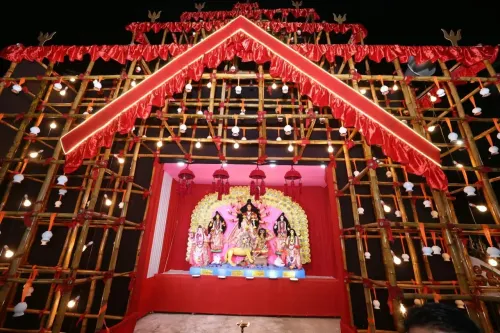
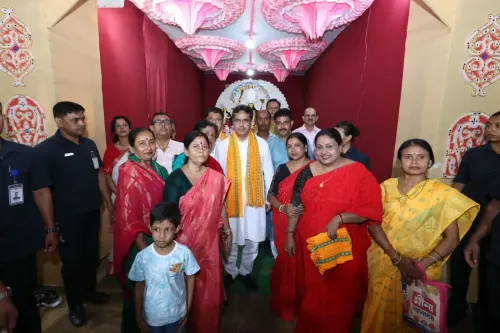
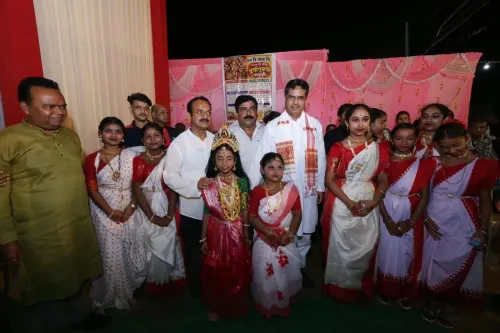
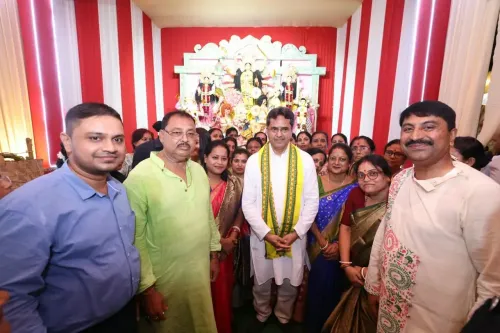
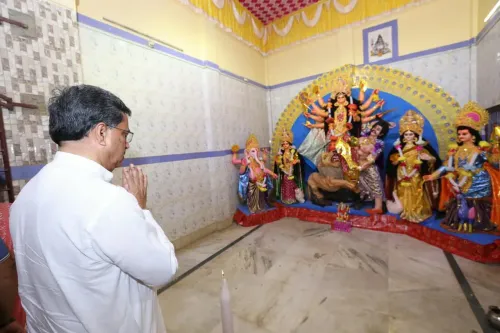
Tripura Chief Minister Dr. Manik Saha joined Durga Puja pandal rounds on Maha Shashthi evening, visiting Mukti Sangha in Ramnagar on 16 October 2026 and sharing images from the cultural celebration.
Key Takeaways
Manik Saha , Chief Minister of Tripura, visited Mukti Sangha in Ramnagar on the evening of Maha Shashthi, 16 October 2026 .
The visit was part of a Durga Puja parikrama — a traditional round of community pandals during the festival.
Maha Shashthi marks the formal commencement of the five-day core of Durga Puja , the biggest cultural festival for Tripura's Bengali population.
Mukti Sangha is a local community association in Ramnagar , Tripura, that organises annual Durga Puja celebrations.
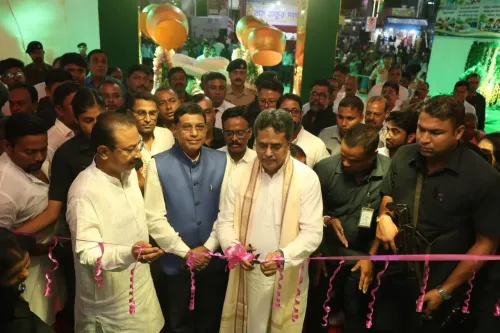
The Chief Minister posted four images from the visit on X , writing in Bengali to connect with the local cultural moment.
On the auspicious evening of Maha Shashthi, Tripura Chief Minister Dr. Manik Saha stepped out for a puja parikrama — a traditional round of community pandals — visiting Mukti Sangha in Ramnagar on Friday, 16 October 2026, immersing himself in one of the state's most beloved cultural celebrations.
Posting in Bengali, Dr. Saha wrote: 'মহা ষষ্ঠীর সন্ধ্যায়, দুর্গা পূজা পরিক্রমায় - মুক্তি সংঘ, রামনগর' — 'On the evening of Maha Shashthi, on a Durga Puja parikrama — Mukti Sangha, Ramnagar' — sharing four images from the visit.
Maha Shashthi and the start of Durga Puja's peak days
Maha Shashthi marks the sixth day of the Navratri cycle and the formal beginning of the five-day core of Durga Puja, when the goddess is ceremonially welcomed and the energy of the festival reaches its first crescendo. Community clubs unveil elaborately decorated pandals, and evenings fill with dhak beats, incense, and crowds moving pandal to pandal. For Tripura, with its large Bengali-speaking population, the festival is not merely religious — it is the cultural heartbeat of autumn.
Mukti Sangha, Ramnagar — a community at the centre of it
Mukti Sangha is a local community association in the Ramnagar locality of Tripura that hosts Durga Puja celebrations each year. Community clubs of this kind are the backbone of the festival across Bengal and Tripura — they fundraise, commission artisans, and organise the rituals that bring entire neighbourhoods together for the duration of the puja. A Chief Minister's visit carries both cultural warmth and a quiet signal of recognition for the volunteers behind the scenes.
A tradition of parikrama for Tripura's top office
State leaders across eastern and northeastern India make it a point to visit multiple pandals during Durga Puja — a practice that fuses civic duty with cultural participation. Dr. Manik Saha, who leads a state where Durga Puja ranks among the most significant annual events, has made such evening rounds a visible part of his public engagement during the festival season. The parikrama is as much a personal act of faith as it is a moment of connection with the communities that organise these celebrations year after year.
Point of View
And Dr. Manik Saha's Maha Shashthi parikrama fits squarely into that tradition. For a BJP leader governing a state with a dominant Bengali cultural identity, visible participation in the festival's peak moments reinforces a bridge between the party's national Hindu-cultural narrative and deeply local, community-level festivity. The choice to post in Bengali — rather than Hindi or English — signals a deliberate act of linguistic and cultural proximity. Routine as such visits appear, they accumulate into a steady rhythm of public presence that shapes a leader's image as embedded in, rather than merely presiding over, the society he governs.
NationPress
17 Oct 2026
Frequently Asked Questions
Where did Tripura CM Manik Saha visit on Maha Shashthi 2026?
Dr. Manik Saha visited the Mukti Sangha Durga Puja pandal in Ramnagar, Tripura, on the evening of Maha Shashthi, 16 October 2026.
What is Maha Shashthi in Durga Puja?
Maha Shashthi is the sixth day of the Navratri cycle and marks the formal beginning of the five-day core of Durga Puja, when the goddess is ceremonially welcomed into the pandal.
What is a Durga Puja parikrama?
A parikrama refers to the tradition of visiting multiple Durga Puja pandals in a single evening or over the festival period, a common cultural and devotional practice in West Bengal and Tripura.
Who is Mukti Sangha in Ramnagar?
Mukti Sangha is a local community club or association in the Ramnagar locality of Tripura that organises Durga Puja celebrations each year.
Why do Indian Chief Ministers visit Durga Puja pandals?
State leaders in eastern and northeastern India traditionally visit Durga Puja pandals during the festival to engage with local communities, honour cultural traditions, and acknowledge the volunteer organisers behind the celebrations.