BJP Anti-Punjab, Traitors Will Be Punished: CM Bhagwant Mann
Synopsis
Punjab CM Bhagwant Mann branded the BJP 'anti-Punjab' and called defecting AAP MPs 'traitors' after Raghav Chadha and six others joined the BJP. AAP's Punjab unit alleged Union Home Minister Amit Shah personally orchestrated the split, offering Chadha a ministerial post — a claim that signals a deepening national political battle playing out on Punjab's turf.
Key Takeaways
Punjab CM Bhagwant Mann publicly labelled the BJP 'anti-Punjab' on April 24, 2025 , following the defection of seven AAP MPs , including Raghav Chadha , to the BJP.
Raghav Chadha , a Rajya Sabha MP elevated to Parliament by AAP at a young age, was at the centre of the defection controversy, with the party accusing him of betraying Punjab.
Punjab AAP General Secretary Baltej Pannu alleged that Union Home Minister Amit Shah personally orchestrated the split, offering Chadha a Union Cabinet position in exchange for breaking seven AAP MPs.
CM Mann linked the BJP's moves to the passage of strict anti-sacrilege laws in Punjab, claiming the BJP cannot tolerate AAP's governance agenda in the state.
AAP alleged that central agencies including the ED, CBI, and Election Commission are being misused to intimidate and coerce opposition MPs ahead of elections.
AAP swept Punjab in 2022 with a historic 92-seat majority ; the current defections, while damaging nationally, do not immediately threaten its state government.
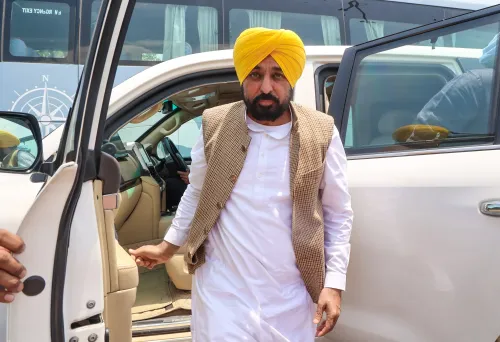
Punjab Chief Minister Bhagwant Mann launched a sharp attack on the Bharatiya Janata Party (BJP) on Friday, April 24, declaring the party has historically been 'anti-Punjab' and warning that the people of Punjab would deliver a decisive lesson to those he called 'traitors'. His remarks came in direct response to Rajya Sabha MP Raghav Chadha and six other Aam Aadmi Party (AAP) lawmakers defecting to the BJP — a political development that has sent shockwaves across Punjab's political landscape.
CM Mann's Fierce Rebuttal: 'Party Is Bigger Than Any Individual'
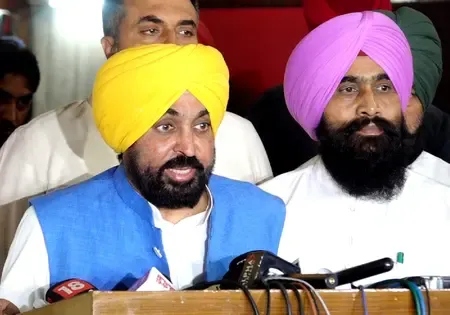
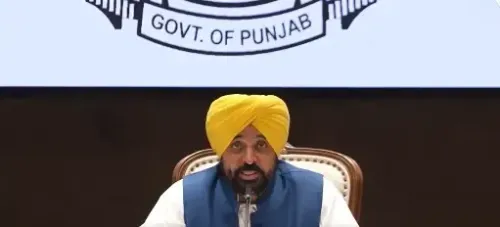
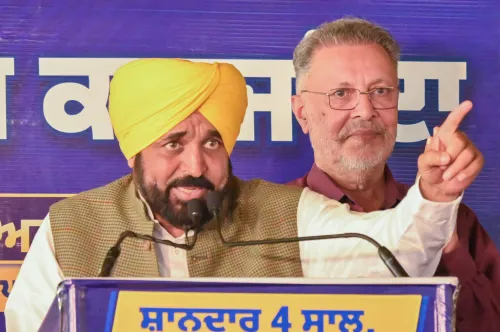
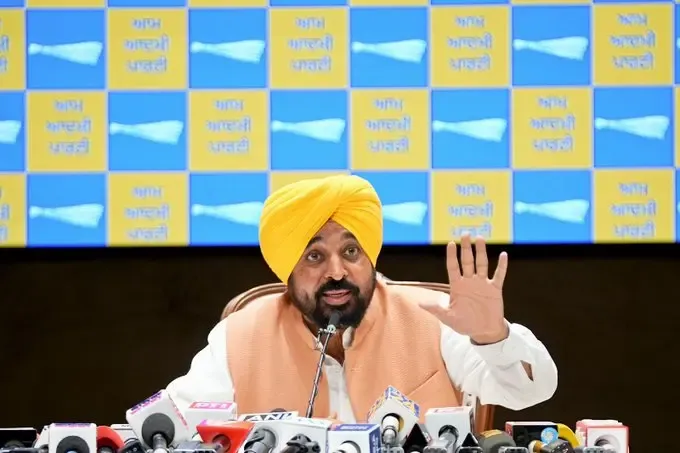
Chief Minister Mann addressed the media in Chandigarh, emphasising that no individual is larger than the party. "The six AAP MPs who have left do not represent Punjab. When they did not find anything against Bhagwant Mann, they tried to break the AAP," he stated pointedly.
Mann accused the BJP of deliberately engineering defections to destabilise opposition-ruled states, drawing a pattern he described as a political 'washing machine' — a term he said had previously been deployed against Sharad Pawar's party, Shiv Sena-UBT, and the Congress. "The BJP has no base in Punjab," he asserted.
The Chief Minister also underscored that the defecting lawmakers were not rooted in Punjab's grassroots politics. "They got seats without asking for votes. They didn't go to streets or speak about people's issues. They went there only to save themselves," he said, adding that even within the BJP, these individuals now hold no meaningful standing.
Sacrilege Laws and BJP's Alleged Hostility Toward Punjab
CM Mann connected the BJP's recent moves to the passage of strict anti-sacrilege legislation by the AAP government in Punjab. He noted that ever since these laws were enacted, visible unease had set in within the BJP's ranks in the state.
"To avenge their repeated defeats in Punjab, the BJP has always harboured feelings of hatred toward Punjab and the Aam Aadmi Party. We strongly condemn, in the harshest terms, both those who leave the party and those who take them in," Mann declared.
He reaffirmed AAP's ideological foundation: "The Aam Aadmi Party is a party of the common people, and the people are our true strength. The Aam Aadmi Party is a party with a revolutionary mindset and stands united and resolute for the truth at all times."
AAP General Secretary Blames Amit Shah for Engineered Defections
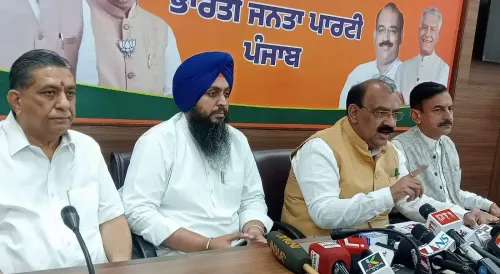
Punjab AAP General Secretary Baltej Pannu went further, directly naming Union Home Minister Amit Shah as the architect of a coordinated effort to fracture the party. Pannu alleged that Amit Shah had offered Raghav Chadha a Union Ministerial position in exchange for breaking at least seven AAP MPs and steering them into a new political outfit.
"A new party is being formed through Raghav Chadha with the backing of the BJP, and efforts are underway to lure AAP MPs into joining it. Our MPs are being pressured through false ED raids, intimidation tactics, and coercion," Pannu told reporters.
He also levelled a personal attack on Chadha, saying the party had elevated him to Parliament at a young age, only for him to "stab Punjab in the back." Issuing a stern warning, Pannu said: "Do not take enmity with Punjabis. It will prove very costly."
Central Agencies Weaponised Ahead of Elections, Alleges AAP
Pannu also alleged that central investigative bodies including the Enforcement Directorate (ED), the Central Bureau of Investigation (CBI), and even the Election Commission are systematically activated before elections to serve the BJP's political agenda.
"They are used to create fear, malign reputations, and force political leaders into submission or defection," he said. These allegations reflect a broader pattern seen across multiple opposition-governed states, where AAP and other parties have repeatedly accused central agencies of selective targeting.
Notably, this is not the first time AAP has faced high-profile defections — the party has weathered internal turbulence in Delhi and Gujarat as well, though Punjab remains its most strategically significant stronghold.
Political Implications for Punjab and AAP's Future
The defection of seven AAP MPs, including a prominent national face like Raghav Chadha, represents one of the most significant internal crises the party has faced since sweeping to power in Punjab in 2022 with a historic 92-seat mandate. The BJP, which has historically struggled to gain traction in Punjab, may be banking on these defections to rebuild a credible presence in the state ahead of future electoral battles.
However, analysts note that Punjab's political culture — shaped by deep regional pride, the legacy of the farmers' protest, and strong anti-establishment sentiment — may work against the BJP's strategy. CM Mann appears to be leaning into this very sentiment, positioning AAP as the defender of Punjab's identity against what he frames as an externally engineered political assault.
With Punjab assembly elections still years away, the immediate test will be whether AAP can consolidate its legislative majority, retain voter trust, and counter the narrative that its parliamentary wing is fracturing. All eyes are now on how the party reorganises its MP bloc and whether further defections follow in the coming weeks.
Point of View
But the explicit allegation naming the Home Minister as the orchestrator — a claim that, if substantiated, would represent a profound misuse of state power. CM Mann's framing of this as an assault on Punjab's identity is politically astute, but it also risks obscuring a harder internal question: why were seven of its own MPs vulnerable to such overtures in the first place? AAP must answer that question as urgently as it attacks the BJP.
NationPress
19 Sept 2026
Frequently Asked Questions
Why did Raghav Chadha and AAP MPs join the BJP?
Raghav Chadha and six other AAP MPs reportedly joined the BJP in April 2025, with AAP alleging they were lured through promises of ministerial positions and coerced via central agency pressure. The BJP has not officially confirmed the specific terms of their induction.
What did CM Bhagwant Mann say about the AAP defections?
CM Bhagwant Mann called the defecting MPs 'traitors to Punjab' and said they did not represent the state's people. He accused the BJP of being 'anti-Punjab' and warned that Punjabis would teach a lesson to those who betrayed them.
What role did Amit Shah allegedly play in the AAP split?
Punjab AAP General Secretary Baltej Pannu alleged that Union Home Minister Amit Shah offered Raghav Chadha a Union Cabinet post if he succeeded in breaking at least seven AAP MPs and forming a new political outfit. The Home Ministry has not responded to these allegations.
How many AAP MPs have left the party to join the BJP?
Seven AAP MPs, including Rajya Sabha MP Raghav Chadha, reportedly left the party to join the BJP in April 2025. CM Mann stated that these individuals were not representative of Punjab's ground-level politics.
What is the political impact of AAP defections on Punjab?
The defections represent one of AAP's biggest internal crises since its 2022 Punjab election landslide of 92 seats. While the party retains its legislative majority in the state assembly, the loss of seven MPs weakens its national parliamentary presence and could embolden the BJP to push harder in Punjab ahead of future elections.