CM Mann Launches Maavan Dheeyan Satkar Yojna for Punjab Women
Synopsis
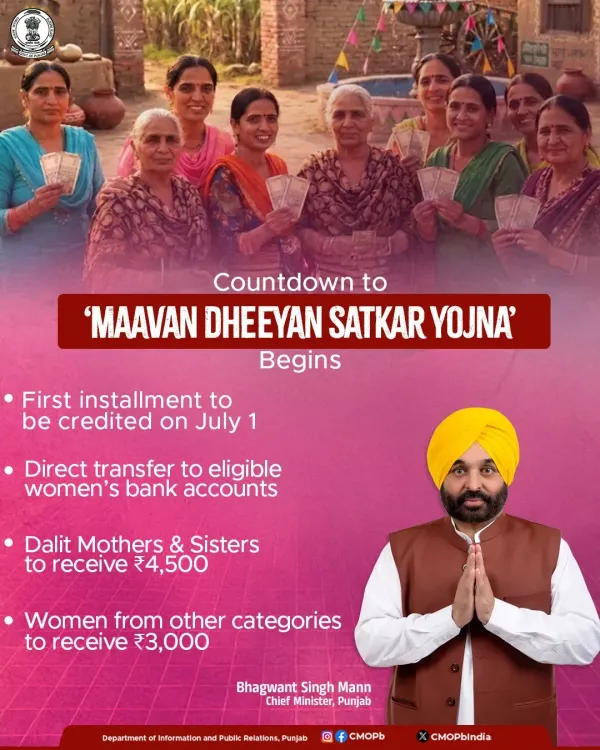
Chief Minister Bhagwant Mann has announced July 1, 2026 as the date for the first three-month installment under the Maavan Dheeyan Satkar Yojna. Dalit women will receive ₹4,500 and women from other categories ₹3,000, credited directly to bank accounts under Punjab's women's economic empowerment drive.
Key Takeaways
The Maavan Dheeyan Satkar Yojna will credit its first installment on July 1, 2026 , covering three months of the Satkar Rashi .
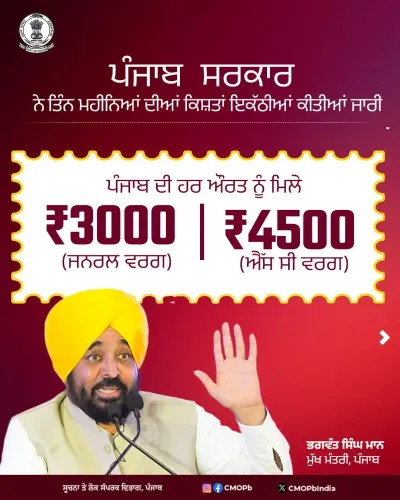
Dalit mothers and sisters will receive ₹4,500 as the first installment; women from all other eligible categories will receive ₹3,000 .
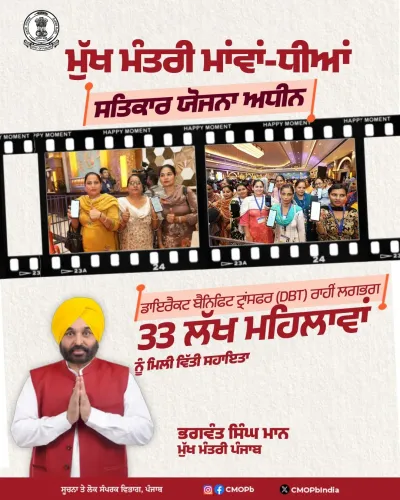
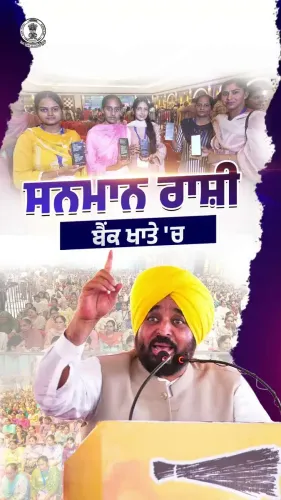
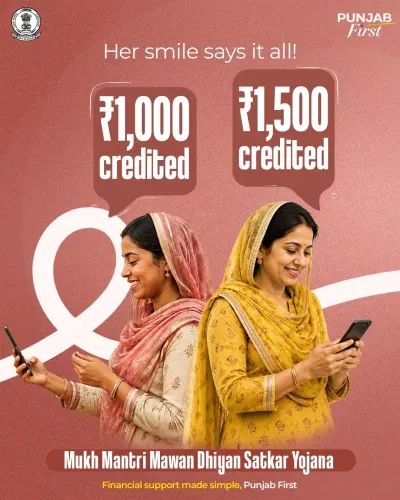
Funds will be transferred directly into beneficiaries' bank accounts via Direct Benefit Transfer (DBT).
Chief Minister Bhagwant Mann described the scheme as central to Punjab's commitment to women's dignity, financial security, and social empowerment.
The scheme features a caste-differentiated payout structure, with a higher amount specifically for Dalit women to address compounded economic vulnerability.
The total number of beneficiaries and the full annual budget allocation are yet to be publicly announced.
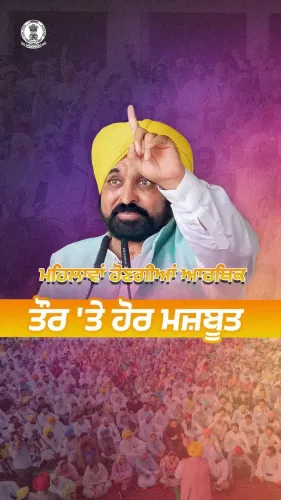
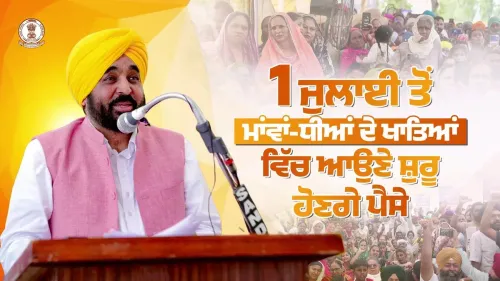
The Chief Minister's Office of Punjab announced on Monday, June 22, 2026, that Chief Minister Bhagwant Mann has set July 1, 2026 as the date for the first disbursement under the Maavan Dheeyan Satkar Yojna, a direct cash transfer scheme aimed at women across the state. The first installment, covering three months of the Satkar Rashi (honour payment), will be credited directly into eligible women's bank accounts.
What the Scheme Offers
Under the Maavan Dheeyan Satkar Yojna, the Punjab Government has structured the benefit in two tiers. Dalit mothers and sisters will receive ₹4,500 as the first installment, while women from all other eligible categories will receive ₹3,000. The scheme uses Direct Benefit Transfer (DBT), routing funds straight to beneficiaries' bank accounts to minimise leakage and ensure timely delivery.
Chief Minister Bhagwant Mann described the initiative as a reflection of the Punjab Government's commitment to 'ensuring dignity, financial security, and social empowerment for women.' The higher allocation for Dalit women is a deliberate policy choice, recognising the compounded economic vulnerability faced by women from marginalised communities.
Context
The Aam Aadmi Party government in Punjab, in power since March 2022, has made direct cash support to women and marginalised groups a centrepiece of its social security agenda. The Maavan Dheeyan Satkar Yojna — whose name translates roughly to 'Respect Scheme for Mothers and Daughters' — follows this established pattern of named welfare schemes with symbolic resonance in Punjabi culture.
The announcement comes as Indian states have broadly moved toward targeted monthly cash transfers for women as instruments of both economic inclusion and political signalling. States including Madhya Pradesh and Rajasthan have run comparable programmes since 2021, using DBT infrastructure to deliver dignity payments at scale.
Policy Backdrop
DBT-based women's welfare schemes have grown significantly across India's state governments over the past five years, leveraging the JAM trinity — Jan Dhan accounts, Aadhaar, and Mobile — to reach previously unbanked or underserved women. Punjab's approach mirrors this national trend while adding a caste-differentiated payout structure that explicitly prioritises Dalit women.
The AAP government has positioned social security delivery as a core governance differentiator since taking office. Schemes targeting women, electricity subsidies, and health coverage have been central to its Punjab policy record.
Stakeholders and Impact
The primary beneficiaries are women across Punjab, with Dalit women receiving a higher quantum in recognition of greater economic disadvantage. The three-month bundled first installment means eligible women will receive either ₹4,500 or ₹3,000 in a single credit on July 1, 2026, providing an immediate and meaningful cash infusion.
Civil society groups focused on women's economic rights and Dalit welfare organisations are likely to watch the rollout closely, particularly for coverage breadth and the verification process used to determine eligibility across categories.
What's Next
All eyes will be on the July 1, 2026 disbursement as the first real test of the scheme's delivery infrastructure. The total number of beneficiaries and the annual budgetary allocation have not yet been publicly detailed, and subsequent government statements are expected to fill in those figures.
If the first installment reaches beneficiaries without significant friction, the scheme is likely to become a flagship welfare reference point for the AAP government heading into future electoral cycles — and a benchmark against which other states may measure their own women's cash transfer programmes.
Point of View
Direct-to-account cash transfers for women as both a governance tool and a political signal. The caste-differentiated payout — higher for Dalit women — is a notable structural choice that goes beyond most comparable state schemes, embedding an equity lens into the benefit architecture. For the AAP government in Punjab, a smooth July 1 rollout would validate its DBT delivery infrastructure and reinforce its social welfare brand ahead of future electoral contests. The scheme's long-term credibility, however, will hinge on the breadth of coverage and the transparency of eligibility criteria, details that are still awaited.
NationPress
21 Sept 2026
Frequently Asked Questions
What is the Maavan Dheeyan Satkar Yojna in Punjab?
The Maavan Dheeyan Satkar Yojna is a Punjab Government scheme announced by Chief Minister Bhagwant Mann that provides a monthly cash payment, called Satkar Rashi, to eligible women in the state. The first installment covering three months is scheduled to be credited on July 1, 2026.
How much money will women get under the Maavan Dheeyan Satkar Yojna?
Dalit mothers and sisters will receive ₹4,500 as the first three-month installment, while women from all other eligible categories will receive ₹3,000. The funds will be transferred directly into bank accounts via DBT.
When will the first payment of Maavan Dheeyan Satkar Yojna be credited?
The first installment is scheduled to be credited on July 1, 2026. It covers three months of the Satkar Rashi benefit in a single transfer.
Who is eligible for the Maavan Dheeyan Satkar Yojna?
The scheme targets women in Punjab, with a specific higher payment tier for Dalit mothers and sisters. Detailed eligibility criteria and the total number of beneficiaries have not yet been publicly announced by the Punjab Government.
Why do Dalit women get more money under this Punjab scheme?
The Punjab Government has structured a higher payment of ₹4,500 for Dalit women compared to ₹3,000 for other categories to specifically address the compounded economic vulnerability faced by women from marginalised communities.