CM Mohan Yadav pays floral tribute at Shaurya Smarak on Independence Day
Synopsis
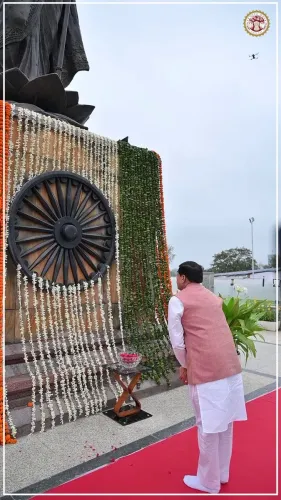
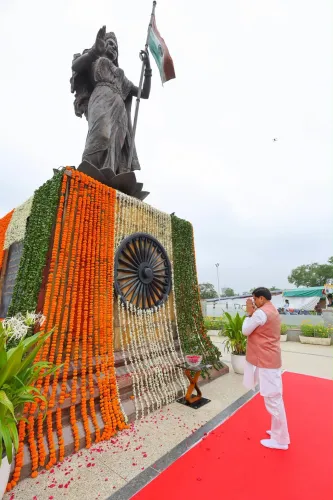
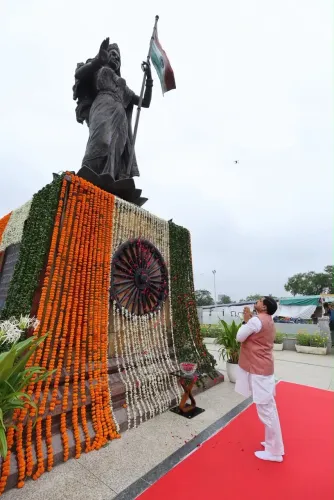
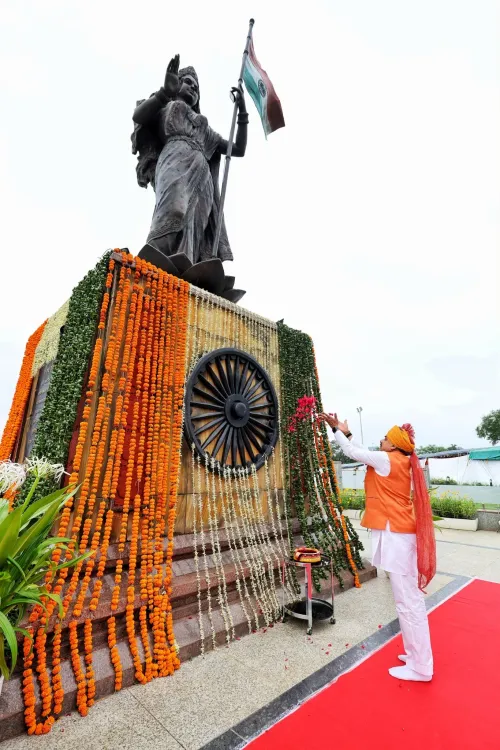
Madhya Pradesh CM Dr. Mohan Yadav paid floral tributes at the Bharat Mata statue and laid a wreath at the Shaurya Stambh at Shaurya Smarak, Bhopal, on Independence Day, honouring soldiers who sacrificed their lives for the nation.
Key Takeaways
Mohan Yadav , Chief Minister of Madhya Pradesh, observed Independence Day with a morning tribute at Shaurya Smarak, Bhopal .
He offered flowers at the statue of Bharat Mata and laid a wreath at the Shaurya Stambh .
The tribute honoured Indian soldiers who sacrificed their lives for the country.
Shaurya Smarak is Bhopal's dedicated war memorial complex for Indian martyrs and armed forces personnel.
State-level Independence Day tributes at war memorials are a standard national protocol observed by chief ministers across India every 15 August .
Flowers before the fallen — Madhya Pradesh Chief Minister Dr. Mohan Yadav began Independence Day not at a podium, but at a memorial. On the morning of 15 August, he offered a floral tribute at the statue of Bharat Mata and laid a wreath at the Shaurya Stambh at Shaurya Smarak, Bhopal, honouring the soldiers who gave their lives for the country.
Posting on X, Dr. Yadav wrote that on the auspicious occasion of India's Independence Day, he paid his respects — 'देश के लिए प्राणोत्सर्ग करने वाले वीर सपूतों को नमन' ('saluting the brave sons who sacrificed their lives for the nation').
Shaurya Smarak: Bhopal's tribute in stone and silence
Shaurya Smarak is Bhopal's dedicated war memorial complex, built to honour Indian martyrs and armed forces personnel. Its centrepiece, the Shaurya Stambh, stands as a permanent reminder of military sacrifice. Laying a wreath here on Independence Day is among the most visible acts of state-level commemoration — a ritual that connects elected office to the memory of those who made it possible.A national protocol, observed across every state capital
Chief Ministers across India observe a standard Independence Day protocol: a morning tribute at a local war memorial, followed by flag-hoisting and parades. What the ritual lacks in novelty, it carries in continuity — an unbroken chain of remembrance stretching back to 1947. For the families of soldiers, these moments are not ceremonial formality. They are public acknowledgement, year after year, that the sacrifice is not forgotten. As Bhopal's morning tribute concluded, the day's larger national ceremonies awaited — but the first act belonged to the soldiers at the memorial.Point of View
But they also carry real symbolic weight — elected leaders publicly anchoring their authority in the memory of military sacrifice. For Dr. Mohan Yadav, who took office in December 2023, such moments are part of establishing a governing identity rooted in nationalist sentiment, a consistent thread in BJP-led state administrations. The choice to lead with a memorial visit — before parades or speeches — signals a deliberate ordering of priorities on the national calendar. Across India, this choreography of remembrance is as much political language as it is ceremony.
NationPress
15 Aug 2026
Frequently Asked Questions
Where did CM Mohan Yadav pay tribute on Independence Day?
He paid tribute at Shaurya Smarak in Bhopal , offering flowers at the Bharat Mata statue and laying a wreath at the Shaurya Stambh.
What is Shaurya Smarak in Bhopal?
Shaurya Smarak is a war memorial complex in Bhopal dedicated to Indian martyrs and armed forces personnel, with the Shaurya Stambh as its centrepiece.
What did Mohan Yadav say on Independence Day?
Dr. Yadav posted on X that he saluted the brave soldiers who sacrificed their lives for the nation — 'देश के लिए प्राणोत्सर्ग करने वाले वीर सपूतों को नमन' .
Who is Dr. Mohan Yadav?
Dr. Mohan Yadav is the Chief Minister of Madhya Pradesh and a BJP leader who assumed office in December 2023 .
How do Indian chief ministers observe Independence Day?
Chief ministers typically begin Independence Day with a floral tribute at a local war memorial, followed by flag-hoisting ceremonies and parades — a protocol observed across all Indian states since 1947.