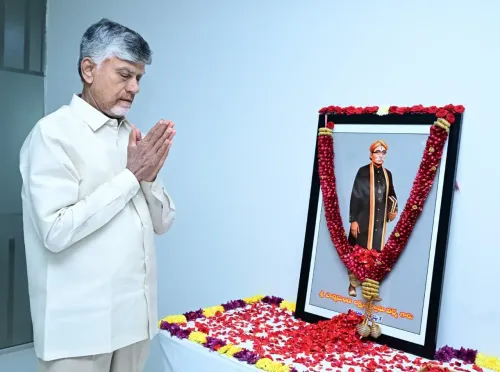
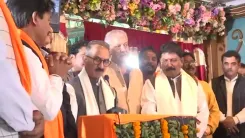
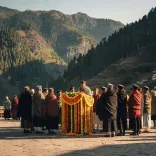
CM Naidu pays tribute to Maharshi Valmiki on Jayanti
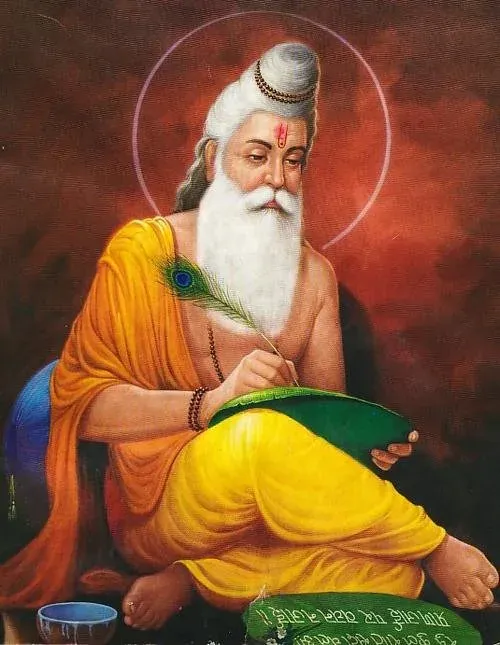
Synopsis
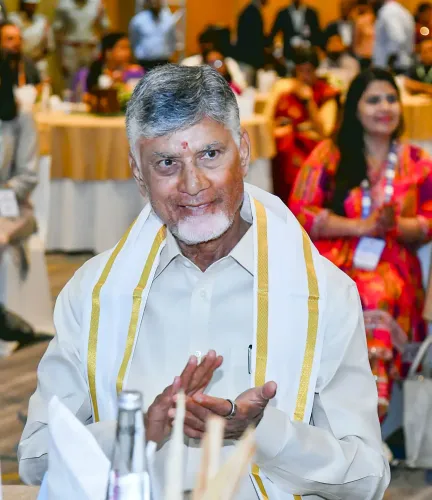
Andhra Pradesh CM N. Chandrababu Naidu marked Valmiki Jayanti by honouring Maharshi Valmiki's teachings on dharma, justice, and public welfare, calling them a guiding light for governance as the state observes the occasion as an official state festival.
Key Takeaways
Andhra Pradesh Chief Minister N.
Chandrababu Naidu posted a tribute to Maharshi Valmiki on Valmiki Jayanti, 26 October 2026 .
Naidu explicitly linked Valmiki's ideals of dharma, truth, and justice to the responsibilities of modern governance, not just personal conduct.
Andhra Pradesh observes Valmiki Jayanti as an official state festival , giving the occasion institutional recognition.
Maharshi Valmiki , revered as Adi Kavi (the first poet), authored the Ramayana , one of India's foundational Sanskrit epics.
The post continues Naidu's pattern of anchoring public communication in Telugu and Hindu cultural heritage across his tenures in office.
Ancient wisdom meeting modern governance — that is the thread Andhra Pradesh Chief Minister N. Chandrababu Naidu chose to weave on Monday, 26 October 2026, as he marked Valmiki Jayanti with a heartfelt message invoking the sage's timeless ideals of dharma, truth, and public welfare.
Posting in Telugu on X, Naidu wrote: 'Maharshi Valmiki, through the great epic Ramayana, guided humanity toward an ideal life filled with dharma, truth, duty, and human values. On the occasion of Valmiki Jayanti, let us recall the priceless teachings he gave us. He was a great soul who emphasised righteousness, justice, and public welfare — not just in personal life, but in governance as well. On this auspicious occasion of celebrating Valmiki Jayanti as a state festival, let us draw inspiration from his ideals and walk the righteous path he showed us.'
Andhra Pradesh observes Valmiki Jayanti as a state festival, a designation that elevates the annual commemoration of the Adi Kavi — the first poet — beyond private devotion into public celebration. The sage is credited with composing the Ramayana, one of the two foundational Sanskrit epics of Indian civilisation, and his work remains a living reference in political, cultural, and moral discourse across the country.
Dharma in the assembly, not just the ashram
What sets Naidu's message apart from routine cultural greetings is its explicit linkage of Valmiki's philosophy to the act of governing. The Chief Minister drew a direct line between the sage's emphasis on justice and public welfare and the responsibilities of a modern administrator — an appeal to a civilisational standard rather than a partisan one. This rhetorical move is consistent with a long tradition among Indian leaders of anchoring contemporary governance in classical texts, lending authority and continuity to political communication without announcing new schemes or policies. Naidu, who also serves as the national president of the Telugu Desam Party (TDP), has historically drawn on Telugu and broader Hindu cultural heritage in his public messaging across multiple terms in office. Framing administrative priorities through the language of the Ramayana allows him to speak simultaneously to devotees, scholars, and voters — a wide tent that crosses caste and community lines.Valmiki Jayanti as a state occasion in Andhra Pradesh
The observance of Valmiki Jayanti as an official state festival in Andhra Pradesh signals the government's intent to honour the sage's legacy institutionally. Valmiki holds particular reverence among several communities across the state, and the state-festival designation ensures that his birth anniversary is marked with official dignity — events, commemorative functions, and government messaging — rather than being left solely to community organisations. The Ramayana's central themes — a king bound by dharma, the primacy of truth even at personal cost, the duty of a ruler to his people — map directly onto the ideals Naidu cited. It is a reminder that the epic was always as much a treatise on governance as it was a spiritual narrative. A 2,000-year-old text, and its lessons still echo in state capitals.Point of View
Civilisational duty rather than a transactional exercise. By tying the Ramayana's ideals to public welfare and justice, he signals cultural continuity to a broad voter base without making any specific policy commitment. The state-festival designation for Valmiki Jayanti adds institutional weight to what could otherwise be a routine tribute. For Naidu — returning to power and seeking to consolidate a diverse coalition in Andhra Pradesh — these cultural anchors serve as soft-power governance tools that transcend partisan lines.
NationPress
26 Oct 2026
Frequently Asked Questions
Why is Valmiki Jayanti celebrated in Andhra Pradesh?
Valmiki Jayanti marks the birth anniversary of Maharshi Valmiki , the ancient sage who authored the Ramayana. Andhra Pradesh observes it as an official state festival, reflecting the sage's deep reverence across communities in the state.
What did Chandrababu Naidu say on Valmiki Jayanti 2026?
CM Naidu paid tribute to Maharshi Valmiki, urging citizens to recall his teachings on dharma, truth, duty, and human values, and drawing a parallel between Valmiki's emphasis on justice and the responsibilities of governance.
Who is Maharshi Valmiki?
Maharshi Valmiki is an ancient Indian sage revered as Adi Kavi — the first poet — for composing the Ramayana in Sanskrit. The epic is one of the two foundational texts of Indian civilisation and addresses themes of dharma, duty, and ideal kingship.
Is Valmiki Jayanti a state holiday in Andhra Pradesh?
Andhra Pradesh observes Valmiki Jayanti as a state festival. The exact year when this designation was formalised is not confirmed in available records, but the current government under CM Naidu has continued this recognition.
What is the significance of the Ramayana in Indian governance?
The Ramayana is widely cited by Indian leaders as a model of dharmic governance — a king bound by truth, justice, and the welfare of his people. Its themes have been invoked across generations in political, cultural, and administrative contexts.