Did CM Bhupendra Patel Win Hearts in Vadodara by Listening to a Visually-Impaired Student?
Synopsis
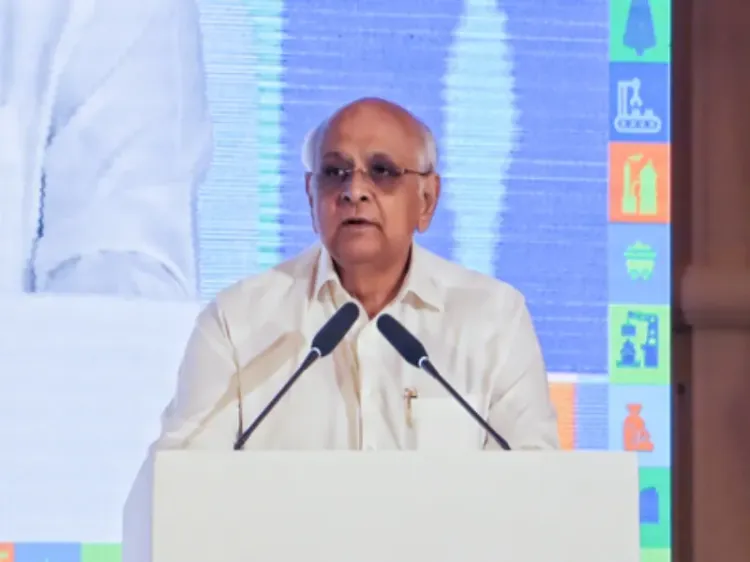
Gujarat Chief Minister Bhupendra Patel's heartfelt interaction with a visually-impaired student at the Urban Innovation Summit has captivated Vadodara. Gauri Shardul, a Class 10 student, shared her aspirations and feedback on disability reforms, making a profound impact on the community and highlighting the Chief Minister's commitment to inclusive education.
Key Takeaways
Bhupendra Patel exemplifies empathetic leadership.
Gauri Shardul inspires with her ambition despite visual impairment.
The Sugamya Bharat Abhiyan has improved accessibility for disabled individuals.
Gujarat's educational reforms focus on inclusivity and quality.
State initiatives promote STEM education for underprivileged students.
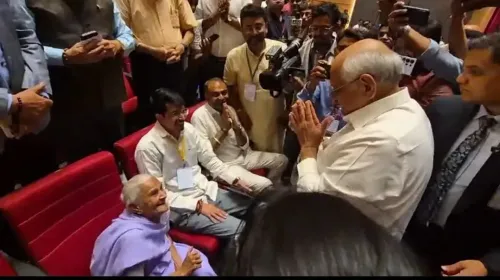
Vadodara, Sep 15 (NationPress) The Chief Minister of Gujarat, Bhupendra Patel, demonstrated his empathetic leadership once again, winning admiration from the community during his engagement with a visually-impaired student at the IELTS Urban Innovation and Infrastructure Summit.
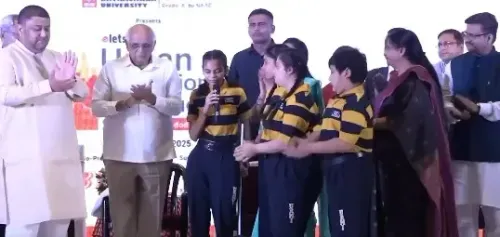
This touching moment occurred as children from the Urmi School for Special Needs were invited to greet the Chief Minister at the summit.
Among them was Gauri Shardul, a Class 10 student who is visually impaired. She presented Patel with a hand-drawn sketch as a token of her respect.
The Chief Minister kindly handed her the microphone and attentively listened as she shared her thoughts on the positive effects of the Sugamya Bharat Abhiyan (Accessible India Campaign), emphasizing how it has improved life for individuals with disabilities.
In an interview with IANS, Gauri expressed her admiration for Patel and conveyed her confidence that the reforms she proposed would be put into action.
“I have complete faith that the Chief Minister will take measures,” she stated.
Despite her visual impairment, Gauri effectively studies using a computer and keeps pace with her classmates. She shared her aspiration of becoming an IAS officer through the UPSC examination, believing the position carries significant dignity and respect.
The Urmi School currently serves over 80 special children, and Gauri’s commitment to achieving her goals left a profound impact on everyone present.
This incident reinforced Patel's reputation as a leader who warmly connects with children, especially those with special needs—a quality that resonated deeply with the community of Vadodara.
In recent years, Gujarat has made substantial advancements in its educational infrastructure. The state boasts approximately 34,500 government schools, with nearly 32,000 being primary institutions. Through the Mission Schools of Excellence program, numerous classrooms are being constructed or renovated; smart classrooms and computer labs are rapidly expanding.
Initiatives such as Namo Lakshmi (targeting girls in grades 9-12) and Namo Saraswati Vigyan Sadhana (for higher-level science students) have been launched to provide financial support and promote STEM education. Although infrastructure challenges remain—over 1,600 primary schools operate with just one teacher—state initiatives strive to enhance the quality and accessibility of education, particularly in rural and underserved regions.
Point of View
I believe this touching interaction between Chief Minister Bhupendra Patel and Gauri Shardul at the Urban Innovation Summit symbolizes a significant step towards inclusive leadership. Patel's engagement with the visually-impaired community illustrates the importance of accessibility in education and governance, reinforcing the need for continuous efforts to enhance the lives of all citizens in Gujarat.
NationPress
2 Oct 2026
Frequently Asked Questions
What was the occasion for CM Bhupendra Patel's interaction with the student?
The interaction took place during the IELTS Urban Innovation and Infrastructure Summit, where children from Urmi School for Special Needs welcomed the Chief Minister.
Who is Gauri Shardul?
Gauri Shardul is a Class 10 student from Urmi School, who is visually impaired and aspiring to become an IAS officer.
What impact did Gauri discuss regarding the Sugamya Bharat Abhiyan?
Gauri highlighted the positive effects of the Sugamya Bharat Abhiyan, noting that it has significantly eased life for people with disabilities.
What initiatives has Gujarat introduced to support education?
Gujarat has launched programs like Namo Lakshmi for girls and Namo Saraswati Vigyan Sadhana for science students to promote STEM education and provide financial assistance.
How has Gujarat improved its educational infrastructure?
The state has enhanced its educational infrastructure significantly, with thousands of classrooms being built or renovated under the Mission Schools of Excellence program.