CM Bhupendra Patel stops at tribal village, talks crops and school with Adivasi family
Synopsis
Gujarat Chief Minister Bhupendra Patel made an unscheduled stop at the tribal hamlet of Pipar Gota on 19 November 2026, visiting farmer Bakulbhai's home to discuss maize cultivation, livelihoods, and the family son's education in the state's eastern Adivasi belt.
Key Takeaways
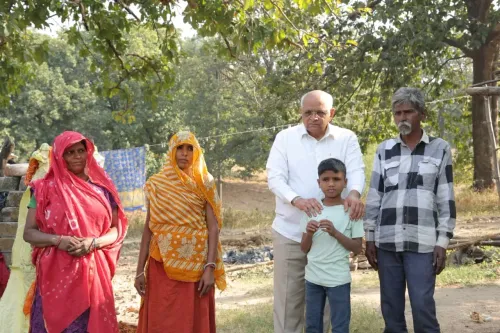
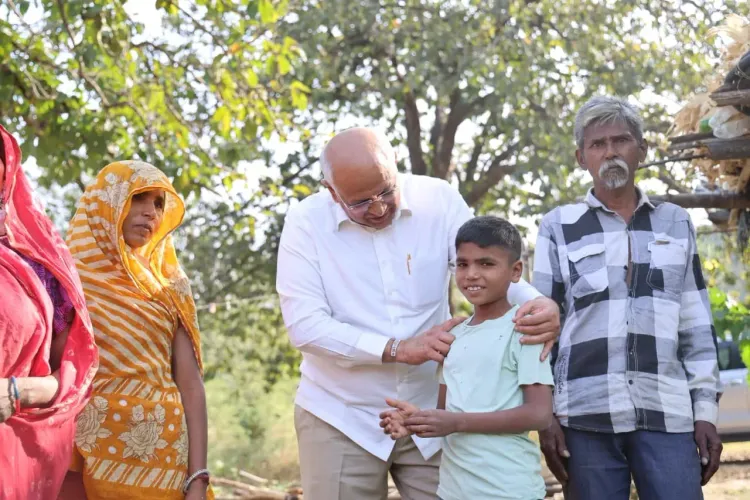
CM Bhupendra Patel made an unscheduled stop at the tribal village of Pipar Gota while travelling from Ratanmahal to Garbada on 19 November 2026 .
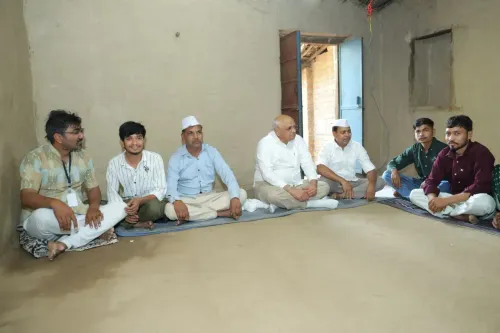
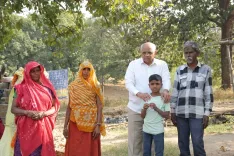
He visited the home of local farmer Bakulbhai and spoke with the family about maize farming and livelihood.
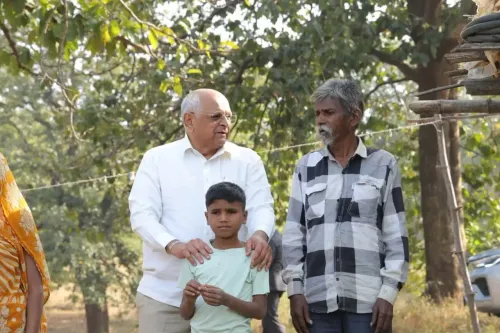
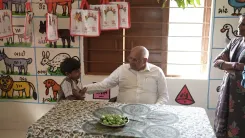
Patel also spoke with the family's son about his schooling and studies .
The visit took place in Gujarat's eastern tribal belt , home to a significant Adivasi population dependent on agriculture.
Patel described the experience in Gujarati, writing that the 'candid love and warm welcome of Adivasi families touches the heart.'
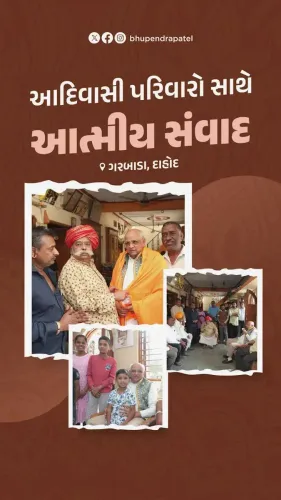
On a road winding back from Ratanmahal to Garbada, Gujarat Chief Minister Bhupendra Patel did something that rarely makes it into a schedule: he stopped the convoy. A small tribal hamlet called Pipar Gota caught his eye, and what followed was an unscripted visit to the home of Bakulbhai, a local farmer whose family grows maize on the land their community has tilled for generations.
Patel, posting in Gujarati on 19 November 2026, described the moment with unusual warmth — 'મન વાત્સલ્યના ભાવથી ભરાઈ ગયું' ('my heart filled with affection') — after sitting with Bakulbhai's family, learning about their maize cultivation, their livelihoods, and speaking with the family's son about his studies and school. 'The candid love and warm welcome of Adivasi families is something that touches the heart,' he wrote.
Maize fields and a child's future in Gujarat's eastern tribal belt
The villages around Garbada sit in Gujarat's eastern tribal belt — a corridor of districts with large Adivasi populations where agriculture is the primary occupation and maize a key kharif crop. For families like Bakulbhai's, the harvest cycle, government support prices, and access to schools for the next generation are the axis around which daily life turns.
Patel's questions about farming and schooling were not incidental. Gujarat has maintained a targeted development focus on this belt, with programmes aimed at improving agricultural support and school infrastructure for tribal communities. A chief minister pausing on a rural road to ask a farmer's son about his lessons puts a human frame around policies that otherwise live in budget documents.
Why unscheduled stops carry political weight
Indian chief ministers routinely conduct village outreach visits, but the unscheduled, unannounced stop carries a different signal — it suggests proximity rather than pageantry. Patel, who has been known for grassroots public outreach since taking office in 2021, framed the encounter not as an inspection but as a conversation: he listened to the family's account of their livelihood, then found himself hoping aloud for the boy's bright future.
That blend of agriculture, education, and direct human contact in a tribal village is precisely the kind of on-ground image that shapes the narrative around welfare delivery in Gujarat's tribal districts — where the gap between state ambition and village reality is still the story that matters most.
One farmer. One child's education. One unplanned stop on a Gujarat backroad. The small moments, it turns out, have a way of saying the loudest things.
Point of View
Ground-level outreach that the Gujarat BJP has cultivated as a governance signature — especially in the state's tribal eastern belt, which carries both electoral and welfare significance. The dual focus on maize farming and a child's schooling is deliberate optics: it links two of the state's headline tribal welfare priorities — agricultural support and educational access — in a single human moment. For a chief minister who came to office in 2021 on a low-profile, work-focused image, these unscripted encounters are the brand. The question the visit quietly raises is how much of what the farmer described in that living room finds its way back into policy refinement.
NationPress
19 Nov 2026
Frequently Asked Questions
Where is Pipar Gota village located in Gujarat?
Pipar Gota is a small tribal hamlet on the route between Ratanmahal and Garbada in Gujarat's eastern tribal belt, a region with a significant Adivasi population.
Why did CM Bhupendra Patel visit a tribal village in November 2026?
CM Patel made an unscheduled stop at Pipar Gota on 19 November 2026 while returning from Ratanmahal to Garbada, visiting farmer Bakulbhai's home to discuss maize cultivation, livelihoods, and the family son's education.
What did Bhupendra Patel discuss with the tribal farmer's family?
Patel spoke with Bakulbhai's family about maize farming and their livelihood, and separately talked with the family's son about his studies and school.
What is the significance of Gujarat's eastern tribal belt?
Gujarat's eastern tribal belt districts have large Adivasi populations whose livelihoods depend primarily on agriculture. The state maintains targeted development programmes for this region covering farming support and school infrastructure.
How long has Bhupendra Patel been Gujarat's Chief Minister?
Bhupendra Patel has been Gujarat's Chief Minister since 2021, known for grassroots public outreach visits across the state including tribal and rural communities.