CM Rekha Gupta Hails Full Vande Mataram Rendition in Lok Sabha
Synopsis
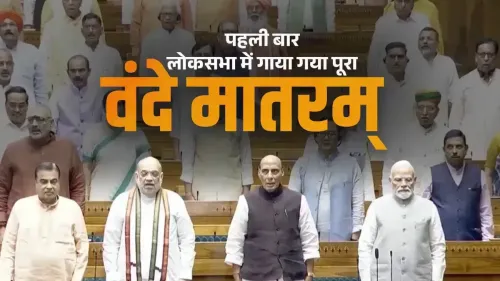
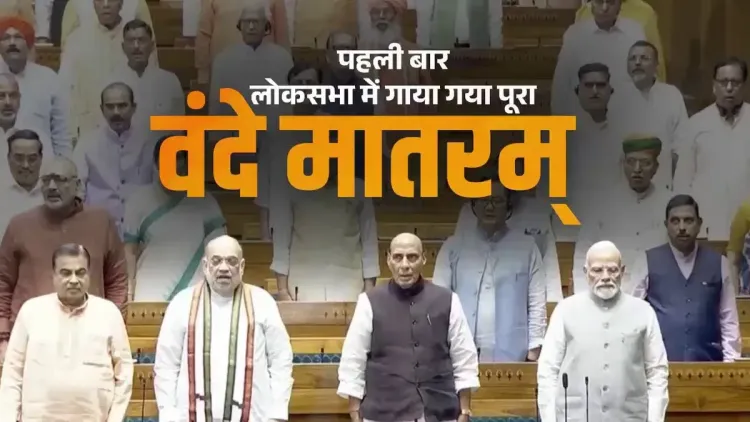
Delhi Chief Minister Rekha Gupta celebrated what she described as the first complete rendition of Vande Mataram in Lok Sabha on August 13, 2026 — the eve of Independence Day — calling it a proud chapter in India's democratic history and linking it to the song's 150th anniversary.
Key Takeaways
Delhi CM Rekha Gupta posted on August 13, 2026 hailing a full rendition of Vande Mataram in the Lok Sabha .
She described it as 'a glorious chapter in India's democratic history' and a symbol of unity and resolve.
Vande Mataram was written by Bankim Chandra Chattopadhyay in his 1882 novel Anandamath .
The Constituent Assembly adopted it as India's National Song in 1950 , alongside Jana Gana Mana as the National Anthem.
The post was tagged #VandeMataram150 , indicating a significant anniversary of the song.
The event occurred on the eve of Independence Day , a period when Parliament traditionally emphasises national sentiment.
A song that once ignited a freedom movement rang out in full inside the lower house of Indian Parliament — and Delhi Chief Minister Rekha Gupta marked the moment as a landmark in the nation's democratic story.
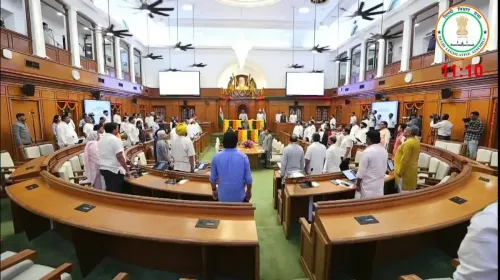
Posting on August 13, 2026 — on the eve of Independence Day — CM Gupta wrote that 'a glorious chapter has been added to India's democratic history' as Vande Mataram was sung in its entirety in the Lok Sabha for the first time, filling the chamber with what she called an 'unbreakable devotion, unity, and resolve towards Mother India.'
A Song Born in a Novel, Elevated to a National Symbol
Vande Mataram — meaning 'I bow to thee, Mother' — was first written by Bengali author Bankim Chandra Chattopadhyay in his 1882 novel Anandamath. It became an anthem of the independence movement long before India was free. When the Constituent Assembly formally adopted it as India's National Song in 1950, it placed it alongside Jana Gana Mana as a twin pillar of the republic's cultural identity — the anthem for state occasions, the song for the soul of the nation. The distinction matters: while Jana Gana Mana carries constitutional protocol — standing at attention, fixed duration — Vande Mataram has always lived in a more open, emotionally charged space. Its complete text, spanning multiple stanzas, has periodically sparked debate about which portions are sung and in what contexts, making a full parliamentary rendition a symbolically weighted event.The Eve of Independence Day, and the Weight of the Moment
The timing is deliberate. August 13 sits one day before Independence Day, and parliamentary sessions in this window have historically leaned into national sentiment — speeches, tributes, cultural performances. CM Gupta's post, tagged #VandeMataram150, suggests the occasion is also tied to a significant anniversary milestone of the song itself, lending the Lok Sabha performance added ceremonial gravity. Political leaders across the spectrum have invoked Vande Mataram at moments of national unity since independence. What makes today's moment distinct, in Gupta's framing, is the completeness — the full rendition, not an excerpt — inside the very chamber where the laws of the republic are made. As India marks another year of freedom, the song that once dared to name the motherland echoed, in full, through Parliament's most consequential hall. That image — however brief — is the one CM Gupta wants the country to carry into Independence Day.Point of View
' she elevates a ceremonial event into a historical marker, reinforcing the party's consistent emphasis on reclaiming and foregrounding national symbols in institutional spaces. The #VandeMataram150 tag also signals an effort to build a broader anniversary narrative around the song, potentially setting the stage for a season of cultural programming. Whether the 'first-ever full rendition' claim withstands historical scrutiny will determine how durably this moment lands in public memory.
NationPress
13 Aug 2026
Frequently Asked Questions
What is Vande Mataram and why is it significant?
Vande Mataram is India's National Song, written by Bankim Chandra Chattopadhyay in 1882 and adopted by the Constituent Assembly in 1950. It played a central role in the independence movement and remains a powerful symbol of patriotism.
What did Delhi CM Rekha Gupta say about Vande Mataram in Lok Sabha?
CM Rekha Gupta said the full rendition of Vande Mataram in Lok Sabha on August 13, 2026 was 'a glorious chapter in India's democratic history,' calling it an expression of unbreakable devotion, unity, and resolve towards Mother India.
What is the difference between Vande Mataram and Jana Gana Mana?
Jana Gana Mana is India's National Anthem with strict constitutional protocol, while Vande Mataram is the National Song — equally honoured but used in a wider range of cultural and ceremonial contexts.
What does #VandeMataram150 mean?
The hashtag #VandeMataram150 appears to reference the 150th anniversary milestone of the song Vande Mataram, which was first written by Bankim Chandra Chattopadhyay in 1882.
Why was Vande Mataram sung in Lok Sabha on August 13, 2026?
August 13 falls on the eve of Independence Day, a period when Parliament traditionally marks national sentiment. The occasion was also linked to the #VandeMataram150 anniversary, adding ceremonial significance to the full rendition.