CM Revanth Reddy briefs Parliament panel on SC/ST welfare
Synopsis
Chief Minister Revanth Reddy briefed the Parliamentary Committee on SC/ST Welfare at MCR HRD Institute, Hyderabad, on 18 November 2026, highlighting sub-categorisation, Dalit vice-chancellor appointments, YIIRS residential schools, and over-50% fund allocation to SC/ST communities under CMRF and Arogyasri.
Key Takeaways
The Parliamentary Committee on SC/ST Welfare, chaired by Dr F.S.
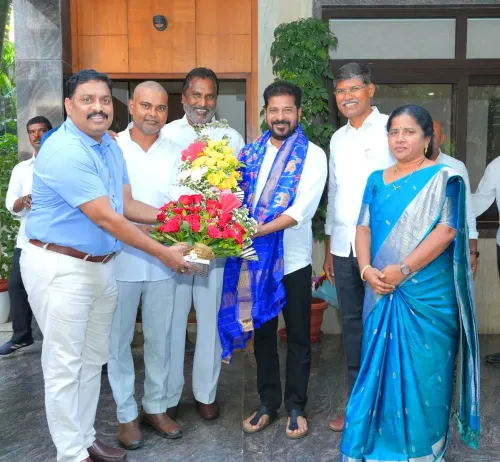
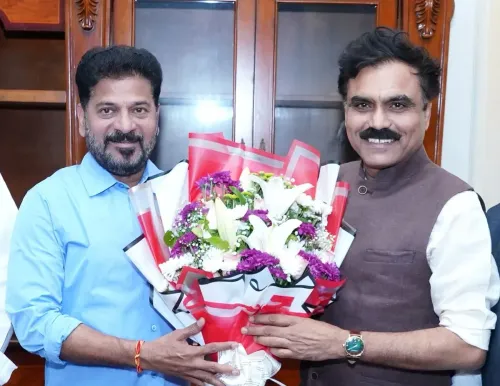
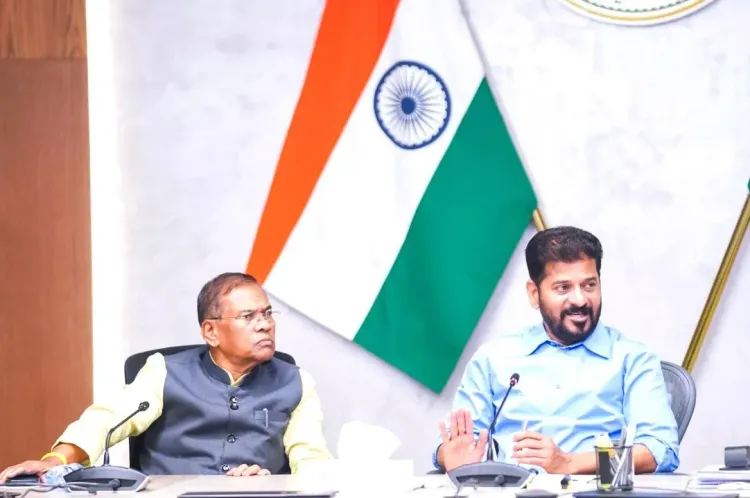
Kulaste , met CM Revanth Reddy at MCR HRD Institute, Hyderabad on 18 November 2026 .
Telangana is claimed to be the first state in India to implement SC sub-categorisation for more equitable distribution of reservation benefits.
For the first time in over 100 years , a Dalit has been appointed Vice-Chancellor of Osmania University ; similar appointments made at Dr B.R.
Ambedkar Open University and Rajiv Gandhi IIIT.
The state reports that more than 50% of CMRF and Arogyasri health funds are spent on SC/ST beneficiaries — an unverified figure cited by the CM.
The Indiramma housing scheme prioritises SC/ST families, and the YIIRS residential schools for SC/ST students drew specific praise from the parliamentary committee.
Committee members from multiple parties attended, including Tapir Gao, H.C.
Meena, Mallu Ravi, Anil Firojiya , and Arun Kumar Sagar .
A Parliamentary Committee overseeing the welfare of Scheduled Castes and Scheduled Tribes landed in Hyderabad on Wednesday, 18 November 2026 — and Chief Minister Revanth Reddy used the meeting to lay out what his government calls a sweeping recalibration of how Telangana treats its most marginalised citizens. The Chief Minister's Office of Telangana confirmed that the committee, chaired by Dr F.S. Kulaste, met the Chief Minister at MCR HRD Institute, Hyderabad, and came away with commendations on two flagship programmes.
What the parliamentary panel heard in Hyderabad
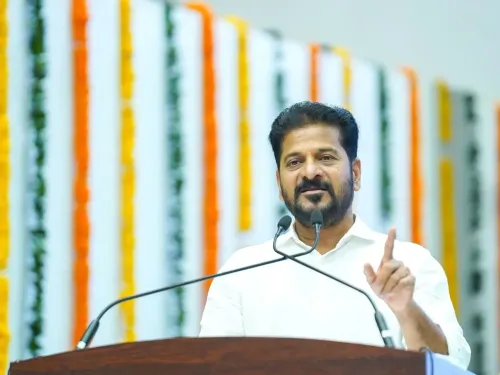
Speaking to the committee, CM Revanth Reddy described a broad sweep of executive decisions: Dalit representation at the level of Legislative Assembly Speaker and cabinet ministers, appointments in the Public Service Commission, and positions in multiple state corporations. The Chief Minister argued that the government has ensured 'appropriate placement for SC/ST communities wherever there is eligibility and opportunity.'
The most striking claim at the meeting concerned Osmania University — one of India's oldest, established in Hyderabad in 1918. Revanth Reddy told the committee that, for the first time in the university's over 100-year history, a Dalit scholar has been appointed as its Vice-Chancellor. He added that similar appointments have been made at Dr B.R. Ambedkar Open University and Rajiv Gandhi IIIT, framing the moves as structural change rather than symbolism.
Sub-categorisation, housing, and health funds
Telangana's SC sub-categorisation — the internal re-ordering of reservation benefits to address disparities among SC sub-groups — was highlighted as a national first. The Chief Minister described Telangana as the first state in India to implement the policy, a measure that has been debated across the country since the Supreme Court reopened the question of sub-categorisation within SC reservations.
On housing, Revanth Reddy said SC and ST families have been given priority in the Indiramma housing scheme, the state's programme to provide pucca homes to eligible poor households. On healthcare financing, he told the committee that more than 50 percent of expenditure from the CMRF and the state's Arogyasri health insurance scheme is directed toward SC/ST beneficiaries — a figure the government presents as evidence of its resource-allocation priorities. (Note: NationPress has not independently verified the specific fund-allocation percentages cited.)
YIIRS schools draw committee's praise
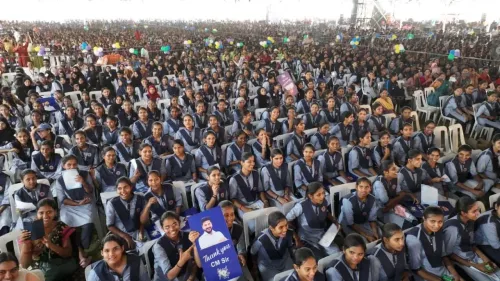
Committee members explicitly congratulated the state on two fronts: the implementation of SC sub-categorisation and the establishment of Young India Integrated Residential Schools (YIIRS), a network of residential schools specifically designed for SC/ST students. The committee's commendation signals that the parliamentary body, which reviews welfare measures across all states, considers these two interventions noteworthy enough to single out.
The meeting was attended by committee members including Dr Mallu Ravi, Tapir Gao, H.C. Meena, Anil Firojiya, and Arun Kumar Sagar, along with MP Kiran Chamala, several Members of the Legislative Assembly, and senior state officials. The breadth of the attendance — both ruling and opposition-side committee members from Parliament — underscores that such oversight visits are cross-party in composition even when the content is politically charged.
Telangana's SC/ST framework in national context
India's constitutional mandate for affirmative action has long been implemented unevenly across states. Telangana, since its formation in 2014, has steadily built out dedicated SC/ST welfare corporations and expanded political representation in its cabinet and assembly positions. The current Congress government under Revanth Reddy has leaned into the sub-categorisation debate as a differentiator — positioning Telangana as a laboratory for a more granular, equity-focused reading of reservation policy.
Parliamentary committees play a watchdog role in this architecture, assessing whether state governments are translating constitutional intent into ground-level outcomes. The committee's visit to Hyderabad, and its noted praise for YIIRS and sub-categorisation, will now feed into a broader national review. What the panel recommends next — and whether other states follow Telangana's sub-categorisation lead — is the question that will define the next chapter of this story.
Point of View
A Supreme Court-validated but nationally contested policy, is a calculated move to position Telangana Congress as more doctrinally committed to Dalit equity than its rivals. However, the credibility of the state's claims will ultimately rest on verified data on fund disbursement and the actual pace of YIIRS school rollout — areas the parliamentary committee is best placed to scrutinise. The committee's praise is politically useful for the ruling party, but its follow-up report will determine whether the applause is durable.
NationPress
18 Nov 2026
Frequently Asked Questions
What is the Parliamentary Committee on SC/ST Welfare and why did it visit Telangana?
It is a standing parliamentary committee that reviews the implementation of welfare measures for Scheduled Castes and Scheduled Tribes across Indian states. It visited Hyderabad on 18 November 2026 to assess Telangana's SC/ST schemes and met Chief Minister Revanth Reddy at MCR HRD Institute.
What is SC sub-categorisation and has Telangana really implemented it first in India?
SC sub-categorisation refers to dividing the Scheduled Caste reservation pool into sub-groups to give more benefits to the most backward among them. Telangana's Chief Minister claims the state is the first in India to implement this policy, following the Supreme Court's ruling that allowed it.
What are YIIRS schools in Telangana?
YIIRS stands for Young India Integrated Residential Schools, a Telangana government programme establishing residential schools specifically for SC/ST students. The Parliamentary Committee praised the initiative during the 18 November 2026 meeting in Hyderabad.
Who is the first Dalit Vice-Chancellor of Osmania University?
Chief Minister Revanth Reddy stated that Osmania University, founded over 100 years ago, has for the first time been given a Dalit Vice-Chancellor under the current Telangana government. A specific name was not mentioned in the official post.
What is the Indiramma housing scheme in Telangana?
Indiramma is a Telangana state housing scheme that provides pucca (permanent) houses to eligible poor households, with the government stating that SC/ST families are given priority in its allocation.